The Home Cook’s Guide to Salt: A Masterclass in Seasoning for Enhanced Flavor and Texture
Salt is the single most important ingredient in your pantry, yet it is arguably the most misunderstood tool in the home kitchen. While many amateur cooks treat it as an afterthought—a quick shake from a shaker before serving—professional chefs view it as the backbone of every dish, from the simplest morning eggs to the most complex braised short ribs. Understanding salt isn't just about avoiding a bland meal; it is about mastering the chemical reaction that unlocks the hidden potential of your ingredients. When you salt properly, you aren't just adding a savory note, you are actively modifying the molecular structure of your proteins and vegetables to achieve the perfect bite.
In this masterclass, we will peel back the layers of culinary science to reveal how different salts behave under heat, moisture, and time. We will explore why the shape and size of a crystal determine its usage, why certain salts are meant for the finish line rather than the prep board, and how salt acts as a conduit for flavor throughout the cooking process. You will learn to move beyond the recipe measurements and begin seasoning by intuition, using your palate as your primary guide. It is time to stop fearing the salt cellar and start using it with the confidence of a seasoned line cook.
By the time you finish this guide, you will understand the profound difference between kosher salt, sea salt, and table salt, and why the "pinch" is the most underrated unit of measurement in gastronomy. We will discuss the art of dry-brining, the necessity of seasoning throughout the cooking process, and how to fix a dish that has been over-salted. Cooking is an act of transformation, and salt is the catalyst. Let us dive into the crystalline world of seasoning, where the goal is always balance, depth, and the pursuit of the perfect plate.
The Chemistry and Varieties of Salt
The journey to better seasoning starts with knowing exactly what you are putting into your food. Not all salts are created equal, and the primary difference lies in the mineral content, surface area, and purity. Most standard grocery store table salt is heavily processed, stripped of natural minerals, and treated with anti-caking agents that can leave a metallic, chemical aftertaste. For the serious home cook, moving away from fine-grained table salt is the first step toward professional-quality results.
Kosher Salt: The Professional Standard
The gold standard for almost every commercial and restaurant kitchen is Kosher salt. Its name is derived from the Jewish culinary tradition of using larger-grained salt to draw moisture out of meat, but its utility in the modern kitchen is unmatched. Because the crystals are flat and flaky rather than cubic, they provide excellent surface area, allowing them to dissolve at a rate that is easy to control. I exclusively use Diamond Crystal or Morton’s Kosher salt because they are easy to pinch, allowing you to gauge exactly how much you are sprinkling into a pan or over a steak.
Sea Salt vs. Mineral Salt
Sea salt is harvested through the evaporation of seawater, often retaining trace minerals like magnesium, potassium, and calcium. These minerals add subtle nuances of flavor that range from floral to earthy depending on the region of harvest. Meanwhile, Fleur de Sel and Maldon sea salt are considered finishing salts. These are delicate, pyramidal crystals that should never be subjected to high heat, as their structural integrity is their greatest asset. Use these at the very end of your cooking process to provide a textural crunch and a burst of concentrated salinity.
"Salt is the bridge between a dish that is merely edible and a dish that is truly memorable. It is not just about salinity; it is about the elevation of every other flavor on the plate."
The Art of Layering: Seasoning Through the Process
One of the most common mistakes home cooks make is seasoning only at the end of the cooking cycle. Seasoning is a cumulative process. When you salt at the beginning, the middle, and the end, you are creating a foundation of flavor that penetrates deep into the ingredients. This is the difference between a steak that tastes seasoned on the surface and one that tastes delicious throughout the entire cut of meat.
The Foundation Layer
Always salt your vegetables and aromatics as soon as they hit the pan. If you are sautéing onions, a pinch of salt draws out their liquid, allowing them to caramelize and soften rather than just steam in their own juices. By salting early, you are manipulating the osmotic pressure within the cellular structure of the produce. This release of moisture is vital for creating a savory base, or fond, which serves as the foundation for your sauces, soups, and stews.
Mid-Cook Corrections
As a dish reduces—such as a tomato sauce or a beef bourguignon—the liquid evaporates, but the salt stays behind. This is where your palate must intervene. Never season a sauce to perfection at the beginning of a two-hour simmer, or you will end up with a salty, unpalatable mess by the time it reaches the table. Taste frequently throughout the process, adding salt in small increments and allowing it to dissolve fully for at least a minute before tasting again.
Finishing the Dish
The final seasoning is your opportunity to bring the dish into balance. This is when you taste for acidity and salinity simultaneously. Often, a dish that tastes "bland" is not actually lacking in salt; it is lacking in acid. A squeeze of lemon or a splash of vinegar can wake up the salt you have already added, making the dish pop. Always keep a small bowl of high-quality finishing salt nearby to provide a final textural pop right before serving.
The Science of Dry Brining
If there is one technique that will immediately upgrade your roasted proteins, it is dry brining. We are not talking about soaking a chicken in a bucket of salt water—which can lead to soggy skin and an uneven texture. Dry brining is the process of applying salt to the surface of meat several hours, or even days, before cooking. This allows the salt to draw moisture out, dissolve into a brine, and then be reabsorbed into the muscle fibers through osmosis.
The Timing Protocol
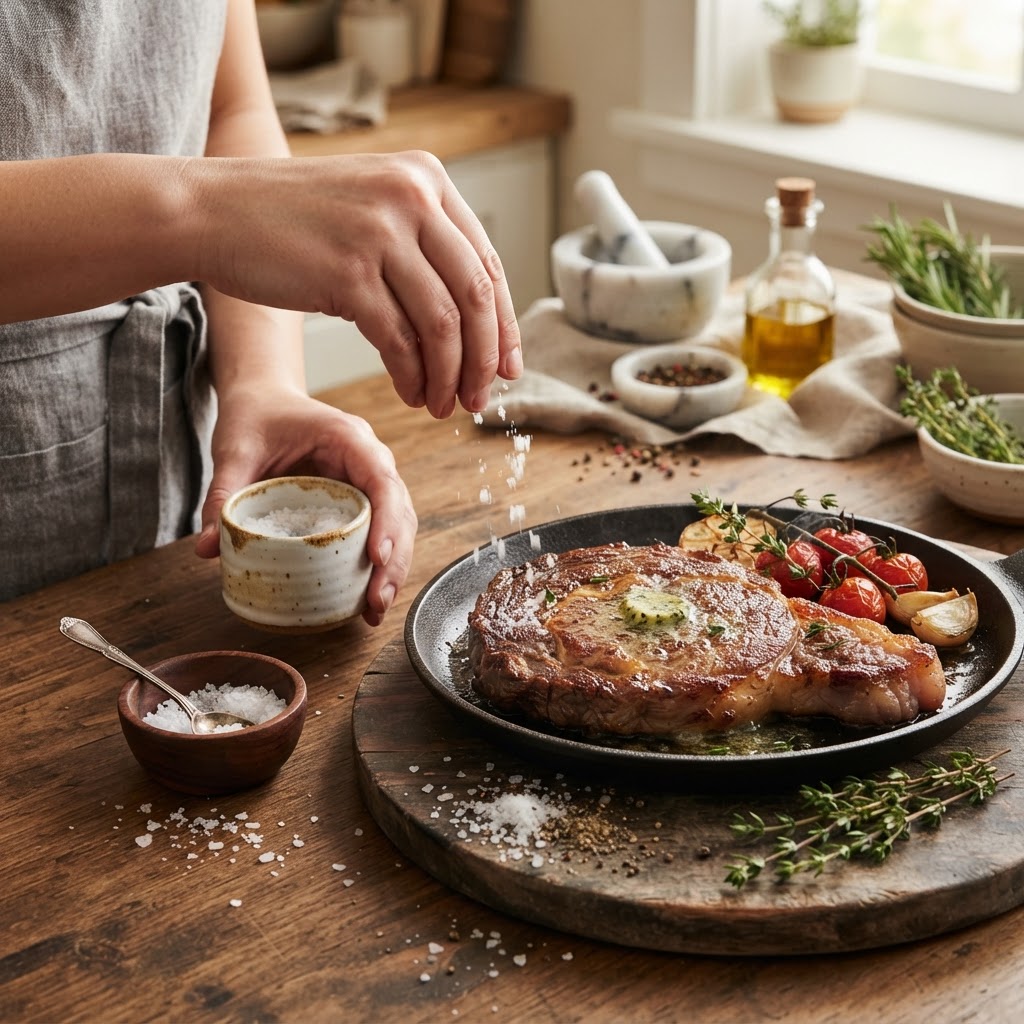
For a thick-cut steak, I recommend salting it at least 45 minutes before it touches the heat. If you have the time, place the seasoned meat on a wire rack in your refrigerator, uncovered, for 12 to 24 hours. The circulating air of the fridge will dry out the exterior of the meat, ensuring that when it hits a hot pan or grill, you achieve a perfectly golden-brown crust rather than gray, steamed meat.
Ratios for Success
A general rule of thumb is to use approximately 3/4 teaspoon of Kosher salt per pound of meat. While this might seem like a lot, remember that much of it will be absorbed deep into the tissue. If you are preparing a whole bird, make sure to season under the skin as well. This creates a flavor profile that is consistent from the crispy skin down to the deepest part of the breast meat, which is notoriously difficult to season post-cooking.
"Cooking is not a static act; it is a dynamic conversation between the heat, the ingredient, and the seasoning. Listen to the sizzle, smell the transformation, and taste the balance."
Salt and Vegetable Texture
Salt is a powerful tool for manipulating the texture of your vegetables. We have already mentioned how it aids in sweating onions, but it can also be used to remove the "wateriness" of bitter greens or to soften tough cruciferous vegetables like cabbage and kale. When you salt eggplant or zucchini before roasting, you are essentially drawing out excess water that would otherwise turn the vegetable into a mushy, unappealing mess.
Sweating and Purging
If you are preparing a salad with raw cucumber or red onion, a light dusting of salt and a ten-minute rest will draw out the harsh, acrid liquids. Simply rinse the vegetables under cold water and pat them dry afterward. You will be left with crisp, vibrant vegetables that possess a concentrated flavor without the watery finish that often dilutes your vinaigrettes.
Preserving Vibrancy
When boiling green vegetables like broccoli or asparagus, a heavy hand with the salt in your boiling water is essential. The salt raises the boiling point of the water, allowing the vegetables to cook faster and retain their vibrant chlorophyll-driven color. Always have a bowl of ice water ready for an ice bath so you can shock the vegetables immediately after removing them from the boiling, salted water, locking in that bright green color and crisp-tender texture.
Common Salt Myths and Pitfalls
There is a pervasive myth that adding salt to your pasta water "makes it boil faster." While scientifically true—salt does increase the boiling point—the amount of salt you would need to add to see a noticeable change in time would make the pasta completely inedible. The real reason we salt pasta water is to season the pasta from the inside out, as the starch expands and absorbs the liquid.
The "Over-Salted" Crisis
Every home cook experiences the dreaded over-salted soup or stew at least once. If you find yourself in this situation, do not panic and do not throw the dish away. You can often mitigate the saltiness by adding a raw, peeled potato to the pot for 20 minutes, as it acts as a sponge for the excess brine. Alternatively, increase the volume of the dish by adding more unsalted liquid (like water or unsalted stock) or introduce a balancing agent like heavy cream, coconut milk, or a touch of honey to mask the intense saltiness.
The Hidden Salt in Ingredients
Always account for the salt already present in your ingredients. If you are using canned beans, soy sauce, anchovies, or salted butter, you must adjust your seasoning accordingly. It is far easier to add more salt at the end of the cooking process than it is to remove it. Taste your ingredients before adding any salt from your cellar. If your bacon is already quite salty, you may find that the Brussels sprouts you are cooking with it need almost no additional seasoning at all.
Mastering Heat: How Salt Interacts with the Pan
The relationship between salt and heat is volatile and beautiful. When salt meets a hot fat—whether it is olive oil, butter, or beef tallow—it undergoes a transformation. The crystals become part of the flavor crust, often called the Maillard reaction. This chemical reaction between amino acids and reducing sugars is what gives seared meat and roasted vegetables their deep, complex, savory flavor.
The Searing Technique
When searing a protein, salt provides the abrasive element that helps create a crust. If the surface of your meat is wet, the moisture will create steam, which prevents the Maillard reaction from occurring. By using salt to draw moisture out and then patting the surface dry with a paper towel before it hits the pan, you ensure that the salt helps facilitate a perfect sear. The salt crystals actually melt into the fat, creating a flavor-packed glaze that coats the meat.
Seasoning the Pan vs. Seasoning the Food
Experienced chefs know that seasoning the pan is just as important as seasoning the food. When you are deglazing a pan with wine or stock, the salt that has adhered to the bottom of the pan—the fond—is lifted and incorporated into the sauce. This creates a depth of flavor that is impossible to replicate with store-bought broth alone. Every time you scrape the bottom of the pan, you are reclaiming the salt and the caramelized bits that make a sauce taste professional.
When to Use Finishing Salts
Once you have mastered the basics of seasoning throughout the cooking process, it is time to look at finishing salts. These are not for cooking; they are for eating. Because of their high cost and delicate structure, you only apply them at the very last second. They provide a texture and a "crunch" that can define a dish.
Why Texture Matters
A sprinkle of Maldon sea salt over a chocolate chip cookie or a heirloom tomato salad changes the entire eating experience. It provides a sharp, clean burst of salinity that cuts through the richness of chocolate or the sweetness of the tomatoes. This textural contrast is a hallmark of sophisticated cooking, separating your home-cooked meals from the monotony of basic, unadorned food.
The Aesthetic Appeal
Never underestimate the visual impact of a high-quality salt. A dark, seared steak topped with a sprinkle of bright, white, pyramidal salt crystals looks infinitely more appetizing than one that is flat and unadorned. It shows an attention to detail that tells your guests that you have put thought into every single component of the meal, from the temperature of the protein to the final sparkle of the seasoning.
Final Thoughts
Mastering salt is the ultimate expression of your growth as a home cook. It is a journey that moves you from being a slave to a recipe card to being a chef who understands the fundamental mechanics of flavor. When you begin to taste as you cook, when you start to adjust for the chemistry of your ingredients, and when you recognize the distinct roles of different salts, you stop following directions and start creating art.
Remember that salt is a tool of balance. It is meant to highlight the natural qualities of your ingredients, not to mask them. If you can taste the salt before you taste the food, you have gone too far. If the food feels flat and boring, you haven't gone far enough. Keep practicing, keep tasting, and don't be afraid to experiment with the different varieties available in your pantry.
Your kitchen is your laboratory, and salt is your most trusted reagent. Whether you are roasting a simple chicken for a weeknight dinner or preparing a feast for friends and family, hold that pinch of salt with intention. By treating seasoning as the foundational skill that it is, you will find that your food becomes more vibrant, more balanced, and undeniably more professional. Keep cooking, keep seasoning, and most importantly, keep enjoying the process of making something beautiful out of simple ingredients. The kitchen is yours to conquer.
By internalizing these habits, you will find that your confidence in the kitchen grows exponentially. There is no magic to becoming a better cook, just the consistent application of sound techniques and a keen understanding of how to manipulate flavor. The journey of a thousand meals begins with a single pinch, so pick up that salt and start building your foundation today. You have all the skills you need to produce restaurant-quality dishes right in your own home. "Blame the Chef" is here to guide you, but the mastery lies in your own hands, your own taste, and your own dedication to the craft of cooking. Happy seasoning, and may every meal you prepare be a testament to your hard work and newfound expertise. Stay hungry, stay curious, and keep seasoning with boldness.

Get the Next Recipe
Weekly recipes, techniques, and gear picks — straight to your inbox.
