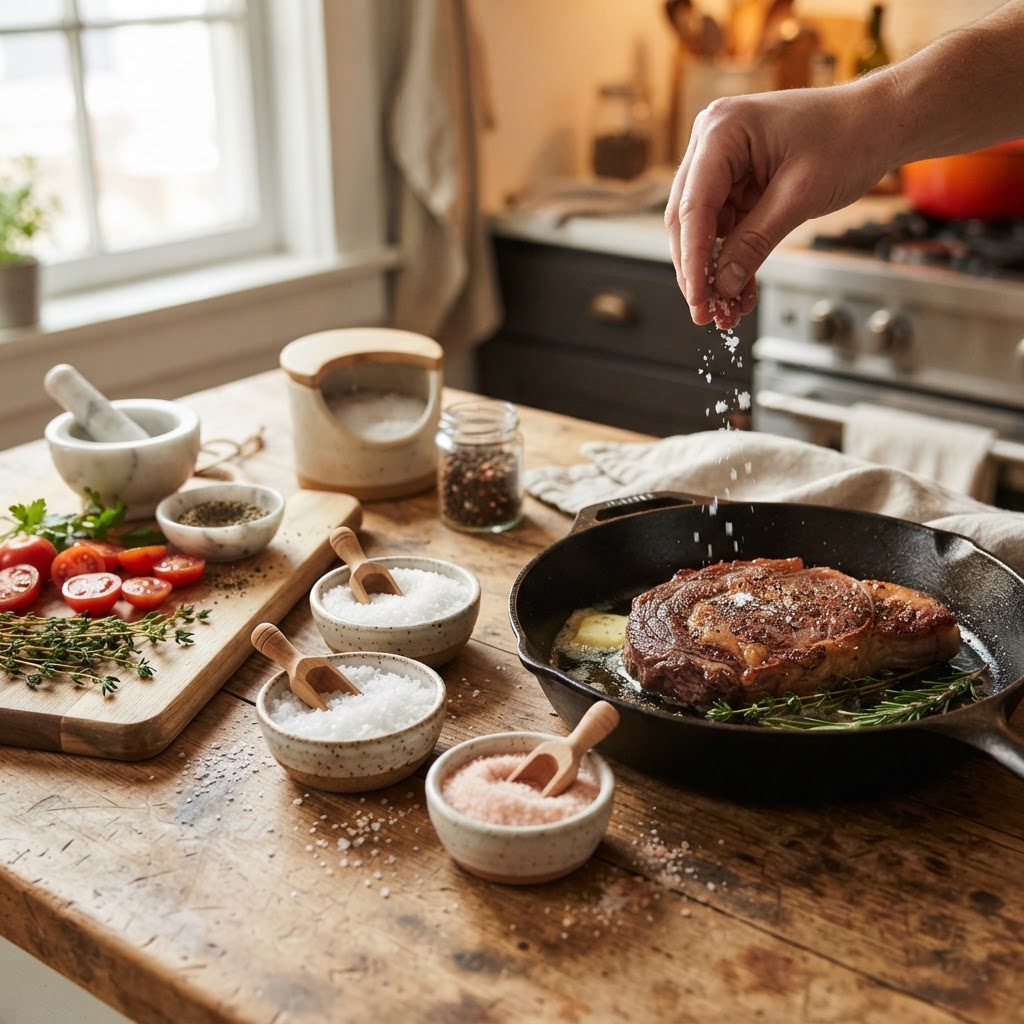
The Home Cook’s Guide to Salt: Understanding Types, Timing, and How to Season Like a Pro
Salt is often seen as the most basic element in cooking, yet it carries a profound impact on flavor, texture, and even food chemistry. For many home cooks, it’s a seasoning used almost instinctively—sprinkling a pinch here, adding a dash there—without fully understanding the nuances that transform a good dish into a great one. But when you comprehend the types of salt available, the correct timing for seasoning, and the techniques used by professional chefs, your cooking reaches a new level of precision and artistry. Mastery of salt isn’t about oversalting; it’s about knowing how and when to use it to enhance every ingredient’s natural character.
In this guide, we will explore everything a home cook needs to know about salt—from the many varieties available to their best uses, to how timing can make or break your dishes. We’ll delve into professional seasoning techniques, including how to properly salt during different stages of cooking and how to taste and adjust seasoning effectively. Whether you’re preparing a delicate sauce, a hearty braise, or simple roasted vegetables, understanding the role of salt can transform your results and elevate your confidence in the kitchen.
The goal here is not just to teach you about salt but to invite you into a mindset that values seasoning as an essential component of culinary craftsmanship. Think of salt as your secret weapon, one that can amplify flavors, improve texture, and even balance acidity or bitterness. With the right knowledge, seasoning becomes a calculable, almost scientific part of your process—yet it also retains the intuition and creativity that makes home cooking so rewarding. Let’s get started by understanding the different types of salt and what makes each one unique.
Understanding the Types of Salt
When it comes to salt, there’s a whole spectrum of options, each with its own characteristics and ideal uses. From common table salt to exotic finishing salts, knowing the differences will help you choose the right salt for the right job. The choice of salt can influence not only flavor but also the texture and appearance of your dishes. Chefs often select specific salts for their distinctive textures and mineral content to achieve particular effects or flavors.
Table Salt
Table salt is the most widely used salt in home kitchens. It is highly refined, with most of its mineral content removed, leaving behind pure sodium chloride. It’s equipped with anti-caking agents and often contains iodine as well, which is essential for thyroid health but can sometimes impart a slightly metallic taste if not balanced properly in dishes.
*Professional chefs prefer avoiding standard table salt for seasoning because its fine grain can lead to over-salting, especially when measured instinctively. Instead, they often use it for baking or specific applications where precision is key.*
Its fine grain dissolves quickly and evenly, making it ideal for baking, brining, and seasoning during cooking. However, because it is so finely ground, it can be tricky to control the amount you add, which is why many chefs and experienced home cooks favor coarser salts for seasoning.
Coarse Sea Salt
Coarse sea salt is harvested by evaporating seawater and is minimally processed, retaining natural minerals like magnesium, calcium, and potassium. It has a flakey or coarse grain that takes longer to dissolve than table salt, making it ideal for finishing dishes where a bit of crunch and sparkle are desired.
*Chefs love coarse sea salt for its ability to accentuate dishes visually and texturally, especially on roasted meats, vegetables, or salads.*
Because of its larger crystals, coarse sea salt is excellent for seasoning foods during cooking, such as sprinkling on steaks or vegetables before roasting. Its slow dissolution provides a more controlled seasoning process, allowing flavors to develop gradually.
Fine Sea Salt
Fine sea salt is similar to table salt but made from evaporated seawater without the anti-caking agents and additives found in commercial table salts. It offers a delicate mineral flavor and a fine, even grain that dissolves quickly.
It is versatile and often used as a finishing salt when you want a subtle crunch or burst of mineral flavor. Keep in mind that because it’s finely ground, it can be easier to over-salt, so always taste as you go.
Flake Salt (e.g., Maldon Salt)
Flake salt like Maldon or other specialty finishing salts are known for their light, flaky texture. They are harvested by slow evaporation and have a large, airy crystal structure that dissolves on contact with food.
*Flake salts are primarily used as a finishing salt—sprinkled over cooked dishes just before serving—to provide a burst of saltiness and a pleasing crunch.*
Because of their texture and mild flavor, they are excellent atop salads, grilled vegetables, roasted meats, or even desserts. They provide an impressive visual contrast and an enhanced sensory experience.
Himalayan Pink Salt and Other Mineral Salts
Himalayan pink salt and other mineral-rich salts (such as Celtic or Redmond salts) contain trace minerals that give them distinctive colors and flavors. These salts are often used for both their mineral content and their aesthetic appeal.
While they aren’t necessarily better for seasoning than other salts, many chefs appreciate their subtle flavor nuances and use them as finishing salts to add a layer of complexity to dishes.
Kosher Salt
Though it’s named "kosher," this salt isn’t exclusive to Jewish cuisine. It’s prized by chefs for its texture and ease of handling. Its coarse, flaky grains make it easy to pinch and sprinkle, and it dissolves quickly and evenly.
*Most professionals prefer kosher salt for seasoning because of its texture and volume—since its flakes are larger, the same volume of kosher salt contains less sodium than fine salts.*
It’s ideal for seasoning meats, vegetables, and even pasta water, and many cookbooks recommend it for its versatility and straightforwardness.
In essence, selecting the right salt depends on your purpose:
Understanding these distinctions helps you harness the full potential of salt, elevating even the simplest ingredients.
When to Salt: Timing Is Everything
Salt isn’t just about flavor; it’s about timing. The timing of when you add salt significantly influences its ability to enhance or diminish the qualities of your dish. Many home cooks make the mistake of seasoning only at the end of cooking, but professional chefs know that strategic timing can unlock deeper, more integrated flavors.
Seasoning During the Early Stages of Cooking
Salting early allows the seasoning to penetrate ingredients thoroughly, especially in slower-cooked dishes such as stews, braises, or roasted vegetables. When you salt at this stage, the salt interacts with plant cell walls and muscle fibers, breaking down some of the structural components, which can improve texture and flavor development.
*A common technique in professional kitchens is called “layered seasoning”—adding small amounts of salt at multiple points during the cooking process to build depth and balance.*
Here’s how you can do this:
This layered approach ensures even seasoning and prevents over-salting at the end.
Salting at the End (Finishing Salt)
Adding salt at the final stage, especially flakes or coarse sea salt, serves to elevate the dish. It’s the technique used by many chefs to give a dish that extra sparkle and burst of flavor at the moment of serving.
*Finishing with a high-quality finishing salt can turn a good dish into a memorable one.*
Use this method when:
The Importance of Tasting
No matter when you salt, tasting is paramount. The best cooks develop an intuitive palate—they continually taste and adjust seasoning as they go. Remember:
Pro tip: Always taste your dish before adjusting seasoning, and do so with clean, unaltered utensils to avoid contamination.
Salting After Resting
Resting is a crucial step, particularly with meats and roasted vegetables. Allow hot foods to rest for a few minutes before serving so juices redistribute and flavors meld. During this time, a light seasoning or finishing salt can be applied for maximum effect.
How to Properly Salt: Techniques and Tips
Salting isn’t just about adding the correct amount; it’s about applying it properly. Proper technique ensures even distribution, thorough seasoning, and avoidance of bitterness or over-salting.
The Pinch and the Handful
Salting in Layers
Layered seasoning involves:
Salt Distribution
Professional Tips
Temperature and Technique
Certain salts dissolve more effectively at specific temperatures:
Tips for Special Situations
Professional Salt Curing and Brining Techniques
Salt isn't just used as a seasoning—it’s also essential in preservation methods that enhance flavor and extend shelf life.
Curing Meats
Salt curing involves coating or immersing meat in salt to draw out moisture and inhibit bacterial growth. The process depends on:
Brining
Brining involves soaking food in a saltwater solution to tenderize, season, and preserve. The basic steps:
Tip: Always rinse cured or brined foods before cooking to remove excess surface salt.
Salt Temperature and Timing in Curing
Exact salt temperatures and timing influence the final texture and safety. Professional techniques involve temperature-controlled environments and calibrated curing times.
In conclusion, these methods show that salt isn’t just a flavor enhancer but a tool that, when used expertly, elevates preservation and flavor in complex ways.
Enhancing Flavor with Salt Beyond Basic Seasoning
Salt isn’t just about adding flavor—it's about enhancing and balancing. Understanding how salt interacts with other ingredients is key to mastering its use.
Salt and Acidity
Salt can ameliorate sourness in dishes like tomato sauce or citrus-based salads. Conversely, overly acidic dishes can benefit from a pinch of salt to smooth out the sharpness.
*Professional chefs often adjust acidity and salt simultaneously, tasting frequently to find the perfect balance.*
Salt and Sweetness
Salt enhances sweetness, making it more pronounced without overpowering. This is especially important in desserts like caramels, chocolates, or fruit salads.
Salt and Umami
Some salts, especially those with mineral content, can amplify umami—the savory fifth taste. Adding a touch of finishing salt like Maldon to a mushroom dish or aged cheese can deepen flavor.
Using Salt to Build Layers of Flavor
The concept of flavor layering is central to professional cooking. Salt helps:
Salt as a Mask or Balancer
Sometimes, salt is used to mask undesirable flavors or balance out harshness. For example:
Ending on a High Note: Finishing Salts and Presentation
The final touch of salt can visually and texturally elevate dishes. Finishing salts are often sprinkled just before serving, adding a sensory crunch and burst of flavor.
Using Finishing Salts Effectively
Visual Impact
High-quality finishing salts can add color and sparkle, making dishes more inviting and restaurant-worthy.
*Remember, presentation and texture are just as important as flavor. A sprinkle of fine or flaky salt can make a dish look professional and feel carefully prepared.*
Final Thoughts
Mastering the art of salt is a journey—one of understanding, practice, and intuition. It’s easy to think of salt as a simple seasoning, but beneath that simplicity lies a world of choices and techniques that can dramatically improve your dishes. From selecting the right type of salt for each application to timing your seasoning during different stages of cooking, every decision influences the final outcome. As you experiment and develop your palate, you'll discover how salt can be your most versatile and powerful ally in the kitchen.
Remember, the key isn’t just in adding salt but understanding its role at every step of the cooking process. With patience, tasting, and a bit of craftsmanship, you can season like a pro and truly let the ingredients shine. Keep exploring new salts, techniques, and timings—your dishes will thank you.
Final Words: Elevate Your Skills, Elevate Your Flavor
Don’t forget—cooking is a continuous learning experience. As you incorporate these principles into your everyday cooking, you’ll find that seasoning becomes second nature, and your dishes will consistently impress. The next time you prep a meal, think of salt not as an afterthought but as an integral part of your culinary artistry. Happy seasoning!

Get the Next Recipe
Weekly recipes, techniques, and gear picks — straight to your inbox.
