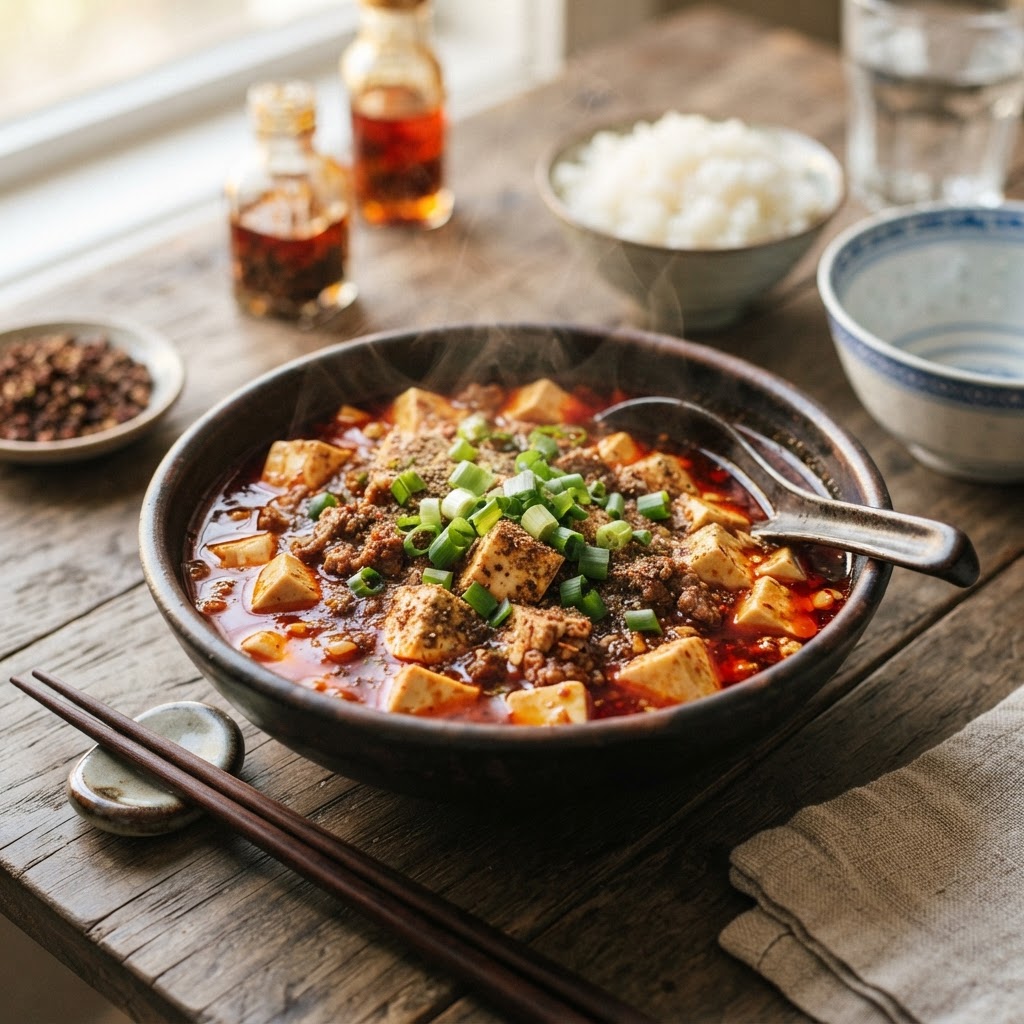
The Home Cook’s Guide to Sichuan Mapo Tofu: Mastering Doubanjiang and Chili Oil Ratios for Authentic Mala Heat
There is an undeniable magic that happens when the pungent, earthy aroma of fermented broad bean paste hits a blistering hot wok. For many home cooks, Sichuan cuisine feels like a distant, intimidating peak, often reserved for the professional kitchens of Chengdu or the high-end specialty restaurants in major metropolitan hubs. Mapo Tofu, the crown jewel of this fiery culinary tradition, is frequently misunderstood as a simple tofu dish drenched in chili sauce, when in reality, it is a complex symphony of textures and temperatures. The goal of this guide is to demystify the process, turning your home kitchen into a shrine of authentic mala heat. We aren't just making dinner; we are mastering the delicate balance between the numbing sensation of Sichuan peppercorns and the deep, savory umami of aged ingredients.
Many people are terrified of the "Mapo" label, thinking it requires a lifetime of experience to achieve that perfect, glossy, oil-slicked crimson finish. The truth is that while the dish demands respect for tradition, it is remarkably forgiving if you understand the fundamental chemistry at play. The sauce needs to cling to the cubes of tofu without turning them into a broken mess, and the beef—if you choose to use it—must be crisped to the point of nutty perfection. We will peel back the layers of the doubanjiang industry, explain why your chili oil might be lacking that professional depth, and walk you through the essential technique of "taming" your tofu so it holds its shape through the intense simmering process. By the end of this journey, you will realize that the best Mapo Tofu doesn't come from a restaurant; it comes from your own seasoned pan.
Stepping into the world of Sichuan cooking requires a shift in how you view heat. It is not about how much pain you can withstand, but rather how much complexity your palate can navigate before the mala—the combination of numbing and spicy—takes over. This dish is a lesson in patience and precise timing. You will learn how to coax the red oil out of the bean paste and why the order in which you layer your aromatics can make or break the final flavor profile. So, sharpen your cleaver, find your favorite wok, and prepare to elevate your home cooking to a level that will make even the most seasoned Sichuan chef nod in quiet approval.
Understanding the Soul: Doubanjiang and Chili Oil
At the heart of any authentic Mapo Tofu lies Pixian Doubanjiang, the fermented broad bean paste that serves as the foundation for almost all Sichuanese red-cooked dishes. If you are using a generic "chili bean paste" from a standard supermarket, you are missing the fermented, earthy soul that provides the dish's depth. Authentic Pixian paste is aged for months or even years, developing a dark, chocolatey color and an incredible depth of umami that supermarket versions simply cannot replicate. When you buy this, look for the word "Pixian" and ensure the list of ingredients is short, emphasizing the fermented broad beans and salt.
The second half of our flavor foundation is the chili oil, which provides the vibrant, glistening finish that makes Mapo Tofu visually arresting. Most home cooks mistakenly think that store-bought chili oil is sufficient, but for this dish, the oil needs to be freshly infused with aromatics. You want a profile that is smoky, slightly sweet, and bold enough to stand up to the numbing power of the Sichuan peppercorns. Mastering the ratio of these two components is where the "Blame The Chef" approach truly shines: we aren't just pouring in ingredients; we are building a sauce structure that stands firm.
The Science of Fermentation
Fermentation isn't just a trend; it is the engine of Sichuan flavor. The broad beans in Pixian Doubanjiang undergo a natural transformation where salt and time work together to break down proteins into amino acids. This is why the dish feels so "meaty" even if the portion of beef is small. When we fry this paste in oil at a moderate heat, we are essentially "waking up" these compounds, releasing trapped volatile oils that transform the dish from simple to transcendent.
"A great Mapo Tofu is not just about the spice; it is a masterclass in the layering of fermented base notes, where the bean paste is treated with the same reverence one would afford a fine wine or an aged balsamic vinegar."
The Tofu Hierarchy: Selection and Preparation
Selecting the right tofu is the first major hurdle for the home cook. While extra-firm tofu is easier to handle, it lacks the delicate, silken texture that allows the sauce to permeate the cubes. For an authentic Mapo Tofu, you need medium-firm or silken tofu. The goal is a contrast: the tofu should feel like custard on the tongue, while the minced beef and aromatics provide a necessary, slightly crunchy contrast in every bite. If you use tofu that is too soft, it will disintegrate into a porridge; if it is too firm, the sauce will simply slide off the surface.
The Blanching Technique
Before you even touch your wok, you must blanch your tofu in salted boiling water for about two to three minutes. This is a non-negotiable professional technique. It serves three purposes: it warms the tofu through, it removes that "raw soy" taste, and most importantly, it firms up the exterior of the cubes so they don't break apart during the final stir-fry. Think of it as a protective seal that keeps the integrity of the tofu intact while allowing the center to remain incredibly soft and creamy.
Cubing for Success
When you cube your tofu, aim for uniform pieces roughly 1.5 to 2 centimeters in size. Consistency is the secret to even cooking. If your pieces are uneven, the smaller ones will overcook and turn to mush while the larger ones will remain cold in the center. Use a very sharp knife and handle the tofu with the gentleness you would reserve for a delicate pastry. Once blanched, drain the water carefully and set the cubes aside in a colander, letting them rest and dry slightly.
The Aromatics: Ginger, Garlic, and the Green Onion Base
Sichuan cuisine is famous for its "fragrant foundation," usually consisting of ginger, garlic, and white parts of the green onion. In a standard stir-fry, these ingredients are tossed in for a quick flash-fry, but for Mapo Tofu, they need to be treated with a bit more intention. We want to sweat these aromatics in the residual oil left over from the meat and bean paste, allowing them to infuse the fat with their pungent oils. This is the stage where the kitchen should start to smell like a bustling street stall in Chengdu.
Fine Mincing
The texture of your aromatics matters. You should aim for a fine mince, not a coarse chop. If you leave large chunks of garlic, they will burn before the flavors have properly melded into the sauce. A fine mince ensures that every spoonful of the final dish contains a concentrated burst of flavor. I recommend using a heavy chef’s knife to mince your garlic and ginger until they almost reach a paste-like consistency, as this helps them dissolve into the sauce rather than standing out as separate, distracting textures.
The Role of Green Onions
There is a hierarchy to the green onion: the white parts are for the initial sauté, providing a sharp, oniony sweetness that forms the base of the sauce, while the vibrant green parts are reserved for the final garnish. This is a critical distinction. The green parts are far too delicate to survive the high-heat simmering of the sauce, and their bright, fresh notes would be lost completely. Save them for the very last second, right before you plate, to add a pop of color and a crisp, herbaceous finish that cuts through the heavy, oily richness of the sauce.
Mastering the Mala Numb: Sichuan Peppercorns
The Sichuan peppercorn is the hallmark of the mala flavor. It isn't actually a pepper at all, but the dried husk of the prickly ash shrub. Its primary quality is its ability to create a tingling, vibrating sensation on the lips and tongue, which effectively "numbs" the palate against the intensity of the chili heat. To get the best result, you must use high-quality, freshly toasted peppercorns. Pre-ground powder, which you find in most spice aisles, is usually stale and lacks the electrifying potency required for a truly authentic Mapo Tofu.
Toasting and Grinding
Start by dry-roasting your whole peppercorns in a cold wok over low heat. Shake them constantly until they darken slightly and become incredibly fragrant—usually about sixty seconds. Once toasted, let them cool before grinding them into a coarse powder. Do not turn them into a fine dust; you want little flecks of the spice throughout the dish. I personally prefer using a mortar and pestle to achieve an uneven, rustic texture that provides varying levels of intensity with every bite.
"The true brilliance of the Sichuan peppercorn is its role as a palate cleanser. By numbing the tongue, it allows you to experience the deep, complex heat of the chili oil without being overwhelmed, making the next bite just as exciting as the first."
The Final Act: The Simmer and the Starch
Once you have your aromatics, your meat, and your paste incorporated into a fragrant, bubbling mass, it is time to introduce the tofu. This is where most cooks fail—they stir too aggressively. You should gently fold the tofu into the sauce, perhaps nudging it with your spatula rather than stirring it in a circle. You want the sauce to surround every piece of tofu, coating it in a thick, vibrant red liquid. This is the moment when the dish transitions from a collection of ingredients into a cohesive unit.
The Cornstarch Slurry
The thick, glossy sauce that clings to the tofu is achieved through the use of a cornstarch slurry. Never add dry cornstarch directly to a hot liquid, as it will clump instantly. Mix one part cornstarch with two parts water in a small bowl until completely smooth. Add this to the wok in three separate stages, allowing the sauce to thicken slightly between each addition. This "three-stage" method ensures you have total control over the consistency, preventing the sauce from becoming gloopy or overly gummy.
The Flash-Fry Finish
In professional kitchens, there is a technique called the "blinding heat," where the chef turns the stove to maximum for the final thirty seconds of cooking. This flash-heat evaporates excess water and intensifies the flavor of the oil. As a home cook, be careful with this, but do try to keep the sauce at a steady simmer right up until the moment of service. The goal is to see a thin layer of red, shimmering chili oil floating on the surface of the sauce—that is the mark of a well-executed Mapo Tofu.
Troubleshooting: Why Is My Dish "Broken"?
If your Mapo Tofu looks grainy or the sauce has separated into an unappealing, watery mess, it usually comes down to one of two things: the heat was too high during the thickening stage, or the starch-to-water ratio was off. If the sauce looks "broken," it means the oil has detached from the starch emulsion. To fix this, you can try whisking in a tiny bit more slurry, or simply be more careful with your stirring next time. Remember: the tofu needs to stay in large, distinct blocks, not shattered fragments.
Managing Expectations
The most common mistake beginners make is trying to rush the process. Mapo Tofu is a dish that relies on the "low and slow" infusion of the aromatics and the "fast and furious" finish of the sauce. Don't be afraid to take your time during the bean paste-frying stage. If the paste isn't dark and fragrant, the final dish will taste metallic and raw. Trust your senses—the color should shift to a deep, dark red, and the oil should turn a brilliant, sunset orange.
The Beef Factor
If you are adding minced beef, ensure you brown it until it is almost crispy. This texture is vital because tofu is so soft; you need something that offers a bit of resistance against the teeth. If your beef is limp or gray, the dish will lack structure. Use a high-quality ground beef, ideally with a bit of fat, and don't be afraid to leave it in the pan for a few extra minutes until it reaches a dark, caramelized brown.
Final Thoughts
Mastering Mapo Tofu is more than just learning a recipe; it is about embracing the specific, bold, and unapologetic flavors of Sichuan province. It requires an understanding of how fermented ingredients like doubanjiang interact with heat, how the cooling sensation of the Sichuan peppercorn balances the intensity of the chili, and how the texture of a simple cube of tofu can be elevated through proper preparation. You are now equipped with the technical knowledge to navigate the nuances of this dish, from the initial blanching of your tofu to the final, vibrant dusting of numbing spice.
Do not be discouraged if your first attempt isn't perfect. Even the most legendary chefs spent years refining their technique, adjusting their ingredient ratios, and learning the specific "rhythm" of their wok. The beauty of cooking at home is that you have the time to experiment and find the specific balance that appeals to your palate. Perhaps you prefer yours a bit spicier, or maybe you enjoy an extra kick of ginger—the choice is yours. Once you have mastered these fundamentals, you will find that you are no longer following a recipe; you are cooking by instinct.
Remember, the kitchen is a space for exploration, not just routine. When you finally sit down to a bowl of Mapo Tofu that you have crafted from scratch, take a moment to notice the way the light reflects off the oil, the way the aroma hits your senses before the first bite, and the complex, numbing heat that settles on your tongue. That experience is why we cook, and that is why we are proud to call ourselves home chefs. Keep your wok seasoned, your aromatics fresh, and your passion for flavor ignited. The next time you find yourself craving that signature mala heat, you won't be reaching for a menu—you'll be reaching for your apron.
"A dish is only as good as the intention put into it. When you respect the ingredients—the fermented paste, the silken tofu, the stinging peppercorn—the food inevitably rewards you with depth and complexity that transcends the simplicity of the recipe."
If you find yourself struggling with the heat levels, remember that you can always adjust the amount of dried chili or the ratio of peppercorns. The "authentic" path is a guide, not a set of shackles. As you become more comfortable, try incorporating other textures, like a handful of finely chopped wood ear mushrooms or a sprinkle of toasted peanuts for an unexpected crunch. The goal of this guide is to give you a solid footing, but the ultimate expression of the dish belongs to you. Enjoy the process, share the results with those you love, and never stop questioning why the dish tastes the way it does. Happy cooking, and may your wok always be hot.

Get the Next Recipe
Weekly recipes, techniques, and gear picks — straight to your inbox.
