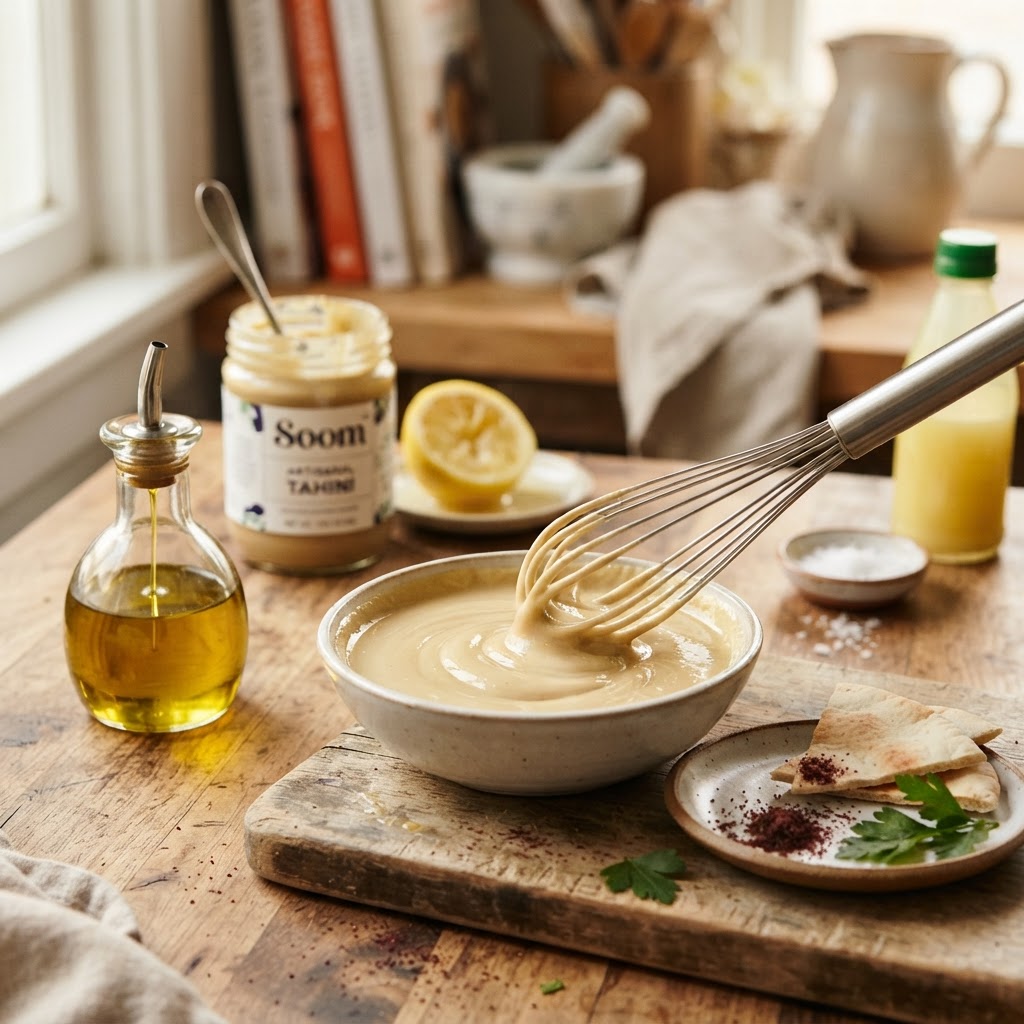
The Home Cook’s Guide to Tahini: Mastering Emulsification and Acid-to-Fat Ratios for Silky, Nutty Dips and Dressings
There is a quiet alchemy that occurs in the kitchen when you stop following recipes and start understanding the physics of your ingredients. For many home cooks, tahini is a shelf-stable afterthought, shoved behind the oversized jars of peanut butter and the forgotten spices, only retrieved when a specific hummus craving strikes. But in the professional kitchen, tahini is a cornerstone of flavor, a versatile paste that acts as both a binding agent and a powerhouse of complexity. To truly master the sesame seed is to unlock a spectrum of texture that can elevate everything from a roasted carrot salad to a decadent chocolate torte. When you look past the grit and separation often found in supermarket jars, you find an ingredient that demands respect and a basic understanding of emulsification.
The primary hurdle most cooks face with tahini is the persistent issue of "seizing" or the dreaded separation where the solids sink to the bottom and the oil pools aggressively on top. This is not a failure of the product, but rather a natural occurrence caused by the absence of chemical stabilizers, which is actually a sign of quality. Emulsification is the bridge between these two states; it is the process of forcing oil and water-based ingredients to live in harmony. By controlling your acid-to-fat ratios and utilizing mechanical force, you can transform a thick, stubborn paste into a pourable, ivory-hued elixir. This process is the foundational skill required to move from basic meal preparation to the kind of cooking that earns a reputation for silky, professional-grade results.
Mastering tahini is not merely about achieving a smooth consistency; it is about calibrating the palate. A great tahini sauce is a balancing act of nuttiness, bitterness, brightness, and salinity. When you add lemon juice, you aren't just adding flavor; you are altering the pH of the mixture, which physically changes how the proteins in the sesame seeds interact with the suspended oils. By learning to tweak these variables in real-time, you gain the ability to salvage sauces that have gone too thick or to revive those that have broken. Welcome to the deep dive into the world of sesame, where we stop blaming the ingredients and start mastering the science of the emulsification.
The Anatomy of Quality Tahini
Understanding what you are working with is the first step toward culinary success. At its most basic, tahini is simply roasted and ground hulled sesame seeds. However, the origin of those seeds and the temperature at which they were toasted drastically alter the final flavor profile. Ethiopian-grown seeds are often prized by chefs for their mild, nutty flavor and exceptionally high oil content, which makes for a smoother, less bitter paste. When shopping, look for jars where the oil hasn't completely solidified and the texture appears slightly fluid. If you find a jar that is rock hard at the bottom, don't despair—it just requires a bit of patience and heat to bring it back to life.
Assessing the Roast
The color of the tahini is your best indicator of its intended use. A light, golden tahini is typically more delicate, making it ideal for dressings, pastries, and subtle sauces. Conversely, a darker, deeply toasted tahini carries a robust, earthy punch that can stand up to hearty roasted vegetables or charred meats. When you are tasting your tahini straight from the jar, it should have a clean, nutty finish. If you notice a metallic or rancid note, it is likely that the oil has oxidized. Always store your tahini in a cool, dark place, and if you use it infrequently, consider keeping it in the refrigerator to prolong its shelf life, though be prepared to bring it to room temperature before you begin your emulsification process.
The Problem of Separation
When you see oil on top, do not pour it off. That oil is the essential fat that you need for your emulsion. To incorporate it effectively, use a heavy-duty butter knife or a small, sturdy spatula to scrape the bottom of the jar. You want to work the solids up into the oil gradually. If the jar is particularly stubborn, place the entire glass container in a bowl of warm water—roughly 100 to 110 degrees Fahrenheit—for about five to ten minutes. This will gently loosen the solids without cooking them. Once you have achieved a uniform, pourable consistency, stir it thoroughly before measuring. Consistency in your base ingredient ensures consistency in your final dish.
"The magic of tahini lies in the tension between its density and its potential for lightness. When you understand the ratio of acid to fat, you aren't just making a sauce; you are composing a symphony of texture that balances the heavy, nutty oil with the bright, sharp snap of citrus."
The Science of the Perfect Emulsion
An emulsion is essentially a fine dispersion of one liquid into another, and when dealing with tahini, you are working with a water-in-oil-in-water system. Tahini is inherently fatty. When you introduce an acidic liquid like fresh lemon juice, you are creating a new environment. If you add the lemon juice too quickly, the proteins in the tahini will react to the acid and cause the sauce to seize, becoming a thick, grainy, paste-like lump. This is the moment most home cooks panic and add more oil, which only worsens the situation. The secret is to add your liquid components—specifically cold water—slowly and in small increments.
The "Sizing Up" Technique
When your tahini "seizes" during the mixing process, it is actually a good sign—it means the emulsification process has begun but has been interrupted by an overload of liquid. To fix this, stop adding lemon juice or water. Take a moment to whisk the mixture vigorously. You will notice that as you whisk, the mixture will suddenly "break" into a smooth, creamy state. This transition is known in professional kitchens as the "magic point." From here, you can continue to add your thinners, such as ice-cold water, slowly. Using ice-cold water is a chef's trick: the temperature shock helps to tighten the emulsion, resulting in a whiter, silkier appearance.
The Role of Salt and Aromatics
Salt is not just a flavor enhancer; it is an active participant in the chemistry of your dressing. By adding your salt to the tahini before you add any liquid, you begin to break down the cellular structure of the ground sesame. This allows the oil to release more readily, creating a better base for your subsequent additions. If you are adding garlic, use a mortar and pestle to create a smooth, pungent paste with your salt. This prevents large chunks of garlic from disrupting the uniform texture of your sauce. Incorporating your aromatics into the base fat before introducing the acid ensures that the flavors are evenly distributed throughout the emulsion.
Mastering the Acid-to-Fat Ratio
The ratio of acid to fat is the most critical element of your culinary success. While there is no single "golden ratio" because every brand of tahini varies in oil content and seed density, a standard starting point for a balanced dressing is two parts tahini to one part acid. However, this is just a baseline. If you are looking for a dipping sauce for falafel, you might lean closer to a one-to-one ratio to ensure the sauce is bright and cutting. For a drizzling sauce for grilled fish, you might want more fat and less acid, leaning closer to a three-to-one ratio.
Calibrating Your Palate
The best way to learn these ratios is to taste as you go. Start with your thick, seasoned tahini paste and add your lemon juice one tablespoon at a time. After every tablespoon, pause to observe the texture and taste the profile. Does it feel heavy on the tongue? Does it lack a sharp finish? If it’s too heavy, add another dash of acid. If it becomes too acidic, you have moved past the point of balance, and you will need to add a touch more tahini to bring it back to center. Professional chefs often keep a small container of neutral tahini on the side specifically for these "corrections."
Integrating Alternative Acids
While lemon juice is the industry standard for its brightness and acidity, it is not the only option. Depending on the flavor profile of your meal, consider incorporating other acidic elements. Red wine vinegar provides a depth that pairs beautifully with earthy grains like farro or lentils. Sherry vinegar offers a subtle sweetness that works well when you are using tahini in a dessert or a roasted root vegetable salad. If you choose a more intense vinegar, remember that they are often more acidic than lemon juice; reduce your initial ratio accordingly to prevent overpowering the delicate, nutty essence of the sesame.
"A sauce is never finished until it has been balanced against the palate of the person eating it. Do not fear the spoon; tasting your emulsion at every stage of the process is the only way to move beyond the limitations of a written recipe."
Equipment Matters: From Whisks to Food Processors
The tools you use to emulsify your tahini will change the final texture. A hand-whisk is the preferred tool for small batches because it allows you to control the aeration and the speed of incorporation. By manually whisking, you can feel the exact moment the sauce turns from a grainy paste to a smooth emulsion. A food processor, on the other hand, is ideal for large batches or when you are adding high-moisture ingredients like chickpeas or herbs. However, be cautious with the food processor; the speed of the blades can sometimes heat up the emulsion too much, which can cause the oils to separate further rather than combine.
Hand-Whisking vs. Machine Processing
When using a food processor, start with the tahini and aromatics on a low setting. Drizzle your liquids in slowly through the feed tube while the machine is running. If the mixture gets too thick, pause the machine and scrape the sides of the bowl with a silicone spatula. Never rely solely on the blade to move the ingredients; the friction can lead to an uneven consistency. For those looking for the absolute silkiest results, a high-speed blender can be used, but ensure you are working with a sufficient volume—blenders often fail to emulsify small amounts because the ingredients simply spin around the blades without hitting the base of the container.
The Importance of Temperature
We have touched on cold water, but temperature control extends to all your equipment. In a professional kitchen, we often chill our stainless steel bowls in the freezer for ten minutes before beginning a delicate sauce. Cold tools help keep the fat stable during the vigorous whisking process. If you are in a warm kitchen, your tahini may lose its structure as the ambient heat melts the sesame fat. If your sauce begins to look greasy or oily, stop, pop the bowl in the fridge for five minutes, and then resume your emulsion. A patient approach always yields a more consistent result than trying to force a broken sauce back together with sheer effort.
Elevating Tahini: Beyond the Hummus Bowl
Once you have mastered the basic emulsification, the world of tahini becomes significantly wider. It is an incredibly versatile ingredient that can function as a dairy substitute, a rich binding agent in baking, or the heart of a savory glaze. Because tahini is high in protein and healthy fats, it can provide a "mouthfeel" that mimics cream or butter. This makes it an exceptional tool for vegan cooking, where you are looking for ways to add richness without animal products.
Tahini in Savory Applications
Consider using tahini as the base for a roasted vegetable glaze. By thinning a thick tahini paste with soy sauce, a touch of maple syrup, and ginger, you create a complex, umami-rich coating that caramelizes beautifully in a hot oven. The sesame solids toast further as they roast, adding a layer of crunch that contrasts with the softness of the vegetables. When applying this, brush it on during the last ten minutes of cooking to prevent the sugars in the syrup from burning. The result is a professional-level side dish that highlights the versatility of your mastery.
Tahini in Sweet Applications
In the pastry department, tahini behaves much like almond butter. It is dense and flavorful, making it perfect for cookies, blondies, and even ice cream bases. When baking, remember that tahini is oil-heavy. You may need to slightly reduce the amount of butter or oil in your standard recipe to account for the fats coming from the sesame. Because tahini has a slightly bitter edge, it pairs exceptionally well with dark chocolate, sea salt, and citrus zest. Use these complementary ingredients to cut through the richness of the tahini and create a balanced dessert that feels sophisticated and thoughtful.
Troubleshooting the Broken Sauce
Even the most experienced chefs encounter a broken sauce. If your emulsion fails—if you see oil floating on top of a grainy, separated mess—do not pour it down the drain. A broken sauce is simply a culinary opportunity. The most reliable way to fix a broken tahini emulsion is to start a "rescue base." In a clean bowl, add a tablespoon of fresh, smooth tahini. Very slowly, drip your broken, separated mixture into the fresh tahini, whisking constantly as if you were making a mayonnaise. The fresh, structured proteins will act as an anchor for the broken ingredients, pulling them back into a cohesive, emulsified state.
Recognizing the Point of No Return
There are instances where a sauce is beyond repair, usually if it has been exposed to extreme heat or if the ingredients have spoiled. If your tahini smells acrid or sour, or if the oil has developed a tacky, glue-like consistency, it has likely gone rancid. Rancid tahini cannot be emulsified into a pleasant sauce. Always perform a sensory check before you begin. A quality jar of tahini should smell fresh and earthy; if it smells like old crayons or cardboard, it’s time to buy a new jar. Never compromise on the base, as your emulsification techniques will only highlight the quality—or lack thereof—of your starting ingredients.
Storage for Longevity
Once you have created your perfect batch of sauce, store it in an airtight glass container. Plastic containers tend to retain odors, which can infiltrate your delicate sesame sauce. Keep your finished dressings in the refrigerator for up to five days. Note that most tahini-based sauces will thicken significantly when chilled due to the fat content. Before serving, let the sauce sit on the counter for ten to fifteen minutes to return to room temperature, or whisk in a tiny splash of warm water to bring it back to a pourable consistency. Keeping your sauce at the correct serving temperature is the final step in ensuring the texture remains silky and luxurious on the plate.
Final Thoughts
Mastering tahini is a journey that moves through the science of emulsions, the rhythm of whisking, and the precise calibration of flavor. It is a lesson in patience and observation. When you choose to step away from the pre-made, sugar-laden jars found in the center aisles of the grocery store and instead lean into the raw, powerful potential of high-quality sesame paste, you are doing more than just following a technique; you are taking control of your kitchen. Every time you whisk a sauce from a broken state into a silky, ivory perfection, you are building the intuition that separates the home cook from the master.
Remember that the "Blame The Chef" philosophy is built on the belief that culinary failure is simply data. If your sauce seizes, you have learned the limits of your acid ratio. If it is too thin, you have learned about the influence of water content. If it is too bitter, you have learned the importance of seed sourcing and temperature. Each batch brings you closer to an effortless mastery where these measurements become second nature. You are no longer looking at a jar of tahini as a stubborn, separated ingredient; you are looking at a blank canvas ready to be transformed by your hands.
As you continue to experiment, keep your ratios in your notebook, but keep your palate at the center of the process. Whether you are dressing a simple salad, glazing a piece of salmon, or folding tahini into a rich chocolate batter, remember that the emulsion is the heartbeat of your dish. It binds the flavors, creates the mouthfeel, and elevates the simple act of preparing food into an art form. So, go back to your pantry, reach for that jar of tahini, and trust the process. The silky, nutty perfection you are striving for is well within your grasp, provided you are willing to slow down, whisk with intention, and let the science of the kitchen guide your hand. Stay curious, stay precise, and keep cooking with confidence.
Get the Next Recipe
Weekly recipes, techniques, and gear picks — straight to your inbox.
