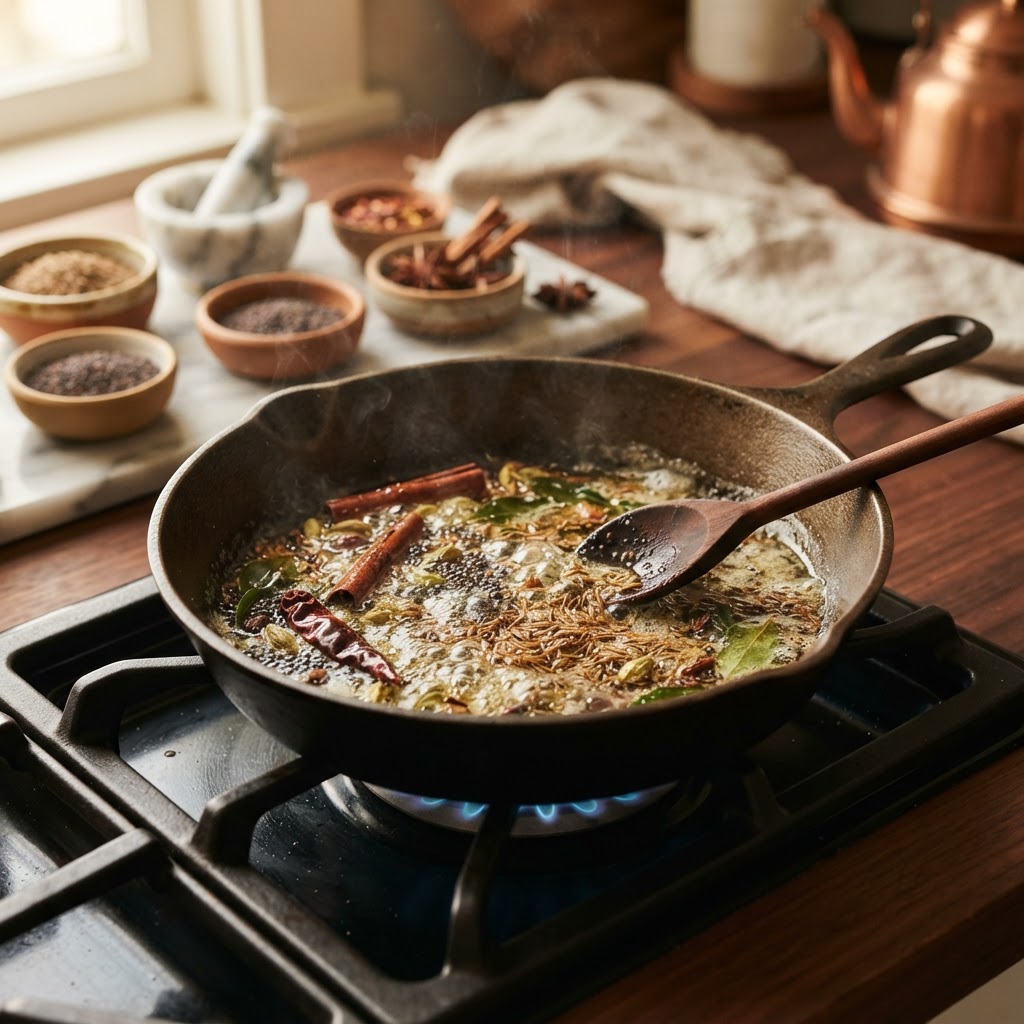
The Home Cook’s Guide to Tempering Spices: Mastering Bloom and Heat to Unlock Deeper Flavor Profiles
There is a moment in the kitchen that separates the mundane meal from the truly transformative experience, and it almost always happens in the first sixty seconds of cooking. You have your mise en place ready, your pan is shimmering with a healthy glug of oil, and the air is about to be filled with the intoxicating aroma of waking spices. For many home cooks, the act of adding spices to a pan is a hurried, panicked dash to avoid burning the ingredients, but it is actually a precise chemical symphony. When you introduce dry spices to fat, you are engaging in a culinary technique known as tempering, or "blooming," which is the secret gatekeeper to restaurant-quality depth. By understanding how to control heat and timing, you shift from simply seasoning your food to building a complex, three-dimensional flavor architecture that permeates every grain of rice or fiber of protein.
Think of spices as locked treasure chests; their essential oils are trapped behind rigid cell walls that remain largely dormant when spices are simply tossed into a simmering sauce or a cold marinade. Water-based cooking, such as boiling or steaming, acts as a solvent for water-soluble compounds, but it does very little to extract the volatile aromatics that define the character of cumin, coriander, turmeric, or cardamom. Fat, however, is a non-polar solvent that acts as a bridge, pulling these flavor-dense oils out of the spice and dispersing them throughout your dish. This process does not just provide a surface-level seasoning; it creates a fragrant medium that coats your ingredients, ensuring that the flavor profile remains consistent from the first bite to the last. Mastering this technique is the single most effective way to elevate your home cooking, regardless of your skill level or the type of cuisine you prefer.
If you have ever felt that your homemade curries, stews, or roasted vegetables lacked that "certain something" found in your favorite restaurants, the answer almost certainly lies in the bloom. Professional chefs often treat spice management with the same reverence they reserve for searing a steak or emulsifying a delicate butter sauce. It requires patience, a keen eye on the color of your aromatics, and a willingness to trust your olfactory senses over a kitchen timer. In this guide, we will break down the chemistry, the methodology, and the nuances of tempering spices so that you can confidently move past basic recipes and begin improvising with purpose. Let’s head to the stovetop, turn up the heat, and unlock the dormant potential hidden within your spice rack.
The Chemistry of Fat and Essential Oils
The primary reason we bloom spices is solubility. Most of the compounds that give spices their distinct flavor—such as the thymol in ajwain or the cinnamaldehyde in cinnamon—are lipophilic, meaning they have an affinity for fats rather than water. When you throw ground spices directly into a watery base like stock or tomato puree, the aromatics remain largely trapped within the spice particle itself. By introducing these particles to a hot fat—whether it is clarified butter, neutral grapeseed oil, or fragrant coconut oil—you essentially extract those oils into the fat, creating a flavored vehicle that carries the seasoning throughout the entire dish.
Understanding Volatile Aromatics
Spices are essentially dried botanical materials that contain complex chemical structures. When they are harvested, dried, and ground, they begin to lose their potency over time as these volatile compounds evaporate. Heat acts as a catalyst in this process; it breaks down the cellular structure of the spice and forces the essential oils into the surrounding fat. This is why a toasted spice smells infinitely more potent than a raw one. You are effectively performing a high-speed infusion, creating a "spice-infused oil" that acts as the backbone of your dish's flavor profile.
The Role of Temperature
Control is everything when tempering. If the fat is too cold, the spices will simply sit there, absorbing the oil and becoming greasy without releasing their fragrance. If the fat is too hot, you will scorch the spices, causing them to turn bitter and acrid almost instantaneously. Aim for a medium-low heat, where the oil shimmers but does not smoke. A common professional rule of thumb is to maintain an oil temperature between 250°F and 300°F (120°C to 150°C). At this temperature, the essential oils are released safely without damaging the delicate chemical structures that provide the sweet or earthy notes you are looking to highlight.
"Blooming spices is not merely about heating; it is an extraction process. By treating your fat as a flavor delivery system, you transform the texture of your dish from flat to multidimensional."
Whole vs. Ground: The Timing Divide
One of the most common mistakes home cooks make is treating whole and ground spices as if they perform identical roles in the pan. They do not. Whole spices are hearty and require a longer, slower approach to draw out their essence, whereas ground spices are fragile, powder-fine, and prone to burning within seconds. Recognizing the difference is the first step toward mastery in the kitchen.
The Case for Whole Spices
Whole spices—think cumin seeds, black peppercorns, mustard seeds, cloves, and cardamom pods—are designed to be tempered at the beginning of the cooking process. Because they are dense, they need to sizzle in the oil for 30 to 90 seconds to fully "wake up." You will know they are ready when you see them dance in the pan and, more importantly, when the scent becomes intense and changes from raw to toasted. If you are using mustard seeds, wait for them to pop; that audible signal is the plant’s way of saying it has released its oils.
Managing Ground Spice Fragility
Ground spices are a different beast entirely. Because they have a high surface-area-to-volume ratio, they can go from "blooming" to "burnt" in less than five seconds. When using powders like turmeric, chili powder, or cumin, add them to the oil only after the onions and garlic have softened. Even then, they should only be in the pan for 15 to 30 seconds before adding a liquid to stop the cooking process. If you are worried about burning them, mix the spices with a splash of water, yogurt, or tomato juice to create a "spice paste" before hitting the hot pan. This prevents the delicate particles from touching the direct heat of the metal, ensuring they cook through via steam and fat rather than frying.
The Importance of the "Bloom" Sequence
In Indian, Middle Eastern, and North African cuisines, the sequence in which ingredients hit the pan is not accidental; it is a carefully calibrated choreography. You should always prioritize the ingredients that take the longest to extract flavor while layering in the more delicate aromatics toward the end of the tempering process.
The Hierarchy of Infusion
Avoiding the Bitter Trap
If you ever find that your dish tastes metallic or overly bitter, you have likely scorched your ground spices. Bitterness is the physical manifestation of burnt plant matter. If this happens, it is incredibly difficult to fix because the bitter oils have already been infused into your cooking fat. The best insurance policy is to have your liquids pre-measured and ready to pour the moment the spices hit the pan. If you are ever in doubt, err on the side of under-toasting rather than over-toasting; you can always cook a dish longer, but you cannot un-burn a spice.
Choosing the Right Fat for the Job
Your choice of fat is not just about lubrication; it is a flavor carrier that will harmonize with the spices you are blooming. Different fats have different smoke points and flavor profiles, which significantly impacts the final outcome of your tempered dish.
High-Heat vs. Neutral Oils
For dishes where you want the spices to shine without the fat interfering, reach for a neutral oil like grapeseed, avocado, or high-quality vegetable oil. These have high smoke points, allowing you to reach that 300°F sweet spot without worrying about the oil breaking down. Conversely, if you are making a traditional South Asian dal or a curry, using ghee (clarified butter) is non-negotiable. Ghee has a distinct, nutty, toasted flavor that complements the earthiness of turmeric and cumin in a way that vegetable oil simply cannot.
The Nuance of Saturated Fats
Fats like coconut oil or lard carry spices differently because of their chemical composition. Coconut oil, for instance, pairs beautifully with seeds like fennel and coriander, adding a slightly sweet, floral finish that elevates the spice profile. When choosing your fat, consider the destination of the dish. If you are building a spicy, heavy-hitting flavor profile, steer toward fats with more character; if you are looking for clarity and freshness, stick to neutral, high-quality refined oils.
"A kitchen is only as good as the medium in which its flavors are carried. Treat your fat as an active ingredient, not just a way to keep your food from sticking to the pan."
Troubleshooting and Pro-Tips
Even the most experienced home cooks encounter issues with spice tempering. Perhaps you added too much, or maybe your heat was a hair too high. Understanding how to rescue a dish—or prevent a disaster—is part of the learning curve that every professional chef has endured.
The "Spice Paste" Technique
If you are nervous about your ground spices burning, adopt the slurry method. Take your measured ground spices (turmeric, chili, coriander, etc.) and whisk them into two tablespoons of water or yogurt. When you add this mixture to your hot pan, the water will evaporate, and the spices will gently cook in the residual fat without the risk of scorching. This creates a deeply integrated paste that forms the perfect base for any braise or stew.
Knowing When They Are Done
The best way to judge the bloom is through your nose. There will be a distinct, visceral moment where the scent of the raw spice disappears and is replaced by a warm, rounded, and powerful aroma. This is the "bloom point." If you are using whole seeds, they will stop crackling once they have finished releasing their oils. If you are using ground spices, the color of the spice will shift—usually deepening—and the oil around the spice will take on the hue of the turmeric or chili you are using.
Storage and Freshness
No amount of technique can fix stale spices. Spices should be kept in a cool, dark place away from the stove to preserve their essential oils. If you find your spices are more than six months old, you may need to bloom them slightly longer to get any effect, or replace them entirely. Buying whole spices and grinding them in a small coffee or spice grinder just before you cook will provide a level of potency that pre-ground store-bought spices simply cannot compete with.
The Cultural Context of Tempering
It is important to acknowledge that the technique of tempering is an ancient practice deeply rooted in global food culture. Known as tadka in India, chhonk in Pakistan, or baghaar in various other regions, this technique represents a sophisticated understanding of botanical chemistry. By exploring these traditions, you gain more than just a recipe; you gain a philosophy of cooking that prioritizes the enhancement of raw ingredients through heat and fat.
Global Variations
While we focus on the technical execution, remember that each culture has its own "magic ratio" of spice to fat. In some traditions, the spice oil is prepared at the very start of the dish, forming the "mother base." In others, the tempered spices are drizzled over the finished dish at the very last second, providing a vibrant, aromatic hit of heat and flavor that greets the diner before the first bite. Experimenting with both "the foundation method" and "the finishing method" will drastically change how your dishes are perceived.
Embracing the Intuition
The beauty of cooking is that it eventually becomes an extension of your own sensory awareness. Once you have bloomed spices a dozen times, you will stop looking at the clock. You will simply feel the heat of the pan and smell the shift in the air. That intuitive shift is where the true joy of being a home cook resides. Do not be afraid to fail, and do not be afraid to push the limits of your spice rack.
Final Thoughts
Mastering the art of tempering spices is a journey of sensory discovery. It is not about adhering to strict, clinical rules but about learning to interact with the raw materials in your pantry in a way that respects their inherent qualities. By focusing on the interplay between fat, temperature, and the specific blooming requirements of whole versus ground spices, you unlock a depth of flavor that is unattainable through water-based cooking alone. Remember that your kitchen is a laboratory, and your sense of smell is your most important tool.
Do not allow the fear of burning your spices to prevent you from blooming them; instead, prepare your workspace, keep your liquids within arm's reach, and trust the process. As you continue to experiment with different fat-and-spice combinations, you will find that your cooking takes on a signature complexity that defines you as a chef in your own home. Whether you are tempering mustard seeds in ghee for a fragrant lentil stew or blooming chili powder in avocado oil for a vibrant taco filling, you are participating in a tradition that spans centuries and continents.
"Blame The Chef" is built on the belief that everyone can cook at a professional level if they are given the right techniques. Tempering is, without question, one of the most powerful tools in that arsenal. Keep your spices fresh, keep your heat under control, and above all, keep cooking with curiosity. Every time you step into the kitchen, you have a fresh opportunity to bloom something extraordinary. So, gather your jars, heat your pan, and start building those layers of flavor—your future meals will thank you for it. Happy cooking, and may your spices always be perfectly bloomed.

Get the Next Recipe
Weekly recipes, techniques, and gear picks — straight to your inbox.
