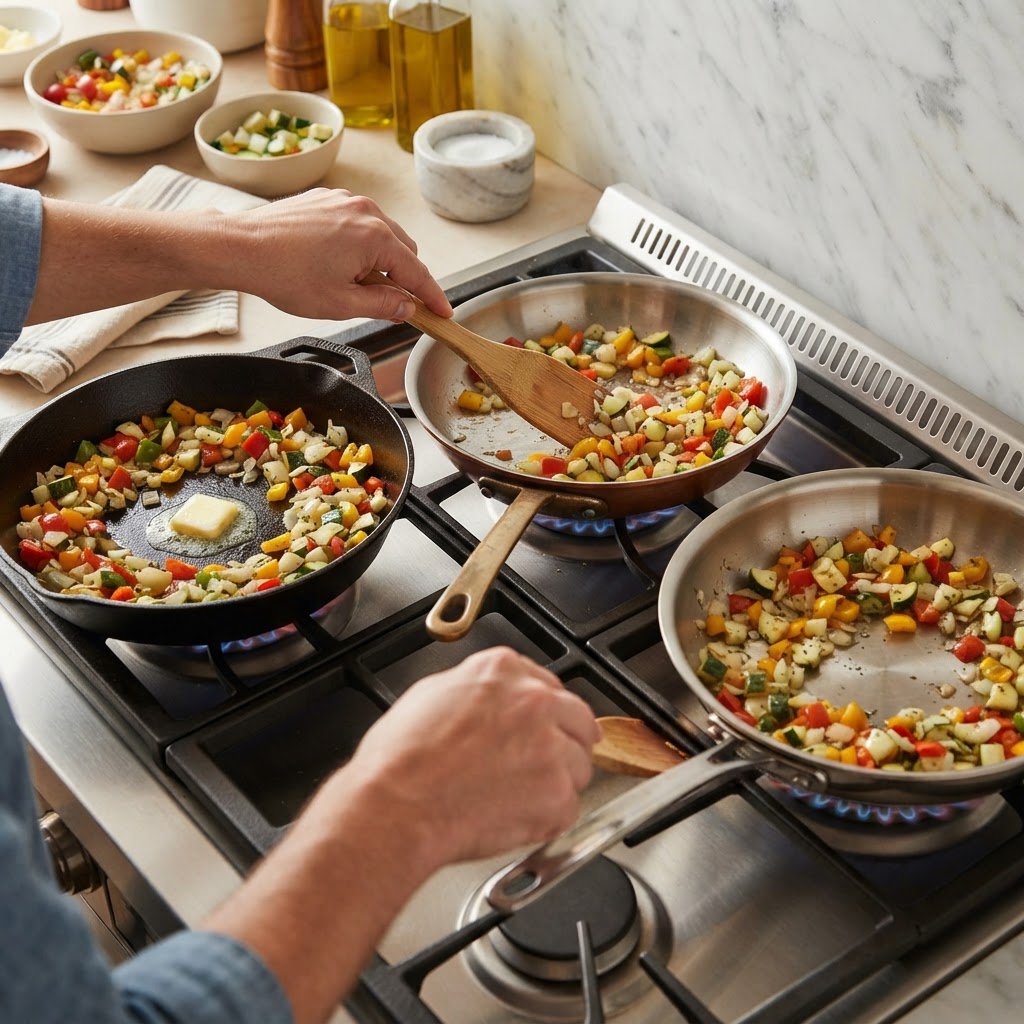
The Home Cook’s Guide to Thermal Conductivity: How Vessel Material Affects Cooking Speed and Evenness
Walk into any professional kitchen, and you will notice one thing immediately: the wall of copper and stainless steel hanging over the station. It isn't just for show or to satisfy some rustic aesthetic; it is a declaration of intent regarding heat management. As home cooks, we often prioritize the look of a pan or the price tag, but the underlying physics of thermal conductivity dictates everything from the sear on your scallops to the delicate curdling of your morning scrambled eggs. Understanding why your pan behaves the way it does is the single most important step in graduating from a recipe-follower to an intuitive cook who understands the soul of the kitchen.
Thermal conductivity is essentially the measure of a material's ability to transfer heat from a source to your food. Some materials, like copper, are eager to share heat, responding almost instantly to a turn of the stove dial. Others, like stainless steel, are stoic and slow, acting as a sturdy, reliable container that holds onto heat once it finally reaches the desired temperature. When you choose a pan, you are choosing a partner in your culinary process, one that will either amplify your skills or fight against your best intentions. If you have ever wondered why your onions brown instantly in one pan but turn to a sad, watery mush in another, you have already encountered the invisible, powerful force of thermodynamics.
In this guide, we are going to peel back the layers—literally—of modern and traditional cookware to reveal how your vessel material dictates the fate of your dinner. We will explore the strengths and weaknesses of copper, aluminum, stainless steel, cast iron, and carbon steel, while providing the practical wisdom necessary to select the right tool for every specific task. By the end of this journey, you will no longer blame your stove or your ingredients for a uneven sear; you will understand exactly which pan is the right weapon for the job. Let us dive into the science of the kitchen and learn how to master the element of heat.
The Science of Heat Transfer and Conductivity
At its core, cooking is a transfer of energy. When we place a vessel on a flame, electromagnetic energy from the gas or electricity is converted into thermal energy, which then travels through the molecular lattice of your pan. High-conductivity materials possess a high density of free electrons that allow heat to zip through them with minimal resistance. This is why a copper pan will heat up in seconds, whereas a thick slab of stainless steel might take several minutes to distribute that same energy across its surface.
Why Conductivity Matters for Evenness
The biggest enemy of the home cook is the hot spot. A hot spot occurs when a material cannot conduct heat away from the flame quickly enough to dissipate it across the entire base of the pan. If you are searing a steak in a thin, low-conductivity pan, the area directly over the burner will scorch the meat, while the edges remain cool and gray. Even heating is the hallmark of a skilled cook, and it is facilitated by materials that can "spread" the energy horizontally before passing it vertically into the food.
The Role of Specific Heat Capacity
While conductivity governs how fast heat moves, specific heat capacity governs how much heat a pan can store. Think of cast iron as a massive warehouse of thermal energy; it is slow to heat up because it requires so much energy to get the molecules moving, but once it is hot, it stays hot even when you drop a cold, refrigerated protein into it. Stainless steel, by contrast, has lower storage capacity, meaning the pan temperature will drop significantly the moment you add cold food, which can lead to steaming rather than searing.
"The true secret to professional cooking isn't just the quality of your ingredients or the sharpness of your knife; it is the relationship between your heat source and the vessel you choose to conduct that energy."
Copper: The Gold Standard of Thermal Response
For centuries, copper has been the darling of professional chefs. With a thermal conductivity rating roughly 20 times higher than stainless steel, copper is unparalleled in its precision. If you are making a delicate hollandaise sauce or a sugar-based caramel, copper is the only material that allows you to make split-second adjustments to temperature without the risk of scorching.
The Maintenance of Copper
The caveat with copper is, of course, maintenance. Pure copper reacts with acidic ingredients, which can leach metallic flavors into your food and potentially cause toxicity if not handled correctly. This is why modern copper cookware is almost always lined with a thin layer of stainless steel or tin. When buying copper, look for thick gauge—anything less than 2mm is essentially decorative.
When to Utilize Copper
Use your copper pans for tasks that require high-precision heat control:
Emulsions:* Making beurre blanc or hollandaise.
Sugar work:* Caramelizing sugar or tempering chocolate.
Sautéing delicate vegetables:* Where you need the pan to respond immediately to a reduction in heat to prevent burning.
Risotto:* Maintaining the precise, gentle simmer required for starches to release correctly.
The Versatility of Stainless Steel and Cladding
Stainless steel is the workhorse of the modern home kitchen. It is non-reactive, durable, and dishwasher safe, making it a dream for daily use. However, stainless steel itself is a terrible conductor of heat. If you bought a pan made of 100% stainless steel, you would have a nightmare of hot spots and uneven cooking. This is why high-end pans utilize cladding—sandwiching highly conductive aluminum or copper between two layers of stainless steel.
Understanding Clad Construction
When shopping, you will see terms like "tri-ply" or "5-ply." This refers to the layers of metal bonded together. A standard tri-ply pan usually consists of a stainless-steel exterior (for induction compatibility and durability), an aluminum core (for fast heat conductivity), and a stainless-steel interior (for non-reactive food contact). This combination gives you the best of both worlds: the responsiveness of aluminum and the safety and durability of steel.
Techniques for Stainless Steel Success
The Leidenfrost Effect:* Always preheat your pan until a drop of water dances across the surface like a ball of mercury. This indicates the pan is hot enough to prevent food from sticking.
Fat Application:* Once the pan is at the right temperature, add your oil and allow it to shimmer before adding your ingredients.
Deglazing: Because stainless steel encourages the Maillard reaction*, use the fond—the browned bits stuck to the bottom—by adding wine or stock to create a pan sauce.
Cast Iron: The Heat Battery of the Kitchen
Cast iron is the antithesis of the copper pan. It is low-conductivity, high-storage, and relatively inexpensive. Because of its massive density, it takes a long time to heat up, but it maintains that heat through almost anything you throw at it. If you are searing a thick ribeye, cast iron is the superior choice because it does not suffer from the "temperature crash" that thinner pans experience when cold meat hits the surface.
Seasoning and Maintenance
The unique property of cast iron is its polymerized oil layer, also known as seasoning. This layer provides a natural, semi-non-stick surface that improves over time. To maintain this, never scrub your cast iron with harsh soaps or leave it to soak in the sink. Always dry it immediately and apply a thin layer of neutral oil to prevent oxidation, or rust.
The "Heat Battery" Technique
When using cast iron, you must learn to "preheat for the long haul."
"A well-seasoned cast iron skillet is a family heirloom that only gets better with every decade of use; it is a tool that records the history of every meal you have ever cooked."
Carbon Steel: The Hybrid Hero
Carbon steel is often overlooked by home cooks, yet it is the material of choice for the majority of line cooks in professional restaurants. It shares many characteristics with cast iron—it is durable, it requires seasoning, and it builds up a non-stick patina—but it is significantly lighter and more responsive to heat changes. If you want the performance of cast iron with the agility of stainless steel, carbon steel is your best bet.
Why Pro Chefs Choose Carbon Steel
Carbon steel pans are usually thinner than cast iron, meaning they don't hold as much heat, but they respond to the burner much faster. This makes them ideal for stir-fries, omelets, and seared fish where you need to be able to move the pan on and off the heat quickly to maintain temperature control. Because they are lighter, they are also far easier to use for the "toss" technique common in French-style sautéing.
Proper Carbon Steel Care
Initial Prep:* Most new carbon steel pans come with a protective wax coating that must be scoured off with hot, soapy water before the first use.
Blueing:* Many enthusiasts perform a "blueing" process with high heat to create an initial layer of iron oxide that helps the seasoning bond better.
Daily Care:* Like cast iron, avoid the dishwasher. If you accidentally scrape off the seasoning with an acidic sauce (like tomato or wine), do not panic; simply re-oil and continue cooking.
Non-Stick Surfaces: When to Use Them
Non-stick pans, typically made of aluminum with a PTFE (Teflon) coating, are designed for one thing: convenience. Because the coating is sensitive to high heat, these pans should never be used for searing or high-temperature roasting. High heat will cause the coating to degrade, releasing potentially harmful fumes and ruining the pan's surface.
The Role of Aluminum in Non-Stick
The base material of a good non-stick pan is almost always heavy-gauge aluminum. Because aluminum conducts heat so efficiently, these pans heat up rapidly, which is exactly what you want for delicate, quick-cooking foods. Use these tools exclusively for tasks where sticking is a major concern and heat management is low-to-medium.
The "Rules of the Road" for Non-Stick
Summary: Matching the Material to the Meal
To become a master of your kitchen, you must treat your pans like a musician treats their instruments. You would not use a tuba to play a violin concerto, and you shouldn't use a delicate copper saucier to sear a four-pound roast. By understanding how the physics of the material affects the outcome of your food, you take the guesswork out of the culinary process.
Quick-Reference Selection Guide
For High-Heat Searing:* Cast Iron (for heat retention) or Carbon Steel (for heat responsiveness).
For Sauces and Emulsions:* Copper (lined) or Tri-ply Stainless Steel (for gentle, even heating).
For Daily Sautéing:* Tri-ply Stainless Steel.
For Eggs and Delicate Proteins:* Non-Stick Aluminum or well-seasoned Carbon Steel.
The Impact of Induction
If you use an induction cooktop, your material choices are strictly limited to ferromagnetic metals. Copper, aluminum, and certain grades of stainless steel without a magnetic base will not work. Always look for the induction-ready symbol on the bottom of the pan. Because induction heats the vessel directly, using a high-quality clad pan is more important than ever to ensure the energy is spread evenly across the surface.
"Cooking is an act of translation; you are translating the energy of the burner into the sensory experience of a meal. The pan is your translator, and a better translator always leads to a clearer, more successful result."
Final Thoughts
The path to becoming a better cook is rarely found in buying a more expensive ingredient; it is usually found in mastering the tools you already have. When you understand that a pan is not just a container, but an active participant in the thermal physics of your meal, your perspective shifts. You stop "blaming the chef" for a burnt edge or a raw center and start looking at the chemistry of the pan.
You now know that stainless steel is your reliable, non-reactive friend for braises and pan sauces. You know that cast iron is your long-distance runner, holding heat for the most intense sears. You know that copper is your delicate artist, responding to the slightest change in your intent. By curating your kitchen with intention and learning how each material breathes and holds heat, you unlock a level of consistency that was previously impossible.
Go back to your stove tonight with this new knowledge. Experiment with how your different pans react to the same burner setting. Notice the time it takes for water to reach a boil in a thick stainless steel pot versus a thin aluminum one. Pay attention to how long the pan stays hot after you turn the flame off. These small observations will compile into a deep, intuitive knowledge base that will serve you for a lifetime. Happy cooking, and remember: the heat is your tool, but the pan is your partner. Keep them both in high regard, and your kitchen will never be a place of frustration again.


Get the Next Recipe
Weekly recipes, techniques, and gear picks — straight to your inbox.
