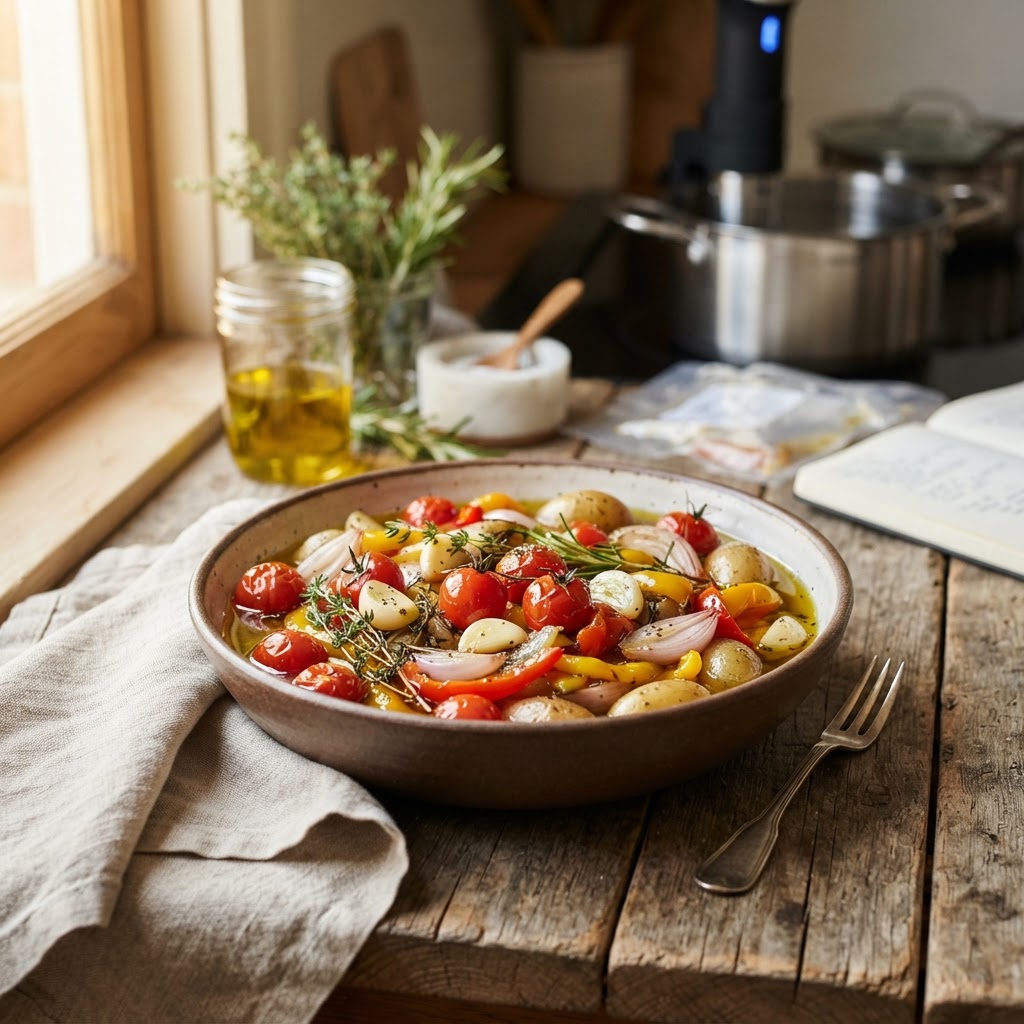
The Home Cook’s Guide to Thermal Processing: Mastering Low-Temperature Confit for Tender, Flavor-Dense Vegetables
Cooking is often misunderstood as a frantic race against the clock, a high-heat scramble to sear, sauté, and char before the dinner bell rings. We are conditioned by television chefs and restaurant kitchens to equate intensity—high flames, smoking pans, and rapid motion—with flavor development. However, some of the most profound culinary transformations happen in the quiet, gentle warmth of a low-temperature environment. When we step away from the tyranny of the sear, we enter the realm of confit, a preservation and cooking technique that relies on the slow infusion of fat and heat. This guide is designed to shift your perspective from "fast and furious" to "slow and steady," ensuring that every vegetable you prepare becomes a masterpiece of texture and density.
At its core, low-temperature confit is about patience and precision, turning simple garden produce into silken, flavor-packed ingredients that can anchor any meal. By submerging vegetables in oil or butter and maintaining a temperature significantly below boiling, we protect the integrity of their cell walls while coaxing out natural sugars and essences. You will find that this method allows for a uniform cook that is physically impossible to achieve with a grill or an oven roast, where the exterior often suffers before the interior is tender. It is a forgiving process, one that rewards the home cook with a luxury product that seems far more complicated than it actually is. As we delve into the science and art of this technique, you will learn to harness fat as a medium for flavor, creating textures that feel like velvet on the palate.
In the following pages, we will explore the specific equipment, the chemistry of lipids, and the precise temperature ranges required to master the art of vegetable confit. Whether you are aiming for the perfect, buttery garlic clove, the ethereal sweetness of a slow-cooked heirloom tomato, or the earthy depth of a confit fennel bulb, the principles remain the same. We are not just cooking; we are engaging in a slow culinary extraction that intensifies flavor by reducing moisture and replacing it with the rich, aromatic fat of your choice. Forget the chaos of the high-heat kitchen and embrace the tranquility of the low-temperature bath. Your patience will be rewarded with a depth of flavor that is simply not attainable through traditional methods, proving once and for all that sometimes, the best way to cook is to barely cook at all.
Understanding the Science of Lipids and Vegetable Cellular Structure
The Role of Fat as a Heat Transfer Medium
When we submerge a vegetable in oil, we are utilizing a medium that transfers heat much more evenly than air. Unlike an oven, where hot spots and dry air can cause rapid dehydration and scorching, a fat bath creates a protective barrier. The fat fills the microscopic gaps within the vegetable, effectively poaching it in a medium that adds richness while preventing the vegetable from losing its structural integrity too quickly. The lipid profile of your oil—whether it is extra virgin olive oil, clarified butter, or even a neutral grapeseed oil—will influence the final flavor, but the primary goal is the creation of an environment where temperature control is absolute and consistent.
Cellular Softening and Pectin Breakdown
The magic of confit lies in the degradation of pectin, the complex carbohydrate that acts as the "glue" holding vegetable cells together. At high temperatures, pectin breaks down rapidly, leading to mushy or overcooked results that lose their shape. By keeping our temperature steady between 160°F and 190°F, we allow the pectin to soften gradually, resulting in a vegetable that is tender to the bite but still holds its form perfectly. This is the hallmark of a professional confit: a texture that is simultaneously soft, succulent, and structurally intact, offering a luxurious mouthfeel that highlights the inherent quality of the produce.
"The secret to the perfect confit is not found in the speed of the flame, but in the restraint of the temperature. When you slow the heat, you allow the ingredient to become the best version of itself, bridging the gap between raw freshness and caramelized complexity."
Essential Equipment for the Confit Home Chef
Precision Temperature Control
To achieve consistent results, a standard stovetop burner is rarely enough. The fluctuations of a flame or electric coil can cause the oil temperature to swing wildly, which ruins the delicate balance of the process. I highly recommend using an immersion circulator (sous-vide machine) if you want absolute perfection, but a heavy-bottomed Dutch oven paired with a high-quality digital probe thermometer is the traditional path. The Dutch oven provides superior thermal mass, meaning that once the oil is heated to the target temperature, it will hold that heat with minimal intervention, protecting your vegetables from the uneven spikes of a thinner vessel.
Selecting the Right Fats
Not all fats are created equal when it comes to long-duration low-temperature cooking. You want a fat with a stable smoke point, though since you are cooking well below the danger zone of burning, you have more flexibility than with deep frying. Extra virgin olive oil is the classic choice for vegetables like tomatoes, garlic, and peppers due to its robust flavor profile. If you want a more neutral background, grapeseed oil or refined avocado oil work beautifully. For a touch of decadence, incorporating a small amount of clarified butter (ghee) adds a nutty, creamy finish that elevates root vegetables to a restaurant-quality side dish.
Safety and Storage
Because you are submerging low-acid vegetables in an anaerobic, low-temperature environment, you must exercise caution regarding food safety. Always ensure your vegetables are thoroughly washed and dried before submerging them to prevent water from introducing bacteria. When finished, the vegetables should be cooled rapidly if not served immediately. If you plan to store them, keep them in their own cooking oil in a sterile, airtight glass jar in the refrigerator. This creates a seal that preserves the vegetables for weeks, allowing the flavors to continue to meld and deepen over time, provided you keep the temperature below 40°F.
Mastering the Garlic Confit: The Foundation of Flavor
Preparation and Ratios
Garlic confit is the "chef's butter" of the kitchen. To start, you will need a substantial quantity of peeled garlic cloves—at least three to four bulbs. Place them in a small saucepan or an oven-safe ramekin. The goal is to submerge the cloves completely in oil so that no part of the garlic is exposed to the air. A common ratio is one cup of oil to every two bulbs of garlic. You can add aromatics like a sprig of fresh rosemary, a bay leaf, or a single dried chili to infuse the oil with a whisper of complexity without overpowering the sweet, mellow garlic flavor.
The Low and Slow Technique
Set your burner to the lowest possible setting. You are looking for a temperature range of 175°F to 185°F. You should see only the occasional tiny bubble rising to the surface; if the oil is bubbling vigorously, you are cooking it too hard. Cook the garlic for approximately 45 to 60 minutes. You will know it is done when the cloves are soft enough to be smashed with the back of a fork with zero resistance. The color should be a pale, translucent gold—not a deep, browned fry. This result is a creamy, spreadable paste that can be used on toast, stirred into sauces, or tossed with pasta for an instant, elegant meal.
"When you confit garlic, you are effectively neutralizing its aggressive, pungent sulfur compounds and replacing them with a mellow, jammy sweetness that lingers on the palate. It is the single most transformative technique in the home cook's arsenal."
The Art of the Confit Tomato: Concentration and Umami
Choosing the Right Fruit
For tomato confit, look for small, firm varieties like cherry, grape, or plum tomatoes. These contain less water than beefsteak varieties, which makes them ideal for the confit process. The goal is to concentrate the flavor, not to turn the fruit into a puddle of juice. Leave them whole if they are cherry-sized, as this keeps the juices trapped inside the skin until the very last moment, providing a burst of concentrated tomato essence when bitten.
Timing and Aromatics
Place your tomatoes in a shallow baking dish in a single layer. Pour high-quality olive oil over them until they are two-thirds submerged. Sprinkle with a pinch of sea salt, a crack of black pepper, and perhaps a clove of smashed garlic and a sprig of thyme. Roast them in a low-temperature oven, set to 200°F, for about two to three hours. The tomatoes should wrinkle slightly and soften significantly, but they should not lose their shape. The resulting oil, now tinted a beautiful red and infused with the bright, acidic sweetness of the tomatoes, is a culinary goldmine for salad dressings or finishing a piece of grilled fish.
Professional Tips for Presentation
When plating your confit tomatoes, handle them with extreme care using a slotted spoon or culinary tweezers. Because the heat has softened the cell structure, they are delicate. Place them atop a piece of crusty sourdough, drizzle with a little of their cooking oil, and finish with a sprinkle of flaky Maldon sea salt. This simple presentation looks sophisticated and offers a complex flavor profile that highlights the season's peak produce. It is a dish that screams professional kitchen, yet it requires nothing more than patience and a low-temperature oven.
Exploring Earthy Confit: Root Vegetables and Fennel
Preparing Hearty Vegetables
Root vegetables like carrots, parsnips, and fennel bulbs benefit tremendously from the confit method, as it softens their fibers while intensifying their inherent earthiness. Peel your carrots or slice your fennel into thick wedges. Unlike garlic or tomatoes, these denser vegetables require a slightly longer cook time to ensure the center is as tender as the exterior. I recommend a longer, slower cook at 190°F for about 90 minutes. You want to see the vegetables become fork-tender while retaining their structural color and shape.
Flavor Profiles and Pairings
Fennel is a star in the confit world. Its natural anise flavor mellows beautifully in hot oil. Add a few strips of orange zest to the oil while cooking fennel for a bright, citrusy counterpoint. For carrots, consider adding a dash of cumin seeds or coriander to the oil. The fat acts as a delivery system for these aromatics, carrying the spice deep into the vegetable, creating a layered flavor profile that is far more sophisticated than a simple steam or roast.
The Finishing Glaze
Because confit vegetables are so rich, they benefit from a high-acid finish. Before serving, take the vegetables out of the oil and briefly toss them in a hot skillet with a tiny amount of the cooking fat and a splash of sherry vinegar or lemon juice. This creates an emulsified glaze that clings to the vegetable, providing a bright, acidic spark that cuts through the richness of the oil. This step elevates your confit from a simple ingredient to a composed, restaurant-worthy vegetable side.
Troubleshooting Common Confit Issues
Avoiding the "Boil"
The most frequent mistake home cooks make is letting the oil temperature exceed 200°F. If the oil begins to boil, you are essentially deep-frying your ingredients. Deep-frying creates a crust, which is the exact opposite of what you want in a confit. If you see the temperature climbing, remove the pan from the heat immediately, add a splash of cooler oil, or adjust your burner to a lower setting. Precision is your greatest ally in this process.
Managing Moisture Content
Water is the enemy of a shelf-stable confit. If you are preparing vegetables to be stored in oil, ensure they are absolutely dry before submersion. Any residual water on the surface of the vegetable will create cloudy oil and significantly reduce the shelf life of your product. If you are in doubt, pat your vegetables dry with a clean kitchen towel twice before placing them into the cooking vessel.
Recovering from Under-cooking
If you remove your vegetables from the oil and find the center is still firm, do not panic. Simply return them to the oil. Unlike boiling or roasting, where the risk of over-cooking is constant, confit is incredibly forgiving. Because the heat is low and the environment is protected by fat, an extra 15 or 20 minutes of simmering will rarely ruin your dish. It is better to err on the side of "too slow" than "too fast."
"Culinary confidence comes from knowing your equipment and respecting the pace of the food. When you stop rushing the vegetable, you allow the ingredients to dictate the rhythm of the meal, resulting in a dining experience that feels intentional and refined."
The Creative Potential of Confit-Infused Oils
Repurposing the Oil
After you have finished cooking your vegetables, you are left with a byproduct that is arguably as valuable as the vegetables themselves: the infused oil. Do not discard this liquid! It is packed with the essence of the aromatics and the vegetables you just prepared. Garlic oil is a perfect base for a homemade vinaigrette. Tomato oil is incredible drizzled over burrata or used to finish a bowl of gazpacho. The fennel oil can be used to sauté mushrooms, adding a delicate, herbaceous note to your morning omelet.
Straining and Clarifying
If you intend to use the oil for cooking, you may want to strain out the spent aromatics (like herbs or whole garlic skins) after the confit process is complete. Use a fine-mesh sieve lined with cheesecloth to ensure the oil is clear and free of burnt bits. Pour the strained oil into a clean, dark glass bottle to preserve its quality away from light and heat. Properly stored, these infused oils can provide a professional culinary shortcut for weeks to come, allowing you to build complex flavors in seconds.
Flavor Infusion Experiments
Once you have mastered the basics, feel free to experiment. Have you tried a chili-lime confit for summer squash? How about a thyme and lemon confit for pearl onions? The versatility of this technique is limited only by your imagination. By keeping the fat at a consistent low temperature and selecting ingredients that share complementary flavor profiles, you can create a signature pantry staple that will make your home cooking feel like it was sourced from a high-end specialty market.
Final Thoughts
Mastering the art of low-temperature confit is a journey toward culinary patience. It is an acknowledgment that some of the best flavors in the world require us to slow down, pay attention, and let chemistry work in our favor. By moving away from the frantic pace of the high-heat kitchen and embracing the steady, gentle warmth of a fat-based cooking environment, you open yourself up to textures and flavor densities that are entirely transformative. Whether you start with a simple batch of garlic cloves or work your way up to complex root vegetables, remember that the "Blame The Chef" philosophy is built on the idea that knowledge and technique are the true ingredients of greatness.
As you practice these methods, you will find that you no longer view vegetables as mere sides to be steamed or scorched, but as canvases for flavor. The confit process allows you to treat your produce with the respect it deserves, coaxing out sugars, softening tough fibers, and creating a luxurious final product that elevates every meal you serve. Keep your temperatures consistent, respect the role of the fats you choose, and most importantly, enjoy the process. Cooking shouldn't be a chore; it should be a deliberate, enjoyable act of creation. With these skills in your repertoire, you are well on your way to becoming a master of your own home kitchen.
Take the time to experiment with the combinations suggested, and don't be afraid to branch out into new, bold flavor territories. Use your infused oils, share your confit jars with friends, and continue to refine your technique with every batch. The beauty of low-temperature confit is that it rewards the diligent and the curious. There is always more to learn and more to taste. As you grow more comfortable with the process, you will find that your kitchen becomes a place of constant, quiet innovation. Enjoy the slow burn, the perfect textures, and the unparalleled flavor that only a true confit can deliver. Happy cooking, and may your kitchen always be filled with the rich, aromatic scents of your next great success. The transition from home cook to home chef happens in the quiet moments between the start and the finish, and now, you are ready to master them all.
Get the Next Recipe
Weekly recipes, techniques, and gear picks — straight to your inbox.
