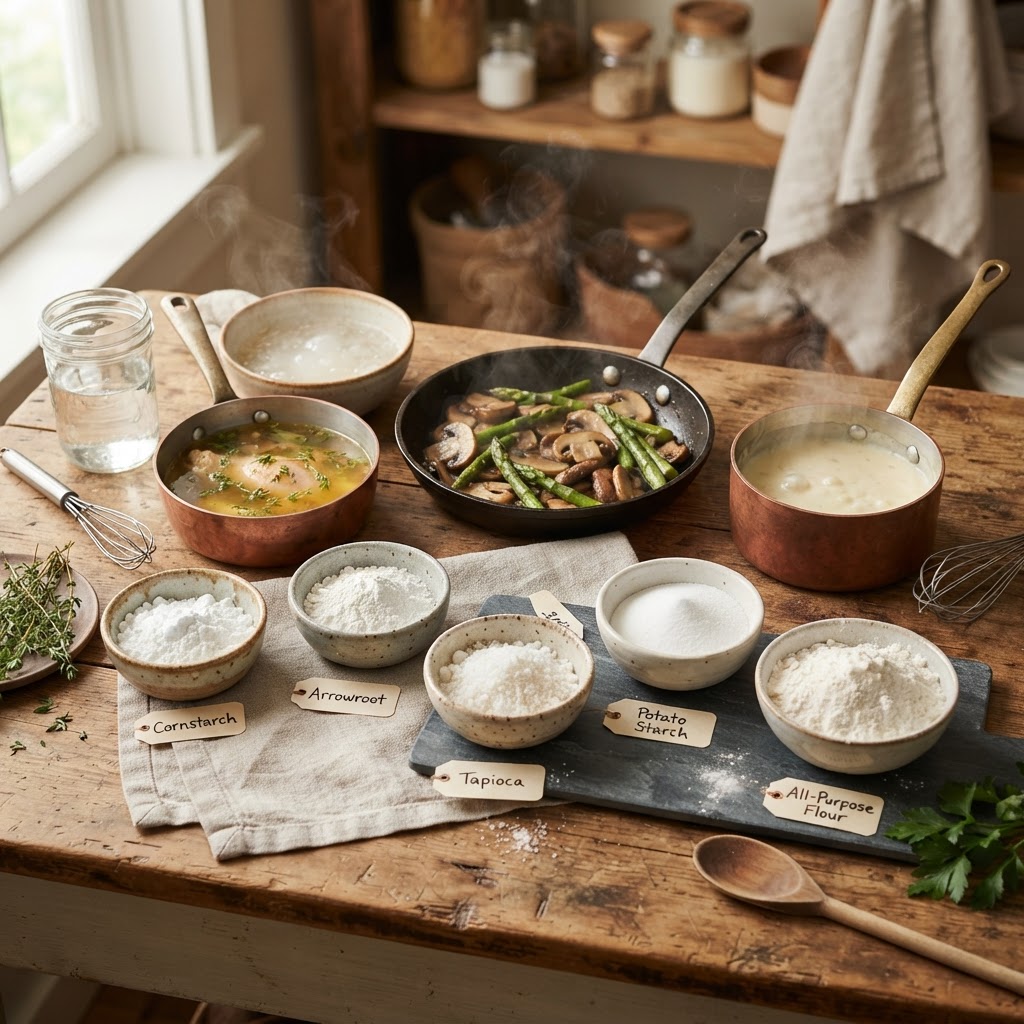
The Home Cook’s Guide to Thickeners: Choosing the Best Starches for Every Sauce, Soup, and Stew
Every home cook eventually hits that moment of frustration where their labor-of-love soup remains a watery tragedy or a pan sauce refuses to coat the back of a spoon. You have followed the recipe, balanced your aromatics, and achieved the perfect depth of flavor, yet the texture lacks that professional, luxurious mouthfeel. It is in these moments that we often find ourselves blaming the quality of our broth or the heat of our range, when the real culprit is a lack of understanding regarding the science of starches. Mastering the art of thickening is perhaps the single most important skill for transitioning from a home cook who follows instructions to a chef who understands the fundamental mechanics of food.
When we talk about thickening, we are discussing the manipulation of liquids through the introduction of specific agents that interact with heat and hydration. Whether you are using a roux, a slurry, or a reduction, you are performing a delicate dance of molecular science. Many novice cooks are intimidated by the prospect of creating a smooth béchamel or a glossy gravy, fearing the dreaded clump of flour or the raw, starchy aftertaste that ruins a meal. However, with the right knowledge of which agent to deploy and how to manage the variables of temperature and agitation, you can elevate your culinary output significantly.
This guide is designed to peel back the curtain on the thickeners that occupy your pantry, transforming them from mysterious white powders into reliable tools of the trade. We will explore the nuances of different starches, from the classic wheat-based staples to the more delicate root-based options. By the end of this journey, you will no longer have to worry about broken sauces or thin stews, as you will possess the expertise to control the viscosity of your dishes with total confidence. Prepare to take control of your kitchen, because once you master these principles, you will never blame your stove—or your luck—for a lackluster sauce again.
The Foundation of French Cooking: Understanding the Roux
The roux is the bedrock of classic French technique, serving as the primary thickening agent for mother sauces like Béchamel, Velouté, and Espagnole. At its most basic, a roux is a mixture of equal parts fat—typically butter—and all-purpose flour by weight. By cooking these two ingredients together, you not only hydrate the starch but also cook out the raw, pasty flavor of the wheat. This process is essential for achieving the professional, velvety finish that defines restaurant-quality cooking.
The Three Stages of Roux
The length of time you cook your roux depends entirely on the intended application and the flavor profile you wish to achieve. A white roux is cooked for only a minute or two, just until the raw flour smell dissipates; this is perfect for delicate cream sauces. A blond roux is cooked slightly longer until it reaches a sandy, golden hue, providing a richer, nuttier base for chicken or seafood veloutés. Finally, a brown roux requires patience and steady heat, resulting in a deep, dark color and a complex, toasted flavor that is indispensable for a true Cajun gumbo or a robust beef gravy.
"A roux is not merely a thickener; it is a flavor delivery system. The longer you cook it, the more depth you add, but be warned: as the roux darkens, its thickening power slightly diminishes due to the breakdown of starch granules."
Mastering the Incorporation Technique
To avoid the amateur mistake of creating a lumpy sauce, temperature control is paramount. The general rule of thumb is the opposite temperature rule: if your roux is hot, add cold liquid; if your roux is cold, add hot liquid. By whisking constantly while gradually pouring in your liquid, you allow the starch granules to expand evenly without clumping together. If you do encounter lumps, do not panic; simply pass the sauce through a fine-mesh chinois or sieve to restore the silky texture.
The Versatility of the Slurry: Cornstarch and Arrowroot
For dishes that require clarity or a quick thickening fix without the heavy mouthfeel of fat-based roux, the slurry is your best friend. A slurry consists of a starch—most commonly cornstarch or arrowroot—mixed with a small amount of cold liquid until it forms a smooth, milky paste. This method is incredibly efficient for stir-fries, fruit fillings, and lighter sauces that need to retain their brightness rather than becoming opaque.
Why Starch Quality Matters
Cornstarch is highly effective and produces a high-gloss finish, making it the preferred choice for Asian-style stir-fries or pan glazes. However, cornstarch must be brought to a full boil to activate its thickening properties; if you do not hit the boiling point, the sauce will never reach its potential viscosity. Conversely, arrowroot powder is a more refined starch that remains stable even when exposed to acidic ingredients. Unlike cornstarch, which can turn thin or "weep" if a sauce is frozen and thawed, arrowroot creates a superior, stable gel that remains clear.
The Proper Ratio for Success
When using a slurry, the starting ratio is typically one part starch to two parts cold liquid. Always whisk the starch into the cold liquid thoroughly before introducing it to your hot pan. If you throw dry cornstarch directly into a hot liquid, you will inevitably end up with hardened, uncooked pockets of starch that ruin the texture of the dish. Pour the slurry slowly into the simmering liquid while whisking, wait for the sauce to bubble, and observe how the viscosity changes in real-time.
The Power of Reduction: The Chef’s Secret Weapon
Sometimes, the best way to thicken a sauce is not to add an external agent at all, but to remove the excess water through evaporation. This technique, known as reduction, is perhaps the most elegant way to concentrate flavor. As the water evaporates, the natural sugars, proteins, and fats in your stock, wine, or juice become more concentrated, resulting in a naturally thicker, more intense sauce that coats the back of a spoon with ease.
Managing Heat for Flavor Development
Reduction is not just about thickness; it is about flavor intensity. To achieve a perfect reduction, use a wide, shallow pan to increase the surface area, which allows the water to escape more rapidly. Keep the liquid at a consistent, gentle simmer rather than a violent boil to ensure that the fats do not break or burn. This process requires patience, but the result is a clean, honest sauce that highlights the quality of your base ingredients.
"A reduction is the purest form of culinary alchemy. By stripping away the water, you are left with the concentrated soul of your ingredients, creating a viscosity that no chemical thickener can ever replicate."
The "Nappe" Test
To determine if your reduction has reached the ideal thickness, perform the nappe test. Dip a clean spoon into your sauce and run your finger across the back of it. If the sauce leaves a clean, well-defined path that does not run, you have achieved the perfect consistency. This professional benchmark ensures that your sauce is thick enough to cling to protein or vegetables without being overly gloopy or sticky.
Embracing Vegetable-Based Thickeners
For the health-conscious cook or those managing dietary restrictions, vegetable-based thickeners provide a brilliant alternative to flour and cornstarch. Many root vegetables, such as potatoes, parsnips, or even pureed carrots, contain significant amounts of natural starches that, when pureed into a soup or stew, create a naturally creamy, substantial base. This approach adds fiber, vitamins, and incredible earthy flavor to your dishes.
The Potato Technique
A classic technique for thickening vegetable soups is to incorporate a starchy Russet potato into the mix. Dice the potato into small cubes and let it simmer until it is falling apart. Once tender, use an immersion blender to process the entire soup. The starch from the potato emulsifies with the liquid, creating a thick, velvety consistency that feels indulgent without the need for heavy cream or butter.
Pureeing for Texture
You can also thicken stews by removing a portion of the cooked vegetables, blending them, and returning the puree to the pot. This is particularly effective for lentil stews, bean chili, or split pea soup. By blending only part of the dish, you retain chunks of whole vegetables for textural contrast while ensuring the broth itself has a satisfying, hearty body.
The Role of Emulsification and Monté au Beurre
Beyond starches, the most skilled chefs utilize emulsions to thicken sauces. Monté au beurre is a classic French finishing technique where cold, cubed butter is whisked into a hot sauce off the heat just before serving. The cold butter emulsifies with the liquid, creating a glossy, rich sauce that has a luxurious mouthfeel and a brilliant shine.
Balancing Heat and Agitation
The key to a successful monté au beurre is to ensure the liquid is simmering but not boiling when you whisk in the butter. If the liquid is too hot, the butter will melt too quickly and separate into an oily puddle. If it is too cold, the emulsion will not hold. Whisk constantly as you add one cube at a time, allowing each to incorporate completely before adding the next. This creates a stable emulsion that transforms a simple pan drippings sauce into a restaurant-grade masterpiece.
Other Emulsifying Agents
The Science of Starch Gelatinization
To truly master thickening, one must understand gelatinization. This occurs when starch granules are heated in the presence of water, causing them to absorb moisture and swell. As the temperature rises—usually between 150°F and 170°F—the granules rupture and release their amylose content into the liquid, forming a network that traps water molecules and increases viscosity.
Temperature Sensitivity
Every starch has a different temperature threshold for gelatinization. Wheat flour needs a high heat to fully hydrate, whereas cornstarch gelatinizes at a slightly lower point but requires a sustained boil to ensure the "raw" starch structure is fully broken down. If you do not reach the appropriate temperature, your sauce will remain thin or have a chalky, powdery texture that is unpleasant on the palate.
Troubleshooting Common Issues
Sauce is too thin:* Continue to simmer to reduce, or add a secondary slurry. Remember to add in small increments to avoid over-thickening.
Sauce is grainy:* This often occurs when flour is not properly cooked out or if the roux was scorched. Pass through a fine-mesh strainer.
Sauce feels "gummy":* You may have used too much starch. Dilute with a little extra stock or wine to adjust the texture.
"Culinary success is rarely about luck; it is about the mastery of thresholds. When you understand the specific temperature at which your starch activates, you gain total control over the personality of your plate."
Choosing the Right Thickener for Your Dish
Choosing the right agent is about matching the desired outcome with the properties of the starch. If you are making a delicate dessert sauce, flour will ruin the clarity and flavor. If you are making a hearty beef stew, a slurry might feel too "slippery" compared to the deep, clinging quality of a flour-based roux.
Quick Reference Guide
Soups and Stews:* Roux, pureed vegetables, or natural reduction.
Asian Stir-Fries:* Cornstarch slurry for a high-gloss, clean finish.
Fruit Pies/Fillings:* Arrowroot or Tapioca for stability and clear finish.
Pan Sauces: Reduction and finishing with monté au beurre*.
Cream Sauces:* Roux (Béchamel) for a stable, opaque, and classic result.
Professional Chef Tips for Consistency
Always measure your ingredients. While it is tempting to eyeball your flour or cornstarch, consistent results come from having a base ratio of 1:1 for a roux or a known percentage of slurry to liquid. Keep a small notebook of what works; if you find a specific brand of flour provides a better texture in your gravy, stick with it. Culinary precision, even in the home kitchen, is the greatest differentiator between a good meal and a memorable one.
Final Thoughts
Mastering the art of thickening is a journey that moves beyond recipes and into the realm of understanding the "why" of cooking. Whether you are whisking a roux for a classic holiday gravy, stirring a cornstarch slurry into a vibrant stir-fry, or patiently reducing a red wine jus, you are engaging in a process that is as much science as it is art. Do not be discouraged by initial failures; even in professional kitchens, sauces break and gravies clump. The mark of a true cook is not that they never make a mistake, but that they understand how to fix it.
By keeping these starches and techniques in your arsenal, you remove the guesswork from your cooking. You empower yourself to manipulate texture, adjust body, and refine mouthfeel, ensuring that every dish you serve is exactly as you intended. Take these principles back to your kitchen, experiment with different starches, and observe how they react under heat. You will soon find that you no longer need to blame the chef—or the pantry—for your culinary outcomes. You are the architect of your dinner, and with these tools, the structure of your sauces will finally match the excellence of your flavors. Happy cooking, and may your sauces always be perfectly nappe.
Remember that the process of thickening is fundamentally about the management of energy and molecular structure. It requires your focus, your attention to temperature, and your willingness to watch the pan as it transforms. Cooking is not just about the final bite; it is about the steady, intentional steps that get you there. When you stop fearing the thickener, you stop fearing the complexity of a recipe. Everything becomes a variable that you can control, adjust, and master over time.
Lastly, do not undervalue the importance of resting your sauces. Often, a sauce may seem slightly thin directly off the heat, but as it cools slightly, the starch network settles and the viscosity increases. Give your dishes a moment to breathe before serving. This brief pause allows the flavors to harmonize and the texture to set, resulting in a more refined and polished final product. You have all the knowledge you need now to go forth and create masterpieces. Go and create something incredible.



Get the Next Recipe
Weekly recipes, techniques, and gear picks — straight to your inbox.
