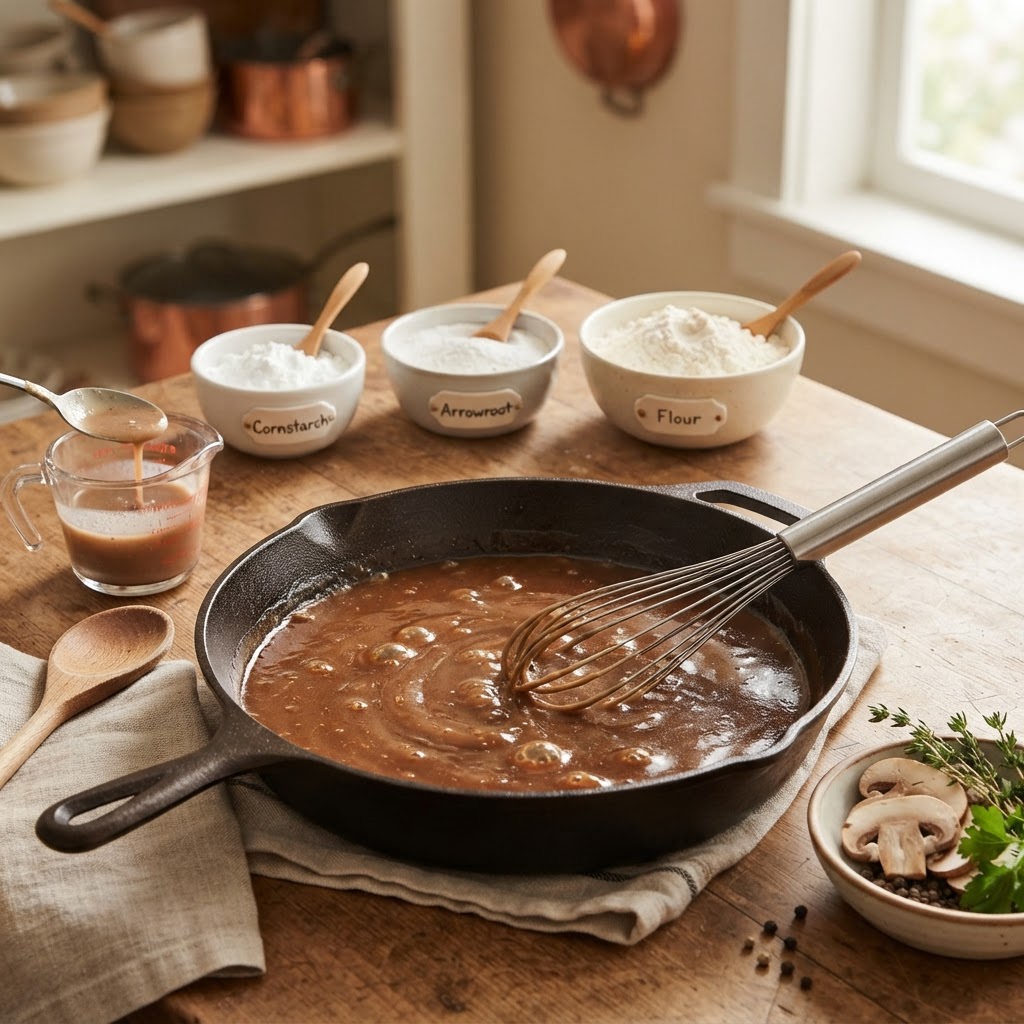
The Home Cook’s Guide to Thickeners: How to Choose and Use Starches for Perfectly Textured Sauces and Gravies
Every home cook has stood over a bubbling saucepan, peering into a watery, lackluster sauce, feeling that familiar pang of kitchen insecurity. We follow the recipe perfectly, yet the final result lacks that luxurious, coating consistency that defines professional cooking. The difference between a home-cooked meal and a restaurant-quality plate often comes down to the mastery of thickening agents. These unsung heroes of the pantry are the foundation upon which complex textures are built, and understanding them is the single most effective way to elevate your culinary game. Once you grasp the science behind how starches behave, you stop treating sauce-making as a guessing game and start treating it as a controlled, repeatable process.
The world of starches can feel intimidating at first, with a seemingly endless array of flours, powders, and pastes lining the grocery store shelves. Do you reach for the all-purpose flour for a rustic gravy, or should you pivot to cornstarch for a silky, translucent stir-fry glaze? Each thickener brings its own unique set of properties to the pan, reacting differently to heat, acidity, and agitation. By learning to navigate the nuances of these agents, you gain the freedom to rescue broken sauces, refine soups, and create glazes that cling perfectly to your ingredients. This guide is designed to strip away the mystery, providing you with the technical foundation to make confident decisions in the heart of your home kitchen.
Ultimately, "Blame The Chef" is about empowering you to take ownership of your results, even when things go awry. We have all experienced the dreaded flour lumps or the starch-heavy aftertaste that can ruin a perfectly seasoned reduction. Developing a intuitive relationship with your thickeners takes practice, but it is an incredibly rewarding skill that fundamentally changes how you approach every single recipe. Whether you are whipping up a Thanksgiving gravy that needs to stand the test of time or a delicate pan sauce for a seared scallop, the following breakdown will provide the clarity you need. Grab your whisk, sharpen your spatula, and let’s dive into the fascinating, transformative world of culinary thickeners.
The Science of Starch Gelatinization
At the core of every thickened sauce lies the process of gelatinization. When you add a starch to a liquid and apply heat, the starch granules absorb the surrounding moisture, swelling like tiny, dry sponges. As they swell, they eventually burst, releasing amylose molecules into the liquid, which trap water and create that thick, luscious structure we love. This process is highly dependent on temperature, time, and the specific type of starch being used. Understanding these variables is the secret to moving past hit-or-miss cooking and into the realm of professional consistency.
Why Temperature Matters
Most starches require a specific temperature range to fully activate their thickening power. For instance, wheat flour generally needs to reach near-boiling temperatures to fully hydrate and set, whereas starches like arrowroot or potato starch can thicken at slightly lower temperatures. If your liquid isn't hot enough, the granules will remain partially hydrated, resulting in a thin, gritty, or "raw" tasting sauce. Conversely, overheating some starches can lead to a breakdown of the thickened structure, causing the sauce to lose its body after too long on the heat.
The Role of Agitation
When you incorporate a thickener into your pan, your mechanical action matters just as much as your heat source. Whisking is essential to prevent the granules from clumping together in isolated pockets. If a dry starch hits a hot liquid directly, the exterior of the clump gelatinizes instantly, forming a protective barrier around the dry center. This is the primary culprit behind those stubborn, unsightly lumps in your gravy. Using a cold liquid to create a slurry before adding it to the pot is the most reliable way to ensure a perfectly smooth, velvety texture every time.
"A sauce is the backbone of a dish, and the starch is the scaffolding that holds it all together. Don't fear the process; master the temperature, and the texture will follow."
Wheat Flour and the Art of the Roux
The roux is the quintessential thickening technique in Western culinary arts, a foundational blend of equal parts fat and flour. By cooking the flour in fat before introducing the liquid, you achieve two primary goals: you toast the starch to remove the raw flour taste and you coat each starch granule in fat, which helps prevent those dreaded lumps. Whether you are preparing a white béchamel, a golden velouté, or a dark, nutty gumbo base, the roux remains the gold standard for opaque, rich, and stable sauces.
The Three Stages of Roux
The length of time you cook your roux depends entirely on the desired flavor profile and the required thickening power. A white roux is cooked just enough to remove the raw starch taste, usually for one to two minutes, and is ideal for creamy milk-based sauces. A blond roux is cooked slightly longer until it turns the color of pale toast, offering a hint of nuttiness to soups or veloutés. A brown or dark roux, often used in Creole and Cajun cooking, is cooked for much longer, which develops incredible depth but sacrifices some of its thickening potential as the starch breaks down over the intense heat.
Tips for Perfect Incorporation
When adding your liquid (milk, stock, or water) to a roux, the golden rule is the "opposite temperature" method. If your roux is hot, add your cold liquid slowly while whisking vigorously. If you add hot liquid to a hot roux too quickly, the steam buildup can cause the mixture to splatter violently or clump instantly. Add the liquid in small splashes, incorporating fully between each addition, until the sauce reaches your desired consistency. This methodical approach ensures a smooth, glossy finish that won't require a trip through a sieve later.
Cornstarch: The Master of Translucency
When you need a sauce that is clear, glossy, and light, cornstarch is your best friend. Unlike flour, which provides a matte finish and a substantial mouthfeel, cornstarch produces a shimmering, translucent texture that makes it perfect for Asian-style stir-fries, fruit fillings, and delicate glazes. It has about twice the thickening power of flour by weight, meaning you need significantly less to achieve the same structural density. However, because it is a pure starch, it requires a different approach to ensure it remains stable.
Creating the Perfect Slurry
Never add cornstarch directly to a simmering pot. Because it thickens so rapidly upon contact with high heat, it will inevitably clump into rubbery beads. The universal technique is to create a slurry—a mixture of cornstarch and cold liquid (water, stock, or wine) stirred together in a small bowl until completely smooth. Only when the main pot is at a gentle simmer do you whisk in the slurry, pouring it in a thin, steady stream. You will see the sauce thicken almost instantly, transforming before your eyes into a beautiful, shimmering glaze.
The Problem of Breakage
While cornstarch is efficient, it is also fragile. If you continue to boil a cornstarch-thickened sauce for too long, or if you stir it too aggressively once it has set, the starch chains can break down, causing the sauce to thin out suddenly. Additionally, cornstarch sauces can "weep" or lose their consistency if stored in the refrigerator and reheated, as the starch molecules rearrange themselves into a retrograded state. For this reason, always prepare cornstarch-based sauces as close to serving time as possible for the best possible results.
"True kitchen mastery isn't just about following the steps; it's about understanding why the starch behaves the way it does. Control the slurry, respect the simmer, and your sauces will never falter."
Arrowroot and Potato Starch: The Refined Alternatives
For those who want the glossy finish of cornstarch but require a more robust or heat-stable option, arrowroot powder and potato starch are the professional's choice. These root-based starches are incredibly versatile and have a more neutral flavor profile than cornstarch. They are especially popular in fine dining kitchens for finishing delicate sauces or for those who have specific dietary requirements, as they are naturally gluten-free and often processed more gently than commercial cornstarch.
Using Arrowroot in Fine Sauces
Arrowroot is prized for its ability to thicken at lower temperatures and for producing a sauce that is remarkably stable. It doesn't break down as easily as cornstarch when exposed to acidic ingredients like lemon juice or wine, making it the perfect choice for fruit sauces or high-acid reductions. It also holds up better to freezing, which is a major advantage for home cooks who like to prep meals in advance. Use it in a ratio similar to cornstarch, but always mix it with cold liquid first to avoid the common pitfalls of direct-heat thickening.
Potato Starch for Texture
Potato starch is the secret weapon for creating a light, airy coating on fried foods or providing a soft, pillowy texture to gluten-free baked goods. When used as a thickener in sauces, it provides a unique mouthfeel that feels substantial yet clean. It is highly effective but can be slightly more temperamental than arrowroot. The key is to avoid boiling it for extended periods; add your slurry near the end of the cooking process, whisk, and pull the pan off the heat as soon as the desired thickness is reached.
Reducing: The Natural Thickener
Before the widespread use of refined starches, chefs relied almost exclusively on the power of reduction. By simmering a liquid—usually a stock, wine, or juice—you evaporate the water content, naturally concentrating the starches, proteins, and sugars already present in the liquid. A well-reduced sauce has a complexity of flavor that no amount of added starch can mimic. It is the purest way to thicken, though it requires patience and a watchful eye to prevent the flavors from becoming overly salty or bitter.
The Power of Emulsification
When reducing liquids, you are often looking for the point where the sauce begins to "nappe"—the technical term for when a sauce is thick enough to coat the back of a spoon. To take your reductions to the next level, incorporate a technique called monter au beurre. By whisking in small cubes of cold, unsalted butter at the very end of the cooking process, you emulsify the fat into the reduction, creating a glossy, rich sauce that clings beautifully to food. This is the difference between a simple stock and a restaurant-style pan sauce.
Managing Flavor Intensity
The biggest danger with reduction is salt. As the water evaporates, the salt concentration rises, which can quickly turn a balanced sauce into a brine. Always use low-sodium or unsalted stocks when you plan on reducing, and save the final seasoning for the very last step. If you find your reduction is becoming too intense or salty before it reaches the right thickness, you can bridge the gap by adding a tiny amount of cold water or a touch of heavy cream to dilute the intensity while maintaining the body.
Troubleshooting Your Thickened Sauces
Even the most experienced chefs occasionally encounter a sauce that just won't behave. Whether your gravy is too thin, your glaze is lumpy, or your soup has separated, there is usually a way to save it. The key is to remain calm and diagnose the issue before you start throwing extra ingredients into the pan. Most thickening failures are either a result of an incorrect ratio, insufficient heat, or improper technique during the initial incorporation phase.
How to Fix Lumpy Sauces
If you have created a sauce with lumps of flour or starch, don't despair; you don't have to start over. If the lumps are minor, a vigorous whisking with a balloon whisk or an immersion blender can often break them down. If the lumps are stubborn, pour the sauce through a fine-mesh sieve (also known as a chinois) into a clean pan. If the sauce is still too thin after straining, you can slowly whisk in a bit more slurry, being careful to maintain the heat so the new starch activates without clumping again.
Rescuing Thin Sauces
If your sauce is simply not thick enough, it is usually because you haven't used enough starch or haven't allowed the liquid to reach the required temperature. Remember that starches often continue to thicken slightly as they cool, so don't overcompensate too early. If you need to add more starch, always make a new slurry. Never add dry powder directly to the hot pan. If you have already added a lot of starch and it still isn't thickening, check your heat; you may need to increase the flame to ensure the starch is fully activated.
"A kitchen accident is only a failure if you don't learn from it. Most broken sauces can be rescued with a sieve, a whisk, and a bit of patience. Take your time, and trust your palate."
Choosing the Right Thickener for the Job
With all these options available, how do you decide which one to reach for? It comes down to your desired end result: opacity, clarity, flavor, and temperature stability. For a classic, opaque gravy, a flour-based roux is almost always the best choice. It provides a savory, rich foundation that feels substantial. For a stir-fry, a clear soup, or a fruit glaze, cornstarch is the clear winner for its glossy finish and neutral flavor. If you are working with high-acid ingredients or need something that freezes well, arrowroot is your go-to.
Quick Reference Guide
For Country-Style Gravy:* Use a roux (1 tbsp fat + 1 tbsp flour per cup of liquid).
For Clear Glazes:* Use a cornstarch slurry (1 tsp cornstarch + 1 tbsp cold liquid).
For Delicate/Acidic Sauces:* Use arrowroot (1 tsp arrowroot + 1 tbsp cold liquid).
For Rich Pan Sauces:* Use a reduction finished with cold butter.
The Importance of Resting
Remember that time is an ingredient in its own right. A sauce that looks perfect immediately after finishing may thicken further as it rests on the plate. This is why restaurant sauces are often kept slightly thinner in the pan than they appear on the plate. Give your sauces a minute to settle after pulling them from the heat. This allows the starches to fully "set" and the flavors to meld, resulting in a more cohesive and professional presentation every time you serve.
Final Thoughts
Mastering the use of thickeners is not just about memorizing ratios or technical terms; it is about building an intuitive connection with your food. As you grow more comfortable with roux, slurries, and reductions, you will find yourself reaching for the flour or the arrowroot without a second thought. You will begin to taste the difference between a raw, starchy sauce and one where the starch has been perfectly bloomed, releasing its potential to support the other flavors in your dish.
The home kitchen is a laboratory of trial and error, and the beauty of cooking lies in this constant discovery. When you make a mistake—and you will—don't blame the ingredients or the recipe. Instead, look at the science. Did you add the starch too quickly? Was the heat too low? By analyzing these moments, you transition from a cook who follows instructions to a chef who understands the craft. The next time you find yourself standing over a simmering sauce, remember these principles, trust your technique, and enjoy the process of turning simple ingredients into something truly extraordinary.
Every time you choose to thicken a sauce with care and precision, you are honoring the time and effort you put into your ingredients. Whether it’s a quick weeknight dinner or an elaborate weekend feast, the right texture adds a layer of sophistication that turns a meal into an experience. Keep experimenting, keep whisking, and always keep that curiosity alive. Your journey toward the perfectly textured sauce is only just beginning, and the rewards—in the form of countless delicious meals—are waiting for you at the stove.
As you continue to refine your techniques, consider keeping a simple log of what worked and what didn't. Note the ratio of flour to fat in your favorite roux, or the specific timing it took for your latest reduction to reach the perfect nappe consistency. These small data points, when combined with your personal experience, will form the backbone of your unique cooking style. Never stop seeking out new ways to improve, and remember that even the most celebrated chefs in the world are still students of the process.
Finally, remember to share your successes and your lessons with others. Cooking is a communal act, and the knowledge you gain today can help someone else find their own confidence in the kitchen. If you find a technique that works wonders, pass it on. If you discover a shortcut that saves time without sacrificing quality, share it with your friends and family. "Blame The Chef" is about more than just instructions; it’s about building a community of passionate cooks who are unafraid to challenge themselves.
Thank you for joining me on this deep dive into the world of starches and thickeners. It is a fundamental topic, but one that rewards the curious and the patient with a lifetime of better meals. Now, turn that stove back on, grab your whisk, and go make something delicious. You have all the tools you need to succeed, and the final result will be a reflection of the care and technical skill you have cultivated. Happy cooking, and may your sauces always be smooth, glossy, and perfectly balanced.
Consider exploring the role of proteins as well, such as how gelatin from bone broth acts as a natural thickener and mouthfeel enhancer, adding even more dimension to your sauces. The deeper you go, the more you realize that the boundaries between science and art in the kitchen are completely fluid. You are the architect of your own culinary world, and with these basics mastered, the possibilities are truly endless. Whether you are aiming for a classic French technique or a modern, streamlined approach, the principles of thickening remain your most valuable asset.
One final piece of advice: trust your senses above all else. Your eyes will tell you when the sauce has reached the right coating consistency; your palate will tell you if the starch is raw; and your intuition will guide you when it's time to pull the pan off the heat. Do not be afraid to taste, adjust, and taste again. Perfection is rarely achieved in a single movement; it is reached through a series of small, conscious adjustments. You are the master of your kitchen, and every sauce you create is a chance to perfect your craft.
As you move forward, challenge yourself to try a new thickener this week. If you’ve only ever used cornstarch, try making a classic roux for a savory velouté. If you're a fan of flour, experiment with arrowroot to see how it changes the clarity of your next glaze. Growth happens outside of our comfort zones, and the kitchen is no different. Embrace the process, respect the science, and most importantly, have fun with the transformation. Every great meal starts with a choice, and today, you’ve chosen to master the art of the perfect texture.
Keep honing your skills, keep exploring the pantry, and keep blaming the chef when things get messy—because that's just part of the journey to greatness. Whether you’re cooking for one or feeding a crowd, the impact of a perfectly thickened sauce is undeniable. It provides that finishing touch of professionalism that ties every element of the dish together. You are now equipped with the knowledge to make that happen every time you step into the kitchen. Go forth and cook with confidence.
The journey of a thousand sauces begins with a single whisk. From the gentle gelatinization of starches to the bold reduction of stocks, you now hold the keys to the kingdom of texture. Continue to push your boundaries, continue to learn the "why" behind the "how," and your culinary prowess will continue to grow. There is no limit to what you can achieve when you combine passion with practice. Stay curious, stay diligent, and enjoy the incredible flavors you are about to create.
As you reflect on these techniques, remember that they are tools, not rules. Feel free to adapt them to your own taste and the specific requirements of your recipes. Cooking is meant to be a creative expression, and your ability to control texture is just another way for you to convey your personality and style through your food. The kitchen is yours to conquer, one perfectly thickened sauce at a time. I look forward to hearing about your successes as you master these basics and move on to even more complex culinary adventures.
Your dedication to learning these fundamentals is the first step toward becoming a truly accomplished home cook. Do not underestimate the value of mastering the basics; they are the bedrock upon which all great meals are built. When you have these techniques down, you will find that even the simplest ingredients can be transformed into something special. So, take these lessons, apply them to your daily routine, and watch as your kitchen becomes a place of joy, experimentation, and consistent, delicious results.
In the end, the most important ingredient is your own confidence. When you know why a sauce works, you no longer have to worry about whether it will turn out right. You become the creator of your own consistency. With this guide as your roadmap, you have the knowledge to troubleshoot, adapt, and refine your approach until it becomes second nature. Thank you for choosing to learn with us here at "Blame The Chef," and keep reaching for that next level of excellence. You are doing great, and your food is about to get even better.
Final encouragement as you head back to the stove: don't rush the process. Great sauces are built, not manufactured. They take time to hydrate, time to reduce, and time to develop their full character. Be the chef who is willing to wait for the result, and you will find that the wait is always worth it. Happy cooking, and enjoy the journey of mastering the perfect texture. Your kitchen, your rules, your delicious results. See you on the next post.


Get the Next Recipe
Weekly recipes, techniques, and gear picks — straight to your inbox.
