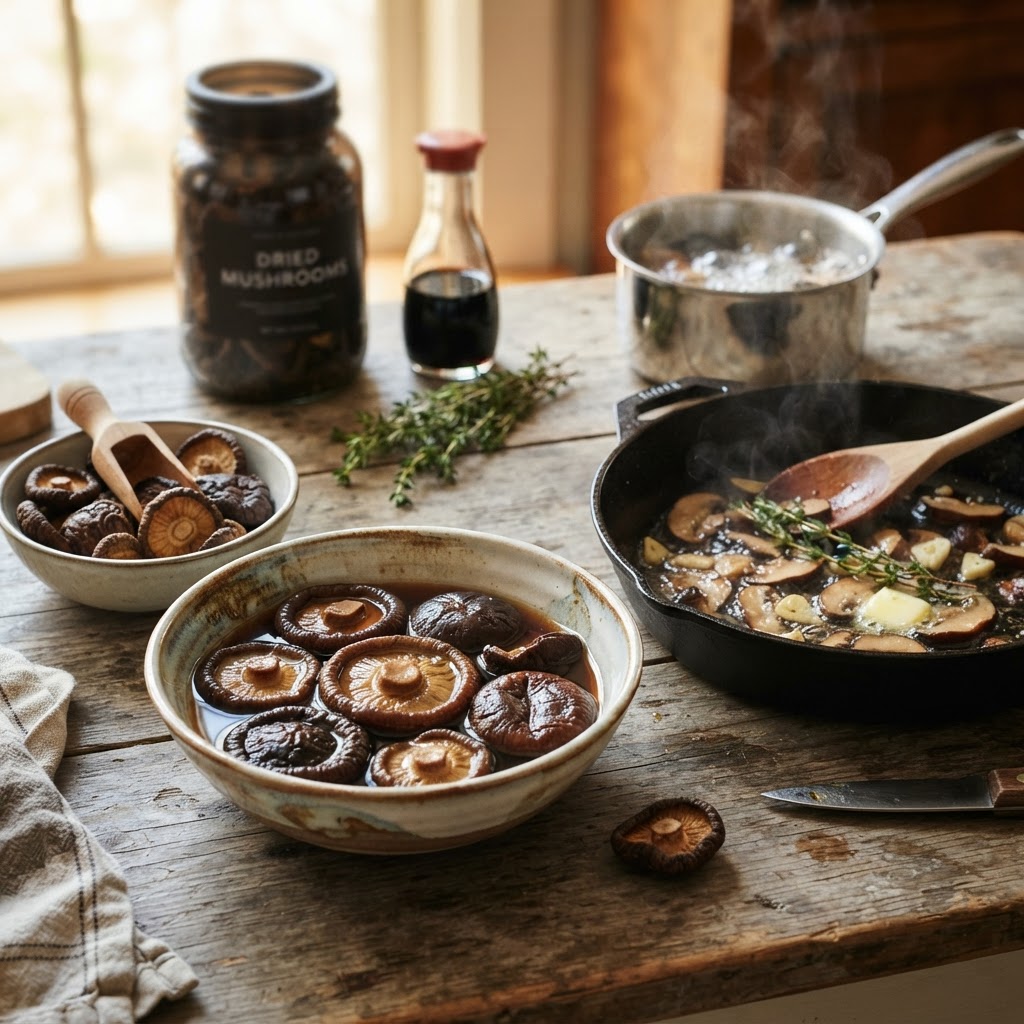
The Home Cook’s Guide to Umami-Rich Mushrooms: Mastering Rehydration Ratios and Sautéing Techniques for Deep, Savory Flavor Foundations
The humble mushroom is perhaps the most misunderstood ingredient in the domestic pantry, often relegated to a secondary status as a mere garnish or a filler for lackluster salads. However, those of us who have spent years navigating the heat of a professional kitchen know that the mushroom is the undisputed king of savory depth. It carries the unique chemical signature of glutamates, which unlock the elusive fifth taste known as umami. When treated with respect, these fungal wonders act as the architectural foundation for everything from rich vegetable stews to complex pan sauces that mimic the depth of a long-simmered bone broth. By understanding their cellular structure and how they respond to moisture, heat, and fat, the home cook can transform a simple Monday night dinner into a restaurant-quality experience.
Mastering the mushroom is less about following a rigid recipe and more about embracing a fundamental understanding of Maillard reaction kinetics. Whether you are working with meaty portobellos, delicate oyster mushrooms, or the concentrated power of dried porcini, the goal remains identical: moisture management. Mushrooms are composed of nearly 90 percent water, and if you fail to properly render that liquid out, you are essentially boiling your fungi rather than browning them. This mistake results in a rubbery texture and a dull flavor profile that leaves the palate uninspired. Once you learn to coax the water out and caramelize the sugars hidden within the fungal fibers, you open the door to a level of richness that few other plant-based ingredients can provide.
In this guide, we will peel back the layers of mycological science to help you build a better foundation for your home cooking. We will discuss the precise art of rehydration ratios for dried varieties, the nuances of temperature control during the sauté, and the strategic layering of aromatics that make mushrooms sing. You will no longer view them as a side-dish afterthought but rather as the essential building block of your culinary repertoire. Grab your favorite heavy-bottomed skillet and prepare to rethink how you approach the produce aisle; we are about to turn your kitchen into a center of deep, savory exploration. It is time to stop fearing the pan and start demanding excellence from your ingredients.
The Science of Umami: Why Mushrooms Rule the Kitchen
To understand why mushrooms are considered the backbone of savory cooking, one must first look at the science of the glutamate molecule. Glutamic acid is an amino acid that occurs naturally in various foods, but mushrooms—particularly those that are dried or aged—contain exceptionally high concentrations of it. When we cook mushrooms, these glutamates are released, interacting with our taste buds to send a signal of satisfaction and richness to the brain. This is the physiological basis of umami, and it is the secret weapon used by chefs to provide "meatiness" to dishes that might otherwise feel thin or incomplete.
It is important to note that not all mushrooms provide the same punch. While white button mushrooms and cremini have a decent level of glutamate, the real heavy hitters are the dark, wood-grown varieties like shiitake, porcini, and morel. When these fungi are dried, the water content is stripped away, but the glutamates remain and become concentrated. This is why a small handful of rehydrated porcini can turn a quart of watery vegetable stock into a robust, velvet-textured liquid that rivals the complexity of a rich demi-glace.
The mushroom is nature’s own MSG, a concentrated delivery system for the savory satisfaction that every great dish requires to feel complete.
Understanding the hierarchy of umami is key to balancing your flavors. If you are preparing a dish that relies on delicate ingredients, you might choose a mild oyster mushroom to avoid overpowering the palate. However, for a hearty braise or a deep reduction, you should reach for the dried stash. By learning how to balance these intensities, you move from being a follower of instructions to a composer of flavor profiles, intentionally layering ingredients to create a symphony of taste that lingers long after the final bite.
Mastering the Rehydration Ratio: The Art of the Infusion
When you decide to work with dried mushrooms, you are essentially working with a concentrate. The rehydration ratio is the first step in unlocking this power. Most home cooks make the mistake of using too much water or throwing away the soaking liquid, which is, in fact, the most valuable part of the process. You want to extract every ounce of flavor from those dried caps without diluting the essence.
The standard rule of thumb for rehydrating dried fungi is a 1:4 ratio, where one part dry mushroom is submerged in four parts warm (not boiling) liquid. Using boiling water can actually "cook" the mushrooms prematurely, causing them to become tough and leathery before they have a chance to soften properly. Instead, use a liquid between 140°F and 160°F. This gentle heat softens the cell walls, allowing the flavors to bloom without damaging the delicate structure of the mushroom.
The Potency of the Soaking Liquid
Strain it carefully:* Always pour your soaking liquid through a fine-mesh sieve or a cheesecloth-lined funnel to remove the grit that often clings to wild-harvested mushrooms.
Reduce it down:* Do not simply add the soaking liquid to your sauce; simmer it separately until it reduces by half to intensify the flavor before incorporating it into your dish.
The "Liquid Gold" rule:* If you have extra liquid, freeze it in ice cube trays. These "umami bombs" can be tossed into soups, gravies, or risottos weeks later to provide an instant flavor boost.
Sautéing Techniques: Moisture Management 101
The sauté is the most critical phase in the life of a mushroom, yet it is also where the most common errors occur. Most home cooks crowd their pan, causing the mushrooms to release their moisture into a collective puddle. Because there is too much liquid and not enough surface area contact, the mushrooms cannot brown. They steam, they soften, and they stay pale. To achieve the golden-brown crust that denotes flavor, you must respect the physics of the pan.
First, ensure your pan is adequately sized. You want the mushrooms to sit in a single layer with plenty of space between them. If you are cooking a large batch, do it in shifts. Crowding the pan is the enemy of texture. Start with a cold pan, add a thin layer of neutral oil, and bring the heat to medium-high. Do not add salt immediately. Salt is hygroscopic—it draws water out—and if you salt the mushrooms at the start of the sauté, they will dump all their liquid at once, preventing any browning from occurring.
The Professional Sauté Protocol
The Layering Strategy: Building Flavors Beyond the Fungus
Once your mushrooms are properly browned and screaming with umami, the next phase is building the flavor structure around them. A single sautéed mushroom is a delight, but a dish centered on mushrooms needs depth provided by secondary aromatics. The classic triad for mushroom cookery consists of shallots, garlic, and fresh thyme. Shallots provide a delicate sweetness that rounds out the earthy notes of the mushroom, while garlic offers the necessary pungency to cut through the richness.
Think of your dish as a building project. The mushrooms are the foundation, but the aromatics are the framing. I like to add my shallots once the mushrooms have achieved 80 percent of their color. If you add the shallots too early, they will burn before the mushrooms are properly browned. If you add them too late, they will remain raw and harsh. The timing of your additions is a rhythmic process that you will eventually develop an intuitive feel for as you cook.
A well-composed mushroom dish should be a journey—it begins with the immediate aromatic hit of herbs, followed by the intense, meaty savour of the sautéed caps, and ending with the long, lingering salt-and-earth finish of the reduction.
Consider also the role of acid as a balancing agent. Because mushrooms are so rich and heavy in umami, they require a bright counterpoint to keep the dish from feeling heavy on the palate. A small splash of high-quality balsamic vinegar or a squeeze of lemon juice right at the end of the cooking process can lift the entire profile, making the flavors pop. This is the difference between a heavy, sluggish stew and a vibrant, professional-grade mushroom ragout.
Troubleshooting Common Mushroom Failures
We have all been there: a pan full of slimy, grey, flavorless mushrooms that look more like an experiment gone wrong than a gourmet ingredient. This usually happens because of a lack of patience. Mushrooms demand time. If you try to rush the Maillard reaction, you will end up with a watery mess. Another common failure is the "greasy mushroom" syndrome, which occurs when the mushrooms are added to a pan that isn't hot enough. Mushrooms will drink up all the oil immediately, then slowly leak it back out as they cook, resulting in a dish that feels heavy and oily rather than rich and savory.
If you find that your mushrooms are releasing too much liquid, don't panic. Simply turn up the heat to high and let the liquid evaporate. This is the reduction method. By boiling away the excess water in the pan, you are effectively concentrating the flavor that has been leached out into the liquid. It requires a bit more active attention, but it is a reliable way to save a dish that seems to be headed for mediocrity.
Key Factors for Success
Heat Control:* If the pan is too cold, the mushrooms will sweat. If it is too hot, the aromatics will burn. Aim for a consistent medium-high heat.
Fat Selection:* Use a blend of butter and oil. The oil allows for higher heat without burning, while the butter adds the essential nutty flavor that pairs perfectly with fungi.
Don't Rush:* If the pan looks like it has water in it, wait. Do not touch the mushrooms until that water is gone and the searing begins.
Advanced Techniques: Beyond the Sauté
If you want to take your mushroom game to the next level, start experimenting with slow-roasting. By tossing whole or halved mushrooms in a high-quality olive oil, a touch of soy sauce, and some aromatics, and then roasting them at 400°F for 30 minutes, you achieve a totally different texture. The mushrooms become almost "confit," with a concentrated, chewy texture that works perfectly in grain bowls or as a topping for toasted sourdough bread.
Another professional secret is the use of mushroom powders. Take your dried mushrooms—porcini are best for this—and pulse them in a spice grinder until they become a fine, dark dust. This powder can be used as a dry rub for steaks, a flavor booster for pasta dough, or a secret ingredient in a bread crust. It adds an earthy intensity that is almost impossible to replicate with fresh ingredients.
Experimenting with Varieties
Oyster Mushrooms:* Best for quick high-heat searing; they become crispy on the edges and delicate in the center.
Lion's Mane:* Excellent for shredding to create a texture that remarkably mimics crab meat or shredded pork when braised.
Cremini/Baby Bella:* The workhorses of the kitchen; perfect for deep browning and adding body to sauces.
The Final Foundation: Incorporating Mushrooms into Sauces
Finally, let us address the incorporation of mushrooms into sauces and gravies. The most effective way to do this is through a process called deglazing. Once your mushrooms are perfectly browned and your aromatics are softened, add a splash of dry wine or stock to the pan. Use a wooden spoon to scrape the fond—the browned bits of food stuck to the bottom of the pan—into the liquid. This fond is where the majority of the concentrated flavor lives.
Integrating this into a cream sauce, a tomato-based ragu, or even a simple pan gravy provides the structural depth that differentiates a home cook’s work from a master's. By building this foundation, you aren't just adding mushrooms; you are adding a layered, multi-dimensional flavor profile that ties the entire plate together. Remember that the mushroom is not just an additive; it is a catalyst for flavor expansion.
Final Thoughts
The path to mastering mushrooms is one of patience and observation. By shifting your focus from "just cooking" to "managing chemical reactions," you transform your relationship with the ingredients. You now know that the Maillard reaction is your best friend, that rehydration ratios must be treated with scientific precision, and that moisture control is the single most important variable in your pan.
It is easy to get discouraged when you don't get the perfect crust on your first try, or when your soaking liquid ends up being too bitter because you used the wrong mushroom variety. Do not view these moments as failures; view them as data points. Cooking is a lifetime pursuit of refinement, and the more you work with these fungi, the more you will understand their unique temperament.
Start small. Try mastering the sear on a simple pack of cremini mushrooms this week. Observe how they release their moisture, note the smell as they begin to caramelize, and taste the difference when you finish with a touch of fresh thyme. Once you have mastered that, move on to the dried varieties. Expand your library of flavors. In time, you will find that your kitchen feels fundamentally different—the aromas will be deeper, your sauces will be more robust, and your guests will find themselves asking what the "secret ingredient" is. The secret, as we have explored, is simply respecting the mushroom and letting its inherent, umami-rich potential lead the way. Happy cooking, and remember: blame the chef, but take the credit for the flavor.
To continue your culinary education, keep practicing these techniques until they become second nature. You are building a foundation of flavor that will serve you for years to come. Whether you are searing, roasting, or creating a rich reduction, remember that the goal is always the same: to pull the deepest, most savory essence out of every mushroom you touch. Stay curious, stay hungry, and keep pushing the boundaries of what you think is possible in your home kitchen. The world of fungi is vast, complex, and waiting for your next move.
When you look back at your initial efforts compared to your future results, you will see the evolution of your technique. The consistency of your browning, the depth of your flavor profiles, and the elegance of your finished dishes will be the direct result of the hours you put into mastering these foundations. There is no shortcut to flavor, but there is certainly a method, and you are now well on your way to perfecting it. The kitchen is yours to conquer, one mushroom at a time. Go forth and create something truly savory.
As we conclude, remember that the most important element of any dish is the intention behind it. You are not just preparing food; you are building an experience. A well-executed dish with mushrooms as the star is an invitation to slow down and appreciate the intricate flavors that nature provides. Take the time to source high-quality ingredients, respect the time they need to cook, and always finish your dishes with care. Your kitchen is the laboratory, your ingredients are the elements, and your palate is the final judge. Enjoy the process of discovery.
The journey into the depths of umami is endless, and there is always another variety to discover or a new technique to refine. Whether it is foraging for wild specimens or hunting down the rarest dried mushrooms in a specialty market, the adventure never truly stops. Keep notes on your successes and, perhaps even more importantly, your trials. Use the knowledge you have gained here to push your boundaries further than you ever thought possible. You are now equipped with the tools, the logic, and the technique to elevate your cooking to a level that truly commands respect.
In every bite, you should taste the culmination of your efforts. From the careful rehydration to the precise control of the pan’s temperature, everything you do contributes to the final result. Be proud of the meals you create, and never stop questioning how you can make the next one just a little bit better. The science is solid, the technique is sound, and your passion is the final ingredient. Go forth, keep your pans hot, your heat controlled, and your flavor profiles bold. The world of umami-rich mushrooms is yours to explore and master.
Finally, keep in mind that the best meals are shared. Take these techniques and host a dinner, sharing the depth of flavor you have mastered with friends and family. There is no greater reward for the home chef than seeing the look of surprise and satisfaction on someone’s face when they taste the depth of a perfectly prepared dish. You are the architect of that experience. Take it seriously, have fun with it, and always, always keep the heat just right. Your culinary journey is just beginning.
As you move forward, let the principles of balance and timing guide your hands. Every time you step into the kitchen, you have the opportunity to create something beautiful, something deeply savory, and something memorable. By focusing on the fundamentals, you ensure that every dish is a success. Let this guide serve as a reference, a starting point, and a constant companion in your culinary adventures. The mushroom is a powerful ally—treat it well, and it will never let you down.
The commitment to quality ingredients, the precision of your preparation, and the patience you show at the stove are what set you apart as a cook. Keep these values at the core of your work, and you will never struggle to create a dish that is worthy of a restaurant table. Whether it is a quiet breakfast of sautéed forest mushrooms on toast or a complex, slow-cooked risotto for a crowd, the same rules apply. Trust your senses, trust your training, and let the savory notes of the mushroom be your guide.
Your potential in the kitchen is limited only by your willingness to learn and adapt. You have been given the keys to the kingdom of savory flavor. It is now up to you to walk through the door and make it your own. Experiment with different fat sources like duck fat or clarified butter, try pairing your mushrooms with unexpected herbs like rosemary or sage, and don't be afraid to take risks. Every failure is a lesson, every success is a step forward, and every meal is an opportunity to show off what you have learned.
Stay focused on the details. The difference between a good dish and a great dish is often in the small, seemingly insignificant choices. The way you slice the mushroom, the exact moment you add the salt, the depth of the reduction—these are the things that define your skill. Be meticulous, be precise, and be bold. The results will follow. And when they do, remember: you earned every bit of that umami-rich perfection through your own hard work and understanding.
As you turn away from this guide and back to your own kitchen, I encourage you to look at your next package of mushrooms with a fresh perspective. See them not as a simple vegetable, but as a complex biological masterpiece that is ready to be transformed by your hands. Challenge yourself to get that deep, dark browning that marks the true professional. Let the scent of caramelizing fungi fill your home, and take satisfaction in the fact that you are executing a technique that has been refined in professional kitchens for generations.
The kitchen can be a place of stress, but when you master your ingredients, it becomes a place of peace. When you know exactly what is happening in the pan, you no longer have to worry about the outcome. You gain a sense of confidence that makes the act of cooking feel like a creative expression rather than a chore. That, in the end, is the greatest gift of culinary mastery. It is about control, it is about knowledge, and it is about the joy of creating something wonderful from the simplest of beginnings.
So, gather your tools, choose your mushrooms, and begin the process. Whether it is a simple sauté or an elaborate, multi-stage reduction, you now have the tools to succeed. The path to savory excellence is clear, and you are ready to walk it. Master the mushroom, and you master the very heart of the savory kitchen. Enjoy the journey, savor the results, and continue to challenge yourself to grow. You have everything you need to become the master of your own culinary world.
In closing, the pursuit of flavor is a lifelong endeavor that brings immense satisfaction to those who commit to it. With mushrooms, you have found a reliable, versatile, and profoundly rewarding partner in that pursuit. Treat them with the care they deserve, and they will transform your cooking into something extraordinary. Your home kitchen is the perfect stage for this transformation, and you are the star of the show. Now, it is time to put these techniques to the test and discover the true potential of the umami-rich mushroom. Good luck, and happy cooking.
Everything you need to know about the science, the technique, and the art of cooking mushrooms has been laid out for you. The only thing missing is your presence at the stove. Go now, and let your curiosity lead the way. Explore new varieties, try new flavor combinations, and never stop refining your approach. The world of umami is waiting, and you are ready to conquer it. This is your foundation—build upon it, change it, and make it your own. The perfect bite is just a pan away.


Get the Next Recipe
Weekly recipes, techniques, and gear picks — straight to your inbox.
