The Home Cook’s Guide to Vertical Slicing: Mastering Mandoline and Knife Techniques for Perfectly Uniform Vegetable Preparations
The journey from a home cook to a culinary enthusiast often begins not with a complex sauce or a delicate pastry, but with the humble act of slicing a vegetable. Many people view chopping as a mindless chore, a repetitive obstacle between them and the actual cooking process. However, the secret to professional-grade dishes lies in the discipline of uniformity. When your carrots are cut to the exact same thickness as your potatoes, they cook at the exact same rate, ensuring that your final dish is harmonious rather than a chaotic mix of mushy and raw textures. Mastering the art of the knife and the precision of the mandoline is not just about aesthetics; it is the fundamental building block of culinary consistency.
In this guide, we will dismantle the mystery of vertical slicing and precision prep. Whether you are aiming for the paper-thin elegance of a carpaccio or the hearty, rustic rhythm of a perfect mirepoix, the techniques outlined here will elevate your kitchen workflow. We aren't just talking about speed, though efficiency is a natural byproduct of good technique. We are talking about the relationship between your hand, your blade, and the structural integrity of the produce. By understanding the grain of the vegetable and the physics of your tools, you will transform your prep time from a dreaded hurdle into a meditative, satisfying practice that sets the stage for every meal you create.
"Blame The Chef" is built on the philosophy that anyone can cook like a professional if they respect the fundamentals. You don't need a hundred-dollar gadget to achieve greatness, but you do need an understanding of how to handle your equipment safely and effectively. This post will serve as your comprehensive manual for creating perfectly uniform vegetable preparations. We will cover everything from selecting the right board to maintaining the razor-sharp edge required for these tasks. Grab your chef's knife, sharpen your mandoline, and prepare to level up your kitchen skills, because once you master the slice, you master the meal.
The Anatomy of a Perfect Slice
Choosing Your Equipment
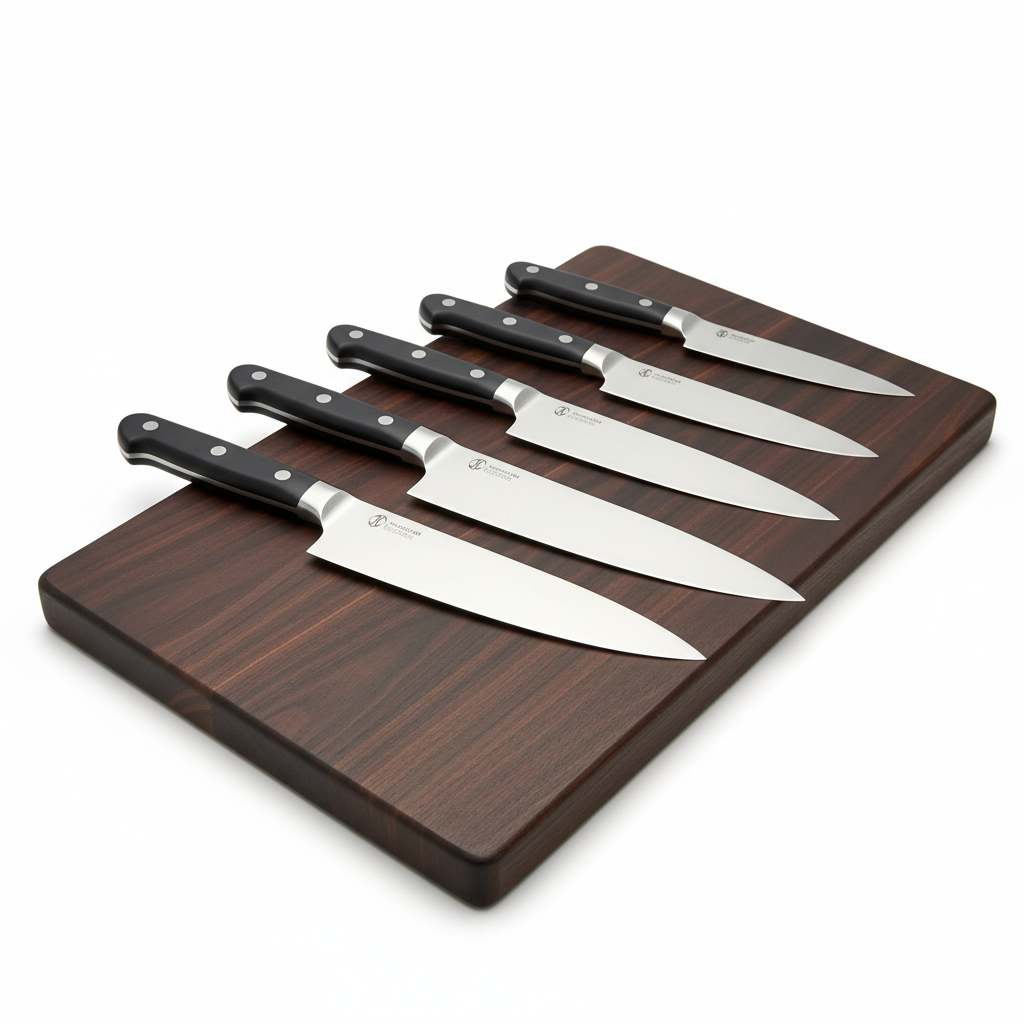
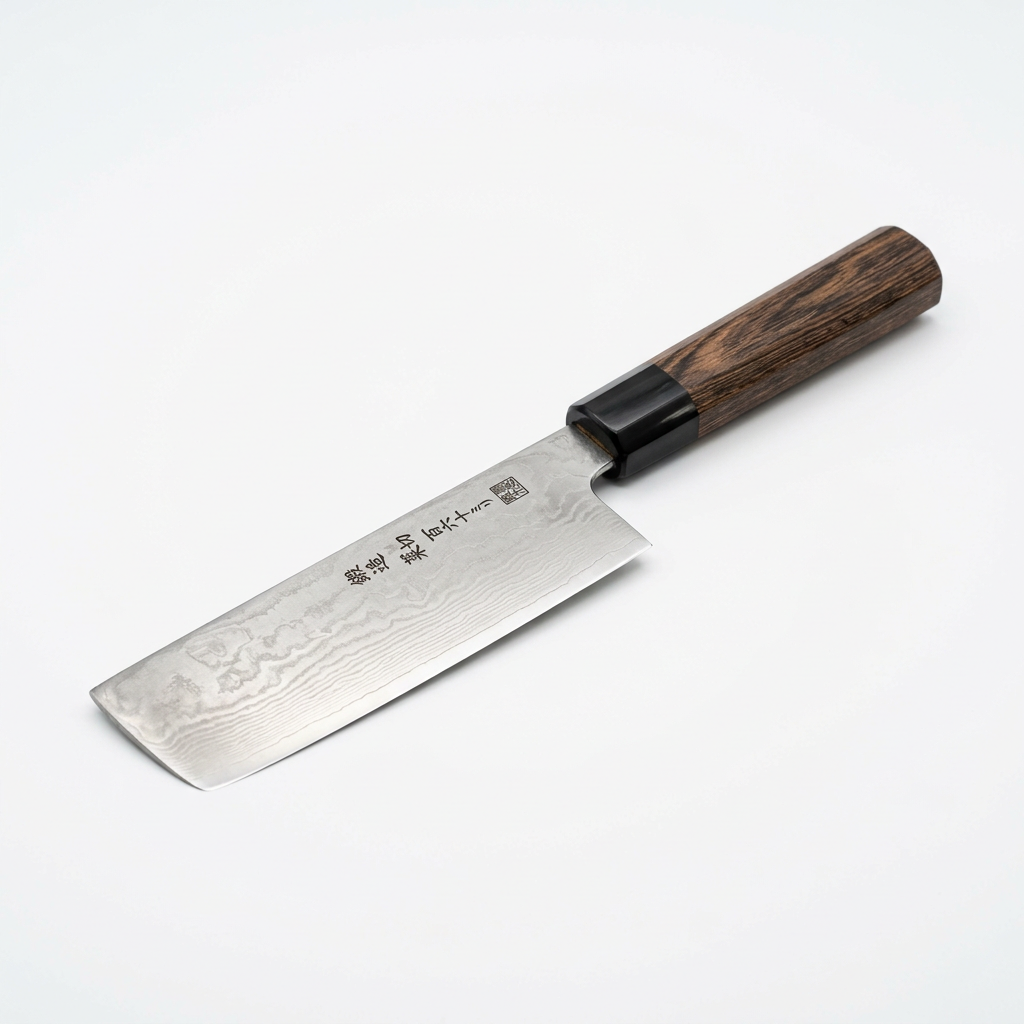
The foundation of any prep work is the gear. A professional chef's knife (typically 8 to 10 inches) should feel like an extension of your arm. For vertical slicing, you need a knife with a slight curve to the blade, which allows for a rocking motion that is essential for long, even cuts. Avoid flimsy, serrated blades for prep work; they tear the cell walls of vegetables, leading to rapid oxidation and wilting. Your knife should be honed frequently and sharpened professionally at least twice a year to ensure that you are cutting through the produce rather than crushing it.
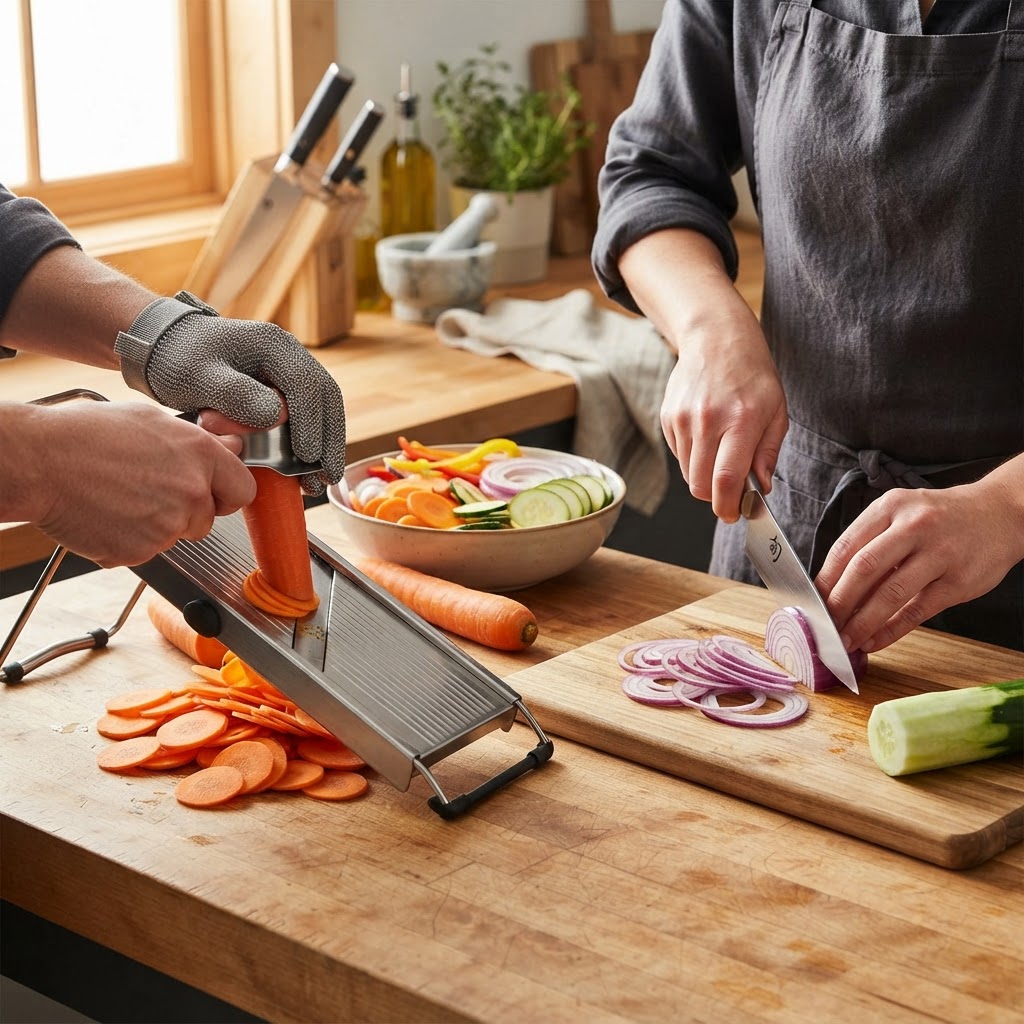
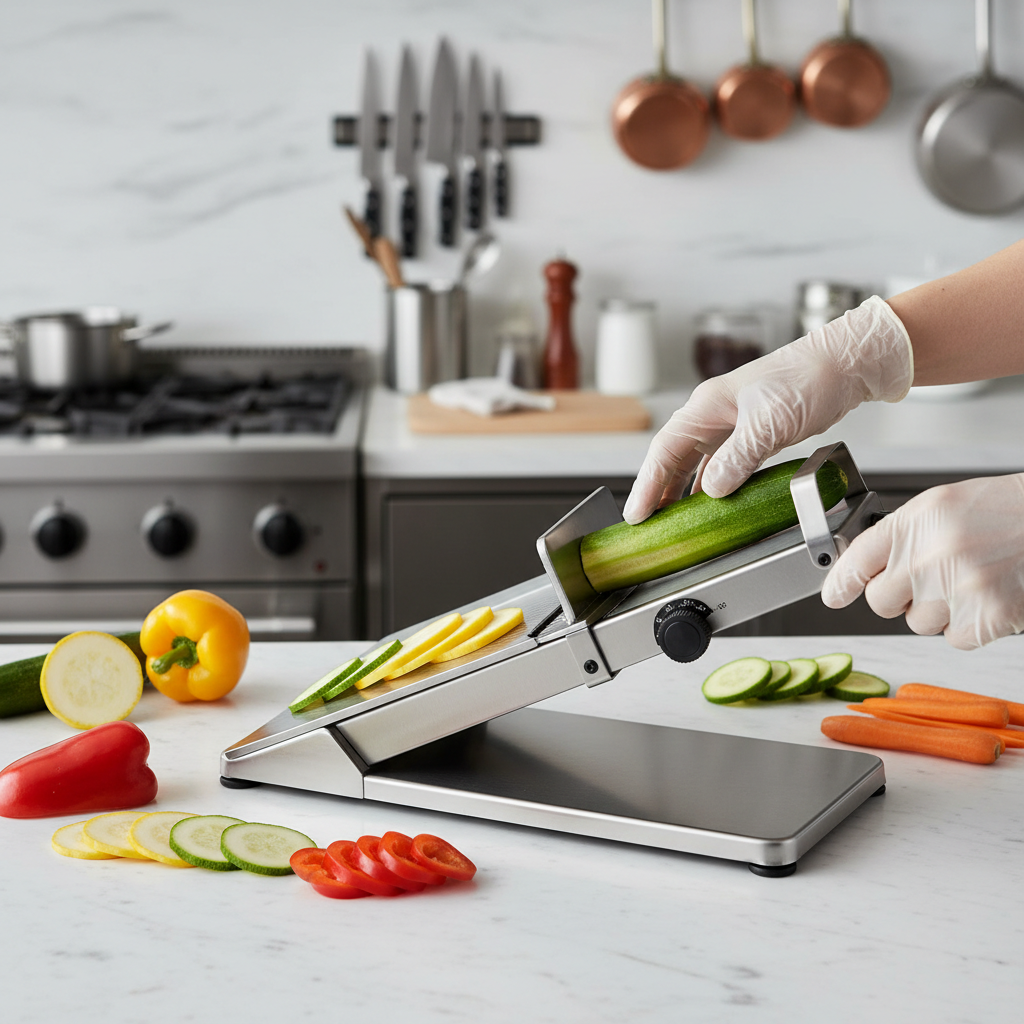
The mandoline is the unsung hero of the home kitchen. While a knife is for general utility, a mandoline is for absolute, surgical precision. When you need to create hundreds of identical slices for a gratin or a salad, a high-quality mandoline is indispensable. Look for a model with a stainless-steel deck and a high-carbon steel blade. Always prioritize models that include a safety guard or a cut-resistant glove. The speed of a mandoline is its greatest asset, but that same speed is where accidents occur if you become complacent or overconfident.
The most dangerous tool in the kitchen is not a sharp knife, but a dull one. A dull blade requires excessive force, increasing the risk of the tool slipping and causing injury to the cook.
Setting Up Your Station
A cluttered station is the enemy of a consistent slice. Your mise en place—the French term for "everything in its place"—should begin with a rock-solid cutting board. If your board slides, place a damp kitchen towel underneath it to grip the surface. Ensure your workspace is well-lit and clear of distractions. If you are prepping multiple vegetables, keep your scraps organized in a designated bowl and your finished product in another. This prevents cross-contamination and keeps your work area clear, allowing for a rhythmic, uninterrupted flow.
Knife Techniques: The Foundation of Control
The Claw and The Rock
The most critical technique for any home cook is the claw grip. To perform this, curl your fingers inward, tucking your fingertips behind your knuckles. The side of your blade rests against your knuckles, which act as a guide and a shield for your digits. As you move the knife, keep the tip of the blade on the cutting board at all times. This "rocking motion" minimizes the lift of the blade, which prevents wobbling and ensures that each cut is clean and uniform. If you lift the blade entirely off the board with every slice, you introduce variation in your slice thickness.
Understanding the Grain
Just like meat, vegetables have a grain or fiber structure. Understanding this helps you achieve the texture you desire. If you want a vegetable to break down and release its flavor into a sauce, cut against the grain. If you want the vegetable to maintain its structural integrity, such as in a stir-fry, cut with the grain. This is particularly relevant when working with fibrous stalks like celery, leeks, or bok choy. A proper vertical slice considers the orientation of these fibers to ensure the best possible mouthfeel in the final dish.
The Precision of the Vertical Cut
A vertical slice essentially means cutting down through the vegetable in a straight, perpendicular motion. To do this perfectly, stabilize the vegetable by creating a flat surface. If the produce is round—like a potato, an onion, or a radish—slice off a small segment of the bottom to create a stable, flat base. Never attempt to slice a round object that is rolling around on the board. By creating a "floor" for your vegetable, you eliminate the wobble, allowing for precise, uniform slices every single time.
Mastering the Mandoline
Safety First: The Mandoline Protocol
Using a mandoline requires a shift in mindset from "controlled force" to "controlled guidance." Never operate a mandoline without a safety guard or a cut-resistant kevlar glove. These gloves are an inexpensive investment that will save you a trip to the emergency room. When using the mandoline, hold the vegetable firmly by the guard and move it across the blade with a steady, confident motion. Do not press too hard; let the sharpness of the blade do the work for you. If you feel resistance, stop and check that the produce is aligned correctly.
Adjusting for Thickness
The primary advantage of the mandoline is the ability to adjust the deck. For julienne techniques, you can set the mandoline to a fine setting for delicate carrots or celery root, or a thicker setting for hearty home fries. Professional chefs calibrate their mandolines based on the starch and water content of the produce. For instance, potatoes should be sliced at a slightly thicker setting than cucumbers. Aim for a thickness of 1/8 inch for most applications, which provides a perfect balance of tenderness and bite. Always perform a test slice on a spare piece of produce to confirm the calibration before committing your main ingredients to the blade.
Precision is not merely a visual requirement; it is a thermal one. Uniform slices ensure that heat penetrates the vegetable evenly, preventing the disappointment of half-cooked, half-mushy vegetables in a single pan.
Maintenance and Cleaning
A mandoline is a precision instrument and should be treated as such. Never put a professional-grade mandoline in the dishwasher. The heat and harsh detergents will dull the blade and potentially damage the plastic or steel body. Instead, rinse it immediately after use under warm water. If there are stubborn vegetable fibers stuck in the blade, use a soft-bristled brush—never your fingers—to clear them. Dry the unit thoroughly before storing it to prevent oxidation or rust from forming on the steel blade.
The Art of Uniform Preparation: A Practical Guide
The Mirepoix Standard
The mirepoix (a mixture of onions, carrots, and celery) is the backbone of French cooking. To achieve the perfect base for a stock or a ragu, your cuts must be consistent in size. A standard fine dice (or brunoise) requires slices that are 1/8 inch by 1/8 inch. By slicing the vegetables vertically first, you create planks of equal thickness. You then stack these planks and slice them into strips, known as julienne. Finally, turn those strips perpendicular and cut again to create the perfect, uniform cubes. This process is efficient, professional, and ensures a balanced flavor profile in your sauces.
The Potato Gratin Principle
When making a potato gratin, uniformity is the difference between a soggy mess and a creamy, layered masterpiece. Using a mandoline set to approximately 1/16 of an inch is ideal. At this thickness, the potato slices are thin enough to cook quickly in the cream mixture but thick enough to hold their shape without disintegrating into starch soup. Layer your slices with precision, overlapping them slightly to create structural integrity. This allows the hot cream and cheese mixture to circulate between each leaf-thin slice, resulting in a cohesive, luxurious texture that is unattainable with hand-cut slices.
Vegetable Carpaccio and Slaws
For raw preparations like a vegetable carpaccio or a crisp slaw, the key is extreme thinness. When vegetables are raw, the mouthfeel is dictated by the slice thickness. A radish or beet cut too thick becomes woody and difficult to chew, but at 1/32 of an inch, it becomes delicate and translucent. Use your mandoline on the lowest setting for these items. Pair these thin slices with an acidic dressing (a ratio of 3 parts oil to 1 part vinegar) to slightly "cure" the vegetables, enhancing their sweetness and softening their fibers just enough to make them pleasurable to eat.
Advanced Slicing Techniques
The Chiffonade
While often associated with herbs, the chiffonade is a vital technique for leafy greens like kale, chard, or spinach. To perform this, stack the leaves on top of one another, roll them tightly into a cylinder, and make thin, perpendicular cuts across the roll. This technique creates beautiful, uniform ribbons. When prepping greens for a sauté, this method ensures that the leaves hit the pan all at once, preventing the stems from being undercooked while the tender leaves overcook and turn bitter.
The Tourné (Optional Precision)
The tourné is a classic French technique of carving a vegetable into a football-like shape with seven sides. While this is primarily a decorative technique used in fine dining, practicing the hand movements associated with it will significantly improve your knife control. It requires a paring knife and a high degree of confidence. While we don't expect you to tourné every carrot, dedicating time to this skill will make your standard vertical slicing feel effortless by comparison.
Working with Roots and Tubers
Root vegetables are dense and require a different approach to slicing. When working with parsnips, celeriac, or sweet potatoes, stability is paramount. Always peel your vegetables first to remove grit that can dull your blade. If you are using a mandoline, root vegetables can be stubborn. If a vegetable is particularly hard, slice it into manageable halves or thirds first to reduce the surface area on the blade. This decreases the force required to push the vegetable, keeping your movements fluid and safe.
Essential Kitchen Habits for the Home Chef
When you can slice a carrot into twenty pieces that are indistinguishable from one another, you have mastered the rhythm of the kitchen. You aren't just prepping food; you are building the foundation of a great dish.
Final Thoughts
Mastering the art of vertical slicing and precision prep is a transformative step for any home cook. It changes the way you interact with your ingredients and, by extension, the way you experience the finished dish. When you take the time to ensure that your onions are diced finely, your potatoes are sliced to the perfect, uniform thickness, and your herbs are chiffonaded with care, you are demonstrating a level of respect for the ingredients that translates directly into the flavor of the final meal.
Remember that culinary technique is not about speed, even though speed is a natural reward for practice. It is about control, consistency, and safety. Do not rush the process; allow yourself the time to get comfortable with the claw grip, the rocking motion of the blade, and the settings of your mandoline. These are the quiet, unsung skills that separate an amateur cook from a confident home chef.
As you continue your culinary journey here at "Blame The Chef," keep this guide nearby. Return to it when you feel your knife skills slipping or when you are preparing a dish that demands perfect symmetry. Whether you are cooking for a crowded dinner party or a quiet meal for one, the pride you take in your prep work will always be the secret ingredient that makes your food stand out. Pick up your blade, focus on your form, and keep slicing—your best meals are yet to come.
Consistency is the hallmark of the professional. By dedicating your practice to the uniformity of your cuts, you are training your hands to perform with intention. This discipline ripples through every aspect of your cooking. You will find that your sautéed vegetables cook evenly, your soups have a better texture, and your salads are more beautifully composed. The mandoline, the chef's knife, and the humble cutting board are the tools of your craft. Treat them well, respect their limitations, and always, always keep those fingertips tucked away.
As you move forward, challenge yourself to incorporate these techniques into your daily cooking routine. Don't just chop an onion; analyze it. Think about the grain, the thickness, and the final purpose of the cut. Is it for a long-simmering stew, or does it need to retain its crunch in a raw salsa? Every decision you make during the prep phase is a decision about the final character of your dish. That is the power you hold in your hands every time you pick up a knife.
Thank you for trusting us at "Blame The Chef" to guide you through these fundamental techniques. We believe that the kitchen should be a place of discovery and joy, and we hope this guide has made your prep work feel less like a chore and more like the craft it truly is. Stay sharp, stay curious, and keep seasoning your life with the skills you have learned today. Happy cooking!
Final note: As you continue to practice, you will notice your speed increasing naturally. Do not chase the speed. Chase the uniformity. The speed will come as a consequence of comfort. When you can look down at your cutting board and see a perfectly uniform pile of vegetables, you know you have truly mastered the technique. Now, go find something in the crisper drawer and put these skills to the test. Whether it is a batch of pickles, a classic vegetable soup, or an elaborate potato gratin, your prep will now reflect the care and precision of a true culinary enthusiast. Enjoy the process, and remember: if it tastes great, you can take the credit; if it doesn't, well, you know exactly who to blame!

Get the Next Recipe
Weekly recipes, techniques, and gear picks — straight to your inbox.
