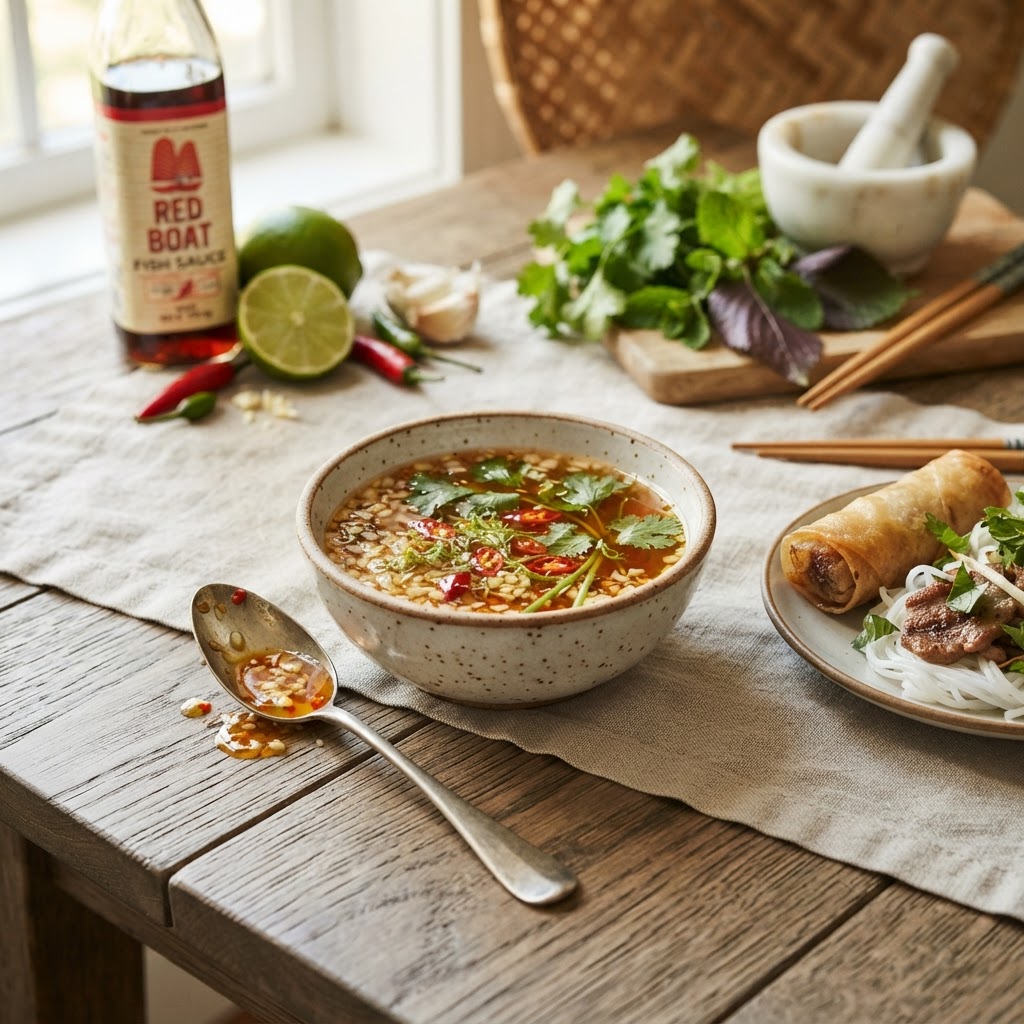
The Home Cook’s Guide to Vietnamese Nuoc Cham: Mastering the Balance of Fish Sauce, Lime, and Chili for Essential Southeast Asian Flavor
If you have ever sat down at a bustling street-side stall in Hanoi or Ho Chi Minh City, the first thing that greets your senses isn't just the roar of motorbikes or the humid tropical air—it is the transformative power of Nuoc Cham. This amber-hued, translucent dipping sauce is the heartbeat of Vietnamese cuisine, serving as the essential bridge between the salty depth of the ocean, the sharp brightness of citrus, and the persistent, slow-burning heat of fresh chilies. It is deceptive in its simplicity, often appearing as a mere side dish, yet it possesses the unique culinary capability to elevate a humble plate of grilled pork vermicelli or a crispy spring roll into a profound gastronomic experience. Mastering this sauce is perhaps the single most effective way to elevate your home cooking, acting as a masterclass in the delicate art of balancing the five fundamental tastes: sour, sweet, salty, bitter, and umami.
Many home cooks approach Vietnamese flavors with a sense of trepidation, intimidated by the pungent aroma of fish sauce or the fear of getting the ratio of lime to sugar wrong. However, the beauty of this traditional elixir lies in its approachable nature; it is a live, breathing composition that rewards intuition and practice. When you whisk together a batch in your own kitchen, you are participating in a tradition that spans generations, honoring a philosophy where every element must exist in perfect equilibrium. The secret is not in a rigid, untouchable recipe, but in understanding how the high-quality fermented anchovy extract interacts with the raw acidity of the lime and the dissolving sweetness of sugar. Once you unlock this harmony, you will find yourself reaching for this sauce to brighten everything from roasted vegetables to seared steaks.
In this guide, we are going to strip away the mystery and get to the core of what makes a world-class Nuoc Cham. We will explore the nuances of selecting the right fish sauce, the physical mechanics of dissolving palm sugar, and the strategic timing of adding aromatics to ensure a vibrant, punchy finish. Whether you are a novice looking to impress at your next dinner party or a seasoned home cook hoping to sharpen your palate, this post serves as your roadmap to Southeast Asian flavor perfection. Prepare to sharpen your knives, clear your counter space, and embrace the vibrant, zesty soul of Vietnam. It is time to stop viewing sauces as an afterthought and start treating them as the essential ingredients they truly are.
The Chemistry of Flavor: Why Balance Matters
At the heart of every great culinary tradition, there is a fundamental understanding of balance, and nowhere is this more evident than in the construction of a classic Nuoc Cham. The sauce is a study in contrasts: the funk and salinity of high-quality fish sauce, the razor-sharp acidity of fresh lime juice, the round, floral sweetness of sugar, and the vegetal heat of bird’s eye chilies. When these components collide, they create a "flavor bridge" that allows the diner to experience each taste simultaneously without one overwhelming the others. If your sauce feels flat, you are likely missing the interplay of these opposing forces, leading to a dish that feels heavy or one-dimensional.
The Role of Umami
The backbone of the sauce is undoubtedly the fish sauce, or nước mắm. This is not merely a salty additive; it is a complex, fermented product brimming with glutamates that provide that unmistakable umami kick. In a professional kitchen, we prioritize fish sauce with a high nitrogen level—often labeled as 40°N or higher—which denotes a longer fermentation process and a more refined, mellow flavor profile. When shopping, look for bottles that contain only two ingredients: anchovy extract and salt. If you see caramel color or excessive hydrolyzed proteins on the label, put it back, as these additives can muddy the clarity of your final sauce.
The Sweet and the Sour
Sugar acts as the moderator in this culinary dialogue, softening the sharp, aggressive edges of the fermented fish. While white granulated sugar is the standard, using palm sugar or coconut sugar can introduce a deeper, more molasses-like complexity that pairs beautifully with the funk of the sauce. The acidity, provided by fresh lime, is the catalyst that brightens the entire mixture. You must always use fresh-squeezed lime juice; bottled alternatives contain preservatives that provide a metallic, artificial aftertaste that will ruin the delicate balance you are working so hard to achieve.
"A great Nuoc Cham is not a recipe you memorize, but a vibration you feel. You are chasing that specific moment where your tongue cannot decide if it wants more salt, more heat, or more sweet—because the answer, quite simply, is all of the above."
Selecting the Right Ingredients
To master the art of the sauce, you must first master your pantry. A Nuoc Cham is only as good as the raw materials you pour into the bowl. Because the ingredient list is so short—often consisting of only four to six items—there is nowhere for subpar products to hide. Quality is not a luxury; it is a structural necessity for this preparation.
Fish Sauce Grades and Origins
Not all fish sauce is created equal. The island of Phu Quoc in Vietnam is famous for producing the gold standard of fish sauce, prized for its amber clarity and lack of "fishy" aftertaste. When you are sourcing your bottle, look for a dark, reddish-gold hue. If the sauce is murky or overly brown, it may have been oxidized or processed with lower-grade fish. A professional chef knows that the fish sauce is the "salt" of the dish, but it is a living salt that adds depth and a savory backbone that regular table salt simply cannot replicate.
Choosing Your Aromatics
The aromatics—garlic and chili—are what give your sauce its personality. For the garlic, use fresh cloves and mince them finely using a chef's knife rather than a press. Using a press bruises the garlic and releases sulfurous compounds that can taste acrid; instead, a fine mince preserves the garlic's sweet, pungent oil. For the bird’s eye chilies, or ớt hiểm, the heat level can vary wildly. If you are serving guests with varying heat tolerances, consider seeding half of the chilies to mellow the intensity while retaining the vibrant, fruity flavor that only fresh chilies can provide.
The Importance of Water Quality
It may seem trivial, but the water you use to dilute your fish sauce is important. Because this is a cold, raw preparation, the flavors are highly concentrated. If your tap water has a high chlorine content or is heavily mineralized, it will affect the taste of your sauce. Use filtered or high-quality bottled water to ensure that the primary flavor profile remains crisp and clean. The goal is to create a vehicle that carries the intense flavors of the fish sauce and aromatics without adding any off-flavors of its own.
The Professional Technique: The Dissolving Method
Many amateur cooks make the mistake of dumping all ingredients into a jar and shaking them together. While this might suffice in a pinch, it does not allow for the proper integration of flavors. The secret to a professional-grade Nuoc Cham is the emulsion-like suspension created by properly dissolving your sugar in water before introducing the fish sauce and lime.
Step-by-Step Preparation
The Temperature Factor
While Nuoc Cham is served at room temperature or chilled, dissolving the sugar is best done with a small amount of warm water (not boiling) to speed up the process. Once the sugar is fully dissolved, you can add a couple of ice cubes to the base to bring it down to the correct serving temperature. Never heat the fish sauce itself; the fermentation process is delicate, and boiling or heating the sauce will destroy the nuanced umami profiles and result in a bitter, flat finish that loses its "live" character.
"If you want to understand the soul of a Vietnamese kitchen, look at the bowl of dipping sauce on the table. It is the signature of the cook, a balance of nature’s most aggressive flavors brought into a peaceful, perfect alignment."
Scaling and Storage: Managing Your Yields
One of the best things about making a large batch of Nuoc Cham is that it is remarkably shelf-stable due to the high acidity of the lime and the high salinity of the fish sauce. A standard ratio for beginners is 1:1:1:5—one part sugar, one part lime, one part fish sauce, and five parts water. However, you should adjust this based on the salinity of your specific fish sauce.
Scaling Up for Parties
When hosting a dinner, you should prepare your sauce at least one hour in advance. This "resting time" is crucial because it allows the garlic and chili to macerate in the lime and fish sauce, infusing the liquid with their spicy, pungent oils. This is known in professional kitchens as a flavor marriage. If you serve it immediately, the components will feel disconnected. If you serve it after an hour, the sauce will possess a cohesive, rounded mouthfeel that feels intentional and well-crafted.
Proper Storage
If you find yourself with leftovers, store your sauce in a sterile glass jar in the refrigerator. While it will keep for up to two weeks, the aromatics (the garlic and chili) will lose their punch after about 48 hours. For the best experience, store the base—the sugar, water, fish sauce, and lime—and add the fresh garlic and chilies right before you serve it. This simple "mise en place" strategy will keep your sauce tasting fresh and vibrant every single time you pull it from the fridge.
Tips for Consistency
To maintain consistency, always use a digital kitchen scale if you are preparing large quantities. While the "cup" method works for home cooking, measuring by weight (grams) ensures that your salt-to-sugar ratio remains stable regardless of how heavily you pack your measuring cups. Aim for a standard of 200 grams of water, 40 grams of sugar, 40 grams of fish sauce, and 40 grams of lime juice. This is a solid starting point that you can tweak by adding more lime if you prefer a sharper profile or more sugar if you enjoy a sweeter dipping sauce.
Common Pitfalls and Troubleshooting
Even with the best ingredients, it is easy to stumble. Perhaps your sauce tastes too salty, or the heat from the chili is overwhelming the meal. Troubleshooting is part of the process, and understanding how to "fix" a batch is what separates a cook from a chef.
Too Much Salt?
If your sauce is hitting the palate too hard with salt, do not just keep adding water, as this will dilute the flavor and make the sauce watery. Instead, add a small splash of rice vinegar or a squeeze of extra lime juice. The added acidity will counteract the perceived salinity, tricking the tongue into sensing balance without losing the depth of the fish sauce.
The Chili Overload
If you have added too many chilies and the sauce has become spicy to the point of being inedible, you can soften the blow by adding a small amount of coconut water or a touch more sugar. The sugar will coat the palate and help neutralize the capsaicin, while the subtle sweetness of the coconut water provides a refreshing undertone that mitigates the heat. Never be afraid to taste as you go; your palate is the final judge.
Achieving the Perfect Clarity
Sometimes, the sauce can look cloudy if the garlic isn't minced properly or if the sugar is impure. To achieve that professional, restaurant-quality look, ensure your garlic is as fine as possible—almost a paste. This allows the garlic to infuse the sauce without creating large, floating chunks. If you prefer a clear, elegant sauce, you can strain the garlic and chili out after the maceration period, leaving you with a potent, aromatic liquid that still packs all the flavor without the visual clutter.
Serving Suggestions: Beyond the Spring Roll
While we often associate Nuoc Cham with fried spring rolls, its applications in the home kitchen are virtually limitless. The key is to view it as a zesty vinaigrette or a finishing sauce rather than just a dip. Because of its intense umami content, it serves as a fantastic foundation for many dishes.
The Vietnamese Vinaigrette
Use the sauce as a dressing for a cold noodle salad. Toss together vermicelli, shredded carrots, cucumbers, fresh mint, cilantro, and crushed peanuts, then drizzle your Nuoc Cham over the top. The acid cuts through the richness of any added meats, such as grilled pork or fried tofu, making the entire dish feel light, vibrant, and incredibly satisfying.
A Master Glaze
You can also reduce the sauce slightly (carefully, as the fish sauce odor can become pungent when heated) to create a glazing liquid. Use this to baste grilled chicken thighs or shrimp. The sugars will caramelize on the grill, creating a sticky, savory-sweet crust that is absolutely addictive. Just remember to brush it on during the last two minutes of cooking to prevent the sugars from burning over the high heat.
Roasted Vegetable Elevation
Try roasting root vegetables like carrots, parsnips, or sweet potatoes with a neutral oil, and once they are out of the oven, drizzle them with a slightly thickened version of your sauce. The pungent, salty-sweet profile of the sauce works wonders with the natural sugars in roasted vegetables. Finish with a sprinkle of toasted sesame seeds or fried shallots for a crunchy, sophisticated side dish that is far more interesting than simple roasted veggies.
Final Thoughts
Mastering Nuoc Cham is a journey that moves beyond a simple recipe; it is an exercise in mindfulness. As you whisk the ingredients together, you are calibrating your sense of taste, learning to distinguish between the sharp bite of a lime and the deep, ocean-born salinity of high-quality fish sauce. This sauce is a testament to the fact that you do not need twenty ingredients to create something world-class. You only need to understand the relationship between the ones you have.
As you incorporate this into your cooking, remember that the "perfect" version of the sauce is the one that brings you the most joy. Whether you like yours fiery with extra chilies or mellow and sweet, the goal is to create a condiment that brings life to your table. Don't be afraid to experiment with the ratios, don't be afraid to taste constantly, and above all, don't be afraid to "blame the chef" if a batch doesn't go quite right on the first try—after all, that is exactly how we learn to improve.
Take this knowledge, head into your kitchen, and start crafting. Once you have a bowl of fresh, aromatic Nuoc Cham sitting on your counter, you will find that the possibilities for your meals are suddenly much larger. Southeast Asian flavor is no longer a destination you have to travel to; it is a skill you have now developed, right in the heart of your own home. Happy cooking, and may your balance always be perfect.
***
Mastering the Nuoc Cham Ratio (The "Chef’s Golden Ratio")
To ensure your success, here is a breakdown of the ratios used in professional settings. Adjust this based on your personal preference for salt and heat.
By following this structure, you create a baseline that is consistently reliable. Remember, the Nuoc Cham should be punchy enough to stand up to fried foods but balanced enough to drink on its own. If you have hit that middle ground, you have truly mastered the balance. Every bowl you make from here on out will be a reflection of your refined palate and your dedication to the craft of flavor. Enjoy the process of finding your own signature touch.

Get the Next Recipe
Weekly recipes, techniques, and gear picks — straight to your inbox.
