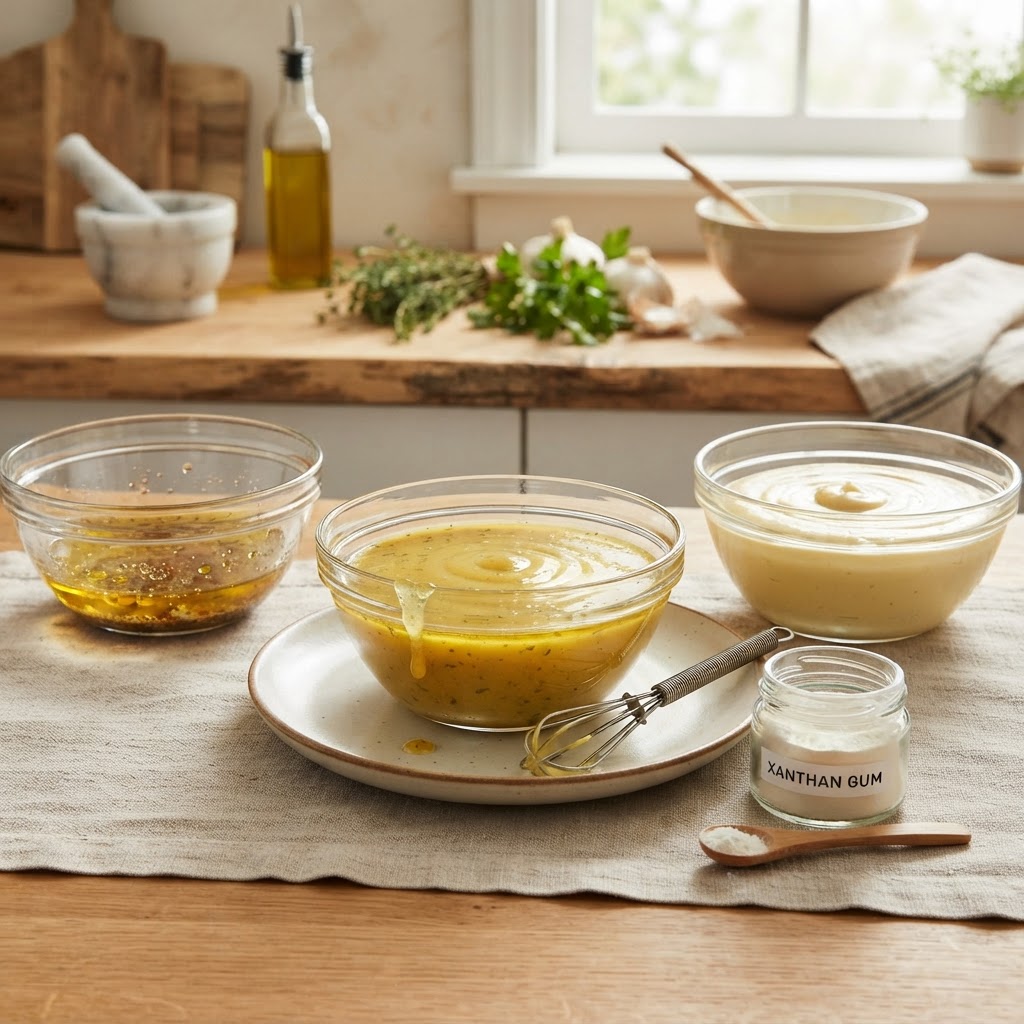
The Home Cook’s Guide to Xanthan Gum: Mastering Stabilizing and Thickening Ratios for Silky, Separation-Free Sauces and Dressings
If you have ever spent hours reducing a delicate pan sauce only to watch it break, pool, or lose its luster the moment it hits a plate, you know the frustration that plagues home cooks. Professional chefs often rely on secret ingredients that bridge the gap between a "good" meal and a restaurant-quality plate, and one of the most misunderstood tools in the arsenal is xanthan gum. For years, this ingredient was relegated to the realm of gluten-free baking and industrial food manufacturing, leaving the average home cook wary of its "chemical-sounding" name. In reality, it is a naturally derived stabilizer that can transform your kitchen workflow, ensuring that your vinaigrettes remain perfectly emulsified for weeks and your sauces retain a silky, professional mouthfeel without the need for excessive amounts of butter or starch.
The science behind xanthan gum is as fascinating as its applications are versatile, functioning primarily as a thickening and stabilizing agent that works even in tiny, almost imperceptible quantities. Unlike traditional roux or cornstarch, which often alter the flavor profile of a dish or require long cooking times to remove a chalky texture, xanthan gum operates effectively at room temperature. It works by creating a complex network of molecules that traps liquid, effectively preventing the separation of oil and vinegar or the weeping of moisture from a delicate emulsion. Once you learn the proper ratios and integration techniques, you will find that a single bag of this white, powdery substance can last for months, significantly elevating the stability and quality of your homemade condiments.
In this guide, we will peel back the curtain on how to master this ingredient so that you can stop blaming the temperature or your whisking speed for separated sauces. We will look at the specific hydration ratios, the importance of shearing to prevent clumping, and the ways in which this stabilizer can save your failing emulsifications. Whether you are whipping up a classic French vinaigrette, a creamy vegan dressing, or a glossy reduction that needs to coat a spoon perfectly, understanding the chemistry of stabilizers is the key to consistency. By the end of this post, you will view your pantry through the lens of a professional, armed with the knowledge to troubleshoot your recipes and achieve that elusive, high-gloss finish every time you step up to the stove.
Understanding the Chemistry of Xanthan Gum
At its core, xanthan gum is a polysaccharide secreted by the bacterium Xanthomonas campestris, which is fermented to produce the white powder we recognize in our kitchens. When introduced to liquid, these molecules swell and hydrate, creating a highly viscous suspension that is incredibly resistant to temperature changes and pH fluctuations. This is why it is widely used in both hot gravies and cold salad dressings—it simply does not care what environment it is in, making it a "set it and forget it" tool for the home cook who values reliability above all else.
The most critical factor to remember is that xanthan gum is incredibly potent. Home cooks often make the mistake of adding a "pinch" too much, which can quickly result in a sauce that has the consistency of hair gel or a snot-like texture that is unappealing on the palate. Professional chefs use digital scales that can measure down to 0.01 grams, but for the home cook, we generally recommend aiming for 0.1% to 0.5% of the total weight of the liquid. Staying within this range is the secret to getting a "silky" texture rather than a "slimy" one, ensuring your sauces remain elegant and pourable rather than goopy.
"Stabilization is not about masking poor technique; it is about providing the structural framework that allows your ingredients to shine without the constant threat of separation."
The Power of Hydration and Shear
To ensure the gum hydrates fully without forming "fish eyes"—those annoying little clumps of hydrated gum surrounding a dry, powdery core—you must employ the correct shearing technique. If you try to whisk it into a liquid by hand, you will likely fail. Instead, you need a high-speed blender, an immersion blender, or a small whisking device that can provide enough mechanical energy to force the particles apart as they expand.
Troubleshooting Your Emulsions
There is perhaps nothing more disheartening than watching a beautiful balsamic vinaigrette fall apart while you are trying to plate a salad for dinner guests. We often blame the oil or the mustard, but the reality is that without a stabilizer, an emulsion is inherently unstable and will always look to revert to its two-part state. Xanthan gum acts as the mediator in this volatile relationship, binding the oil droplets to the water-based ingredients, such as vinegar, juice, or stock.
When you add this stabilizer to an emulsion, you are essentially increasing the viscosity of the continuous phase, which slows down the movement of the oil droplets, preventing them from colliding and coalescing back into a layer of oil. Even if you aren't a fan of synthetic-sounding ingredients, consider that xanthan gum is a natural fiber. Its use allows you to reduce the amount of oil needed in a recipe, making your dressings lighter while actually increasing their "mouth-coating" quality.
Techniques for Perfect Vinaigrettes
When building a vinaigrette, the order of operations is essential. You want your acid, herbs, and aromatics to be fully incorporated before you attempt to stabilize the liquid. Use the following ratios as your gold standard for a professional-grade dressing:
Total Liquid:* 250 grams (vinegar, lemon juice, etc.)
Total Oil:* 250 grams
Xanthan Gum:* 0.5 grams (approximately 1/8 teaspoon)
Always blend your base ingredients (vinegar, mustard, honey, salt) with the xanthan gum first. Only once this base has thickened slightly should you begin to slowly stream in your oil with the blender running. This ensures that the stabilized base can trap the oil as it enters, creating a stable, homogenous dressing that won't separate even if stored in the fridge for a week.
Mastering Silky Sauces and Gravies
Moving away from cold dressings, let's discuss the role of stabilizers in hot cooking. Traditionally, we use flour-based roux or cornstarch slurries to thicken gravies. While these are delicious, they often require constant attention and can easily become lumpy or burn if the heat is too high. Xanthan gum provides an alternative or a supplement that keeps the texture silky without requiring the addition of extra fats or the need to cook out raw starch flavors.
For a restaurant-quality pan sauce, you likely start by deglazing your pan with wine or stock and reducing it. If you want a sauce that clings to a piece of seared chicken or a steak, a heavy reduction can sometimes be too salty or intense. By using a touch of xanthan gum, you can achieve that "nappé" consistency—where the sauce coats the back of a spoon—without having to reduce the liquid to a near-syrup state.
"A great pan sauce is defined by its ability to coat the plate with intent, not by how much butter you were forced to whisk in at the final second."
The "Nappé" Consistency
Achieving the perfect thickness is a matter of visual cues. As you whisk your stabilized liquid, observe how it moves. You want a sauce that is viscous enough to hold onto the meat but fluid enough to flow naturally across the plate. If you find your sauce is too thin, do not add more xanthan gum directly into the hot pan; you will almost certainly end up with lumps. Instead, remove a tablespoon of the sauce, mix it thoroughly with a tiny pinch of the gum, and whisk it back into the main pot.
Tip for Success:* Always add the xanthan gum when the liquid is below boiling. While it is heat-stable, adding it to a boiling liquid can cause it to hydrate too quickly, leading to uneven texture.
Patience is Key:* The thickening power of the gum can continue to increase for a few minutes after the heat is removed. If it looks "almost" there, stop and wait. It will likely reach the perfect consistency on its own.
The Role of Xanthan Gum in Gluten-Free Baking
While this guide focuses on sauces and dressings, it would be negligent not to mention the vital role xanthan gum plays in the gluten-free world. In wheat-based baking, gluten provides the "web" that traps gases and gives bread its chew and elasticity. When we bake without gluten, we lose that structure, resulting in crumbles rather than loaves. Xanthan gum acts as a synthetic gluten, providing the elasticity required to keep your cookies from breaking apart and your loaves from collapsing.
If you are a home cook who enjoys exploring gluten-free culinary arts, you are likely already using this ingredient, but perhaps not effectively. The ratio here is different than in sauces: you are looking for structural integrity rather than liquid viscosity. For every cup of gluten-free flour blend you use, you generally need about 1/4 to 1/2 teaspoon of xanthan gum.
Common Mistakes in Gluten-Free Doughs
Advanced Flavor Profiling and Texture Control
Once you are comfortable with the basics, you can start using stabilizers to achieve specific textures in more complex preparations. Imagine a fruit coulis for a dessert: by adding a tiny amount of xanthan gum, you can prevent the fruit juice from bleeding into the rest of the plate, allowing for clean, precise plating that looks like it came out of a Michelin-starred kitchen. This technique is often referred to by chefs as "structural plating," where the consistency of the component is managed so it stays exactly where you put it.
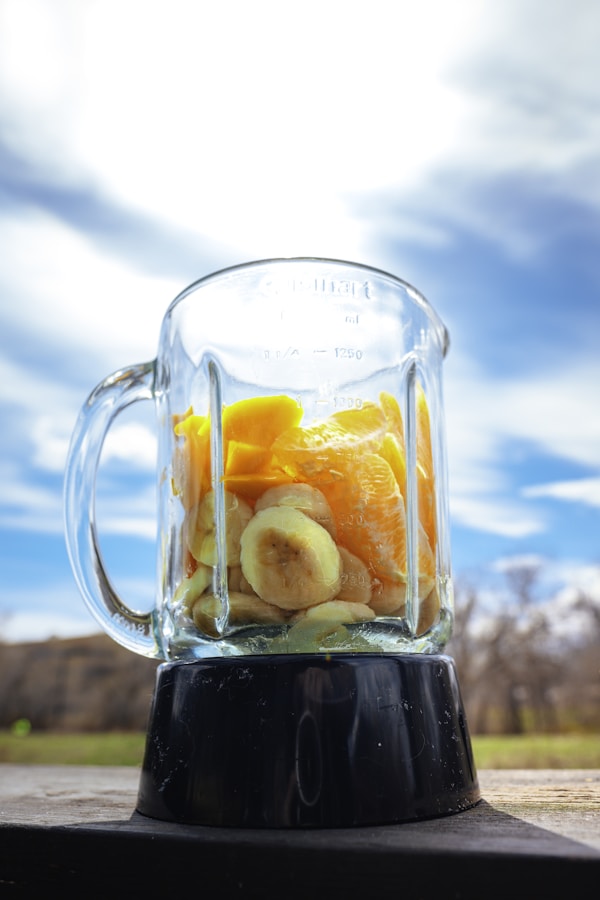
Another application is in the creation of unique beverage textures. Ever wanted a thick, creamy smoothie that stays suspended without the ingredients separating into a watery layer at the bottom? A very small amount of xanthan gum—sometimes as little as 0.05%—can create a luxurious, milkshake-like mouthfeel even in a low-fat or dairy-free smoothie. It changes the way your tongue perceives the drink, making it feel "richer" than the ingredient list would suggest.
Experimenting with Mouthfeel
To truly master this, I suggest you run a kitchen experiment. Take three small bowls of water and add 0.1%, 0.3%, and 0.5% xanthan gum to them, blending each with an immersion blender. Taste them and notice how the texture changes from a light, syrupy consistency to a thick, gel-like structure. Developing your palate for these differences will make you a much better cook, as you will start to recognize how texture impacts the overall enjoyment of a dish, often even more than flavor itself.
Pro Tip:* If your flavor profile is acidic (like a citrus-based dressing), remember that acid can slightly weaken the thickening power of xanthan gum. You might find you need a hair more of the powder than you would for a neutral-pH sauce like a stock or a plain milk-based gravy.
Troubleshooting Common Culinary Disasters
We have all been there: the gravy is lumpy, the dressing is separated, or the sauce has turned into a gelatinous blob. When things go wrong with stabilizers, it usually boils down to a failure to disperse the powder correctly. If you find yourself in the middle of a kitchen emergency, don't panic. These problems are almost always fixable if you have the right tools and a little bit of patience.
If you end up with "fish eyes" (the clumps of dry powder), the only way to save it is through aggressive mechanical force. Pour the liquid through a fine-mesh strainer into a high-speed blender and hit it on the highest setting for at least 30 seconds. If the clumps are too large, you might have to push them through the mesh first, then blend the resulting liquid until perfectly smooth. It takes time, but it is better than starting your dinner over from scratch.
"A kitchen mistake is rarely a disaster; it is merely an invitation to understand the physics of your ingredients a little more deeply."
When to Abandon Ship
There are times when even the best cook must admit defeat. If you have added so much xanthan gum that the sauce has become truly gelatinous and you cannot thin it out without diluting the flavor significantly, it is best to start over. Keep a log of your "mistake" batches, including the exact weight of the xanthan gum you used. This data will be invaluable as you calibrate your own recipes for your specific palate.
Final Thoughts
The journey to becoming a master of your own kitchen is paved with the acquisition of both intuition and technical knowledge. While it is easy to view ingredients like xanthan gum as "cheating" or overly scientific, they are, in fact, the greatest tools we have for achieving consistency. When you remove the anxiety of wondering if your sauce will break or your dressing will separate, you free up your creative energy to focus on what truly matters: flavor combinations, seasoning, and the joy of sharing a meal.
Do not be intimidated by the chemistry. Start slow, use your digital scale, and embrace the process of experimentation. Whether you are aiming for that perfect glossy coating on a braised short rib or a vinaigrette that looks just as good on the third day as it did on the first, you now have the tools to make it happen. You are the chef, and with a little practice, your kitchen will operate with the precision and grace of a professional line, allowing you to focus on the art of cooking rather than the accidents of the stove.
As you continue to refine your skills, remember that the "Blame The Chef" philosophy is built on the idea that there is no such thing as an unsolvable culinary problem. If your sauce breaks, you don't blame your luck; you analyze your ratios and your mechanical shearing technique. You learn, you adapt, and you return to the stove with more confidence than before. The world of stabilizers is wide and varied, but xanthan gum remains one of the most reliable, efficient, and transformative tools in your pantry. Go forth, measure carefully, blend with power, and enjoy the silky, smooth results of your newfound mastery.
If you find yourself struggling with a specific recipe or need a recommendation for equipment, remember that the community here is always growing. Don't be afraid to experiment with different ratios based on the specific viscosity you prefer—cooking is as much about personal taste as it is about scientific fact. Keep that digital scale close by, stay curious about the way ingredients interact, and most importantly, keep cooking. There is nothing more satisfying than a meal that not only tastes incredible but also looks and feels exactly as you intended it to. Your journey into the professional side of home cooking starts with these small, calculated steps, and I look forward to hearing about the masterpieces you create.
Beyond the technicalities of emulsification and suspension, remember that the ultimate goal of any kitchen stabilizer is to serve the dish. A sauce that is perfectly thick but lacking in depth of flavor is a hollow victory. Always ensure your foundational work—your stocks, your reductions, and your seasonings—is robust. When you combine high-quality, flavorful ingredients with the stabilizing power of xanthan gum, you create a synergy that is hard to beat. The stability isn't just about appearance; it’s about the way the sauce clings to the food, delivering a consistent, powerful hit of flavor in every single bite. That is the hallmark of a true chef, and with this guide, you are well on your way to claiming that title in your own home.
One final piece of advice as you stock your pantry: look for high-grade, food-service quality xanthan gum. Many generic brands may contain additives or fillers that can interfere with the purity of your results. Investing in a high-quality, fine-mesh powder will pay dividends in your ability to hydrate the gum quickly and evenly. It is a small investment that will last you for hundreds of meals, ensuring that every vinaigrette, gravy, and glaze you create remains as elegant as the day you first whisked it together. Keep practicing, keep tasting, and above all, keep blaming the chef—because the chef is now officially in control of every drop in the pan.
As you move forward, consider the broader implications of your newfound mastery. Once you understand how to control texture, you can experiment with modernist techniques that were once reserved for laboratory-style kitchens. You can create foams, gels, and purees that stand up to the heat of the oven or the cold of the freezer, all by adjusting your stabilizer ratios. The limit is truly only your imagination. When you master the medium, the canvas of your plate becomes a playground. Stay bold, stay curious, and keep pushing the boundaries of what you thought was possible in your kitchen. Your future culinary projects will benefit immensely from this deep dive into the world of xanthan gum, and I can't wait to see what you plate up next.
Lastly, share your successes (and your learning moments) with others. Culinary knowledge is meant to be passed down, refined, and shared. When you successfully stabilize a difficult sauce, take a photo, write down your ratio, and share it with a friend who might be struggling with the same issue. The "Blame The Chef" community thrives when we all help each other get better, one emulsion at a time. The path to perfection is long, but it is infinitely rewarding, and it is a path that we are all walking together. Happy cooking, and may your sauces always stay perfectly, wonderfully stable.
If you are looking for further reading on the intersection of chemistry and cooking, there are excellent resources on food science that dive even deeper into the specific molecular interactions of polysaccharides. However, for 99% of your home cooking needs, this guide has provided the core principles you need to succeed. Stick to the ratios, respect the hydration time, and prioritize the use of high-speed blending, and you will find that the mysterious world of stabilizers is not so mysterious after all. It is simply another tool in your box, waiting to be used to bring your culinary vision to life. The kitchen is ready for you; now, go make it your own.


Get the Next Recipe
Weekly recipes, techniques, and gear picks — straight to your inbox.
