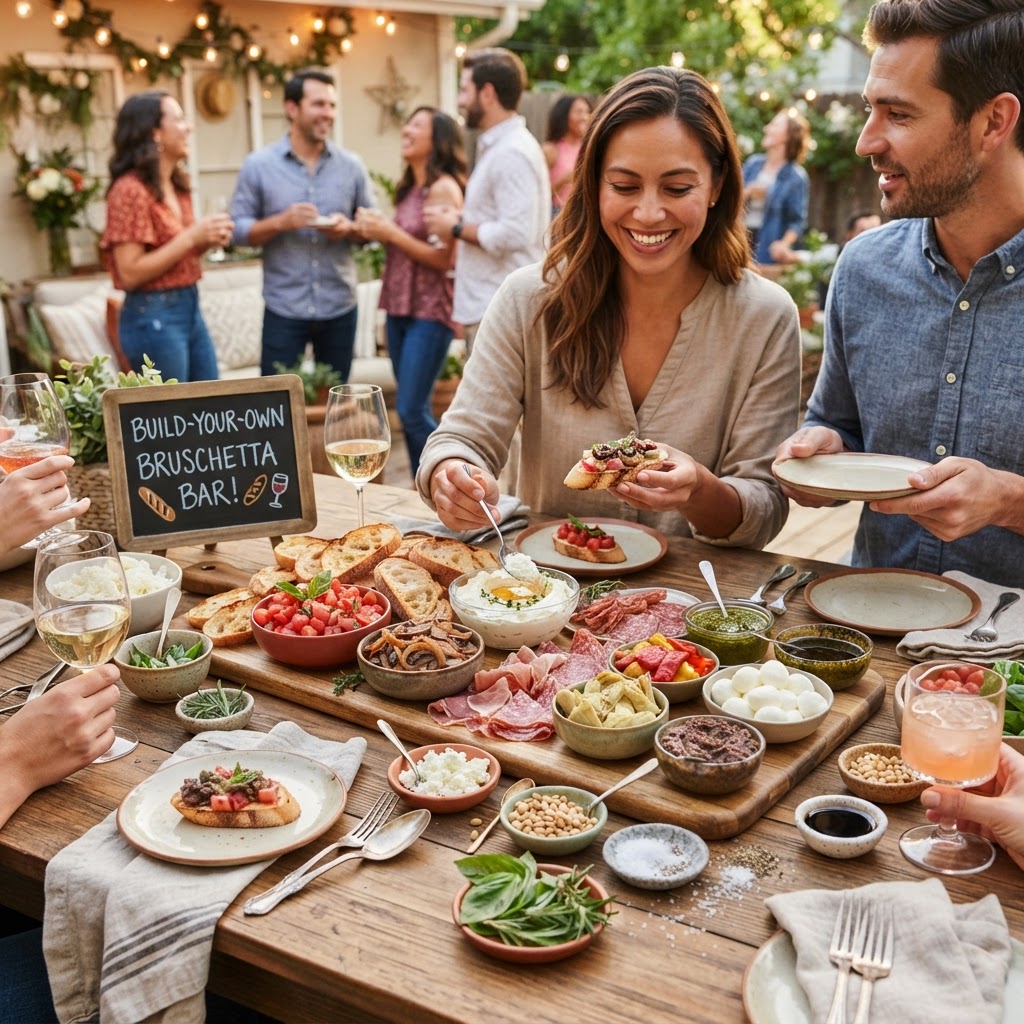
The Interactive Appetizer Station: Designing Build-Your-Own Bars for Seamless Socializing
Hosting a gathering should be a celebration of connection, not a frantic marathon spent tethered to the kitchen while your guests mingle without you. The secret to effortless entertaining lies in shifting the burden of assembly from the host to the guest, transforming your appetizer hour into an engaging, interactive experience. By designing a build-your-own bar, you provide a tactile activity that serves as a natural icebreaker, effectively breaking down social barriers before the first glass of wine is even poured. This approach not only alleviates the pressure of perfect plating but also allows you to tailor your menu to accommodate diverse dietary preferences and flavor profiles. When guests have agency over their plates, the kitchen becomes a playground rather than a high-stress zone, ensuring that the ambiance remains relaxed and inviting throughout the evening.
The architecture of a successful interactive station relies on a delicate balance between variety and cohesion, where every component serves a distinct purpose in the overall flavor narrative. You want to curate a selection of high-quality bases—think toasted baguette slices, artisan crackers, or endive spears—that can support a multitude of toppings without disintegrating. From there, introduce a range of textures and flavor profiles, ensuring you have a mix of salty, sweet, acidic, and creamy elements to satisfy every palate. The beauty of these stations is that they are entirely scalable, whether you are hosting an intimate quartet or a bustling crowd of twenty, provided you understand the fundamental logistics of staging and replenishing your displays. It is about creating a sense of abundance that feels intentional and curated, rather than cluttered or overwhelming.
As we delve into the nuances of designing these stations, we will explore the professional techniques for maintaining food safety, maximizing aesthetic appeal, and sourcing ingredients that stand up to room-temperature service. You will learn how to balance your flavor ratios, how to properly store components for easy setup, and how to guide your guests through the experience with subtle signage or arrangement. Whether you are crafting a gourmet crostini bar, a customizable taco spread, or a sophisticated Mediterranean mezze board, the goal is to elevate the "do-it-yourself" concept into something truly memorable. By the time your guests head to the dining table, the initial social friction has long evaporated, replaced by the warmth of shared culinary discovery. Let’s turn your kitchen into the most coveted social hub in the neighborhood, one station at a time.
The Foundation of Selection and Variety
Choosing Your Base Elements
The foundation of any successful appetizer bar is the structural component, and choosing the right vehicle for your toppings is a science in itself. You must prioritize stability and texture, ensuring your bases offer a satisfying crunch that doesn't buckle under the weight of spreads or garnishes. For a crostini bar, I recommend slicing baguettes at a 45-degree angle to maximize surface area, then brushing them lightly with high-quality extra virgin olive oil and baking at 375°F (190°C) for exactly 8 to 10 minutes until they reach a golden, uniform crispness. If you prefer a gluten-free or lighter option, endive spears or crisp cucumber rounds provide a refreshing, cool contrast to richer toppings, though these should be prepped within an hour of service to prevent wilting.
"True hospitality is not about the complexity of the recipe; it is about the fluidity of the experience. When you empower guests to build their own plates, you are inviting them to participate in the artistry of the evening."
Balancing Flavor Profiles
When curating your toppings, think in terms of flavor mapping. Every station needs a balance of a high-fat element (like a whipped goat cheese or a tapenade), an acidic component (pickled red onions or cornichons), and a fresh herbal finish. Aim for an ingredient ratio of approximately 3:2:1—three savory base components, two textural contrast items, and one signature, high-impact finish. For instance, if you are serving a smoked salmon bar, your creamy base could be a dill-infused crème fraîche, your textural contrast could be crispy fried capers, and your finish could be freshly zested lemon or micro-greens. This systematic approach ensures that even the most inexperienced cook can assemble a combination that feels like a professional culinary pairing.
The Art of Texture and Temperature
Nothing kills a party faster than lukewarm food that should be hot or soggy food that should be crisp. For hot elements, utilize chafing dishes or induction warmers to maintain a steady temperature of 140°F (60°C), which is the safety threshold for keeping warm food out of the danger zone. For chilled items, nest your serving bowls in larger bowls filled with crushed ice; this is a professional catering trick that not only keeps your spreads at a food-safe temperature but also adds a visually stunning, sparkling element to your table design. Always remember that room temperature is where the magic happens, but it is also where bacteria thrives, so replenish small amounts of food frequently rather than piling large quantities that will sit out for hours.
Designing the Flow of the Station
Traffic Management and Ergonomics
The most common mistake when setting up a self-serve bar is creating a bottleneck. You must consider the circular flow of your guests, starting with plates and utensils, moving toward the base elements, then the toppings, and ending with napkins and garnishes. Never place your station in a corner; pull it away from the wall so that guests can access both sides of the table, effectively doubling your throughput. If your space is limited, create a "U-shaped" flow that funnels guests toward the drink station last, ensuring they have their food firmly in hand before they need to pick up a glass.
Strategic Signage and Navigation
While you might know that the blue cheese crumble pairs beautifully with the balsamic-glazed figs, your guests might be hesitant to experiment without guidance. Use small, elegant labels to identify ingredients, but take it a step further by including suggested pairings on the label itself. For example, a tag near the prosciutto could read: "Pairs perfectly with the melon carpaccio and a drizzle of honey." This subtle instruction encourages exploration and builds confidence, turning the station into an educational experience that guests will be talking about long after the dinner service ends.
Managing Refills and Transitions
A pro-chef approach to the build-your-own bar involves the "Mise en Place" prep technique. Keep back-stock of all your ingredients in pre-measured, airtight containers in the refrigerator, ready to be whisked out for a quick refill. Never rely on large, heavy platters that are difficult to swap out; instead, use nested serving bowls that can be whisked away and replaced in seconds. If a component runs out, have a plan for a "pivot" ingredient—a jar of high-quality olives or a bowl of spiced nuts can easily fill the void and maintain the aesthetic integrity of the display if one of your featured toppings disappears unexpectedly.
Professional Techniques for Toppings
The Science of Whipped Spreads
A whipped cheese or bean dip is the ultimate anchor for an appetizer bar because it is easy to spread and visually appealing. Whether you are using goat cheese, feta, or cannellini beans, the secret is the aeration process. Use a food processor fitted with the blade attachment and pulse your ingredients while slowly drizzling in room-temperature olive oil or cream until the consistency is light, airy, and pipeable. For a professional finish, use a piping bag with a large star tip to create beautiful, uniform rosettes on your serving platter, which makes the food look far more expensive than it actually is.
"A great appetizer bar is a study in controlled chaos. It should look bountiful and inviting, but every ingredient must have a specific, functional purpose in the guest's palate journey."
Mastering Pickles and Relishes
Acidity is the engine of flavor, and your station should feature at least two homemade pickled elements. Making quick pickles—a process of heating a 1:1 ratio of vinegar to water with sugar, salt, and aromatics—takes less than fifteen minutes and can be done the night before to allow flavors to meld. Think beyond cucumbers: pickled radish, red onion, carrots, or even stone fruit can add a sophisticated brightness that cuts through rich cheeses or charcuterie. These items are inexpensive, high-impact, and can be made in large batches, making them the most cost-effective way to elevate your spread.
The Importance of the "Crunch Factor"
Every build-your-own bar requires a variety of textural elements that provide a satisfying "snap." This includes toasted nuts, seeds, fried herbs, or crispy aromatics. My favorite trick is to shallow-fry sage leaves in butter until they are translucent and crisp, then drain them on a paper towel and finish with a pinch of sea salt. These crispy aromatics act as a luxurious garnish that bridges the gap between home cooking and fine dining, adding a level of complexity that guests will find nearly impossible to identify but entirely delightful to consume.
Mise en Place: The Chef’s Secret Weapon
Scaling for Your Guest Count
When planning your quantities, the professional standard for an appetizer-only event is roughly 5 to 7 pieces or small portions per person for a two-hour window. If your build-your-own bar is the main pre-dinner activity, scale back to 3 to 4 portions per person. The biggest mistake is over-purchasing; keep a simple spreadsheet where you track the weight of each component consumed. Over time, you will find that you have a "magic number" of ounces per guest for each category—such as 2 ounces of spread, 3 crackers, and 1 ounce of toppings per person—which drastically reduces food waste and saves your budget.
Time-Management for the Host
Do not attempt to assemble your station in the thirty minutes before guests arrive. The "assembly line" method is your best friend:
Storage and Safety Protocols
Understanding the Danger Zone (temperatures between 40°F and 140°F) is critical for home entertaining. If your station is going to be out for more than two hours, you must use ice-cradling for perishables. Never put new food directly on top of old food; always use a fresh bowl. If you find yourself needing more food, swap out the entire vessel rather than adding to a half-empty one. This keeps your station looking fresh and helps prevent cross-contamination, especially with items like spoons and tongs which should be replaced or wiped down every thirty minutes.
The Aesthetic and Environmental Design
Lighting and Atmosphere
The visual appeal of your station is just as important as the taste. Use varied heights to draw the eye, incorporating tiered cake stands, wooden boards on risers, and decorative bowls of different shapes and depths. Lighting is crucial; if your kitchen lighting is too harsh, swap in lower-wattage bulbs or use small, battery-operated tea lights tucked among the bowls to create a warm, inviting glow. Avoid cluttering the table with too many decorative objects; let the ingredients themselves be the stars. Fresh sprigs of herbs like rosemary or thyme scattered sparingly across the table surface create an organic, professional look.
The Role of Tableware
Choose your plates and utensils carefully. Small, heavy-duty bamboo plates are excellent for these bars because they provide enough structure to hold multiple toppings without bending. Ensure you have small cocktail napkins readily available at both ends of the station. For utensils, avoid standard kitchen spoons; use elegant silver or gold-tone serving spoons that feel substantial in the hand. If you are serving items like dips, provide high-quality spreaders so guests aren't forced to use a regular butter knife, which makes for a cleaner, more refined assembly process.
"A well-designed station should feel like an invitation, not a chore. If you have done your preparation correctly, you should be able to walk away from your own appetizer bar, leaving the guests to enjoy the interplay of flavors you have carefully curated."
Sustainability and Waste Reduction
Try to avoid single-use plastics entirely. The modern entertainer uses cloth napkins, ceramic bowls, and reusable wooden boards. When selecting your food, aim for items that can be purchased in bulk from your local market to reduce packaging waste. Any leftovers should be easily stored in glass containers; for instance, any remaining whipped cheese can be used as a base for a pasta sauce the next day, while extra crostini can be pulverized into artisanal breadcrumbs. By viewing your leftovers as future ingredients, you minimize waste and keep your kitchen running sustainably.
Troubleshooting Common Hosting Woes
What if the Bread Goes Stale?
Bread is the most volatile part of the appetizer bar, and humidity is its greatest enemy. If you find your crostini losing their crispness halfway through the event, do not despair. Have a small, toaster-oven friendly tray ready in the kitchen; you can quickly "refresh" them by popping them in the oven at 350°F (175°C) for three minutes. Alternatively, embrace the situation by offering a soft-bread alternative like torn ciabatta or pita triangles, which are meant to be soft and actually hold heavy toppings much better than a delicate, over-toasted cracker.
Handling Dietary Restrictions
In the modern culinary landscape, you must anticipate dietary needs. Always include at least one "Universal" base—something that is gluten-free, vegan, and nut-free. Rice crackers, endive, or even high-quality corn tortilla chips are excellent options that everyone can enjoy. Use distinct, color-coded tongs for items containing potential allergens (like dairy or nuts), and ensure your labels clearly denote common allergens. Being proactive about these details not only protects your guests but also demonstrates a level of thoughtfulness that truly elevates the hosting experience.
Managing Spills and Messes
An interactive bar is inherently a bit messy, and that is part of the fun. Accept that a few crumbs will hit the floor, and have a strategy to manage it. Use a runner on your table that can be easily shaken out or swapped for a clean one mid-event. Keep a small, hidden "clean-up kit" under the table containing a damp microfiber cloth and an extra set of serving utensils. If a spill happens, address it with a smile and a quick wipe; your guests will likely not even notice, and your ability to remain unflappable will set the tone for the rest of the evening.
Final Thoughts
The beauty of the build-your-own bar is that it successfully bridges the gap between the professional kitchen and the home dining room. By treating your appetizer service as an interactive installation, you move away from the traditional model of the "service-only host" and into a role of a "culinary facilitator." This shift does more than just save you time; it creates a dynamic, social atmosphere that encourages conversation, experimentation, and joy.
Remember that perfection is the enemy of a good party. Your guests are there to enjoy your company, not to critique the structural integrity of your bruschetta. If a bowl runs low or a napkin falls, it’s not a failure—it’s an opportunity to engage. As you master these techniques, you will find that you are spending less time in the kitchen and more time actually enjoying the drinks and laughter with your friends.
Start small, perhaps with a simple crostini station for your next gathering, and slowly expand your repertoire as you become more comfortable with the flow and logistics. Keep your bases crisp, your toppings balanced, and your station accessible. When you blame the chef for a dish that tastes divine, make sure the chef is the one who chose the ingredients, while the guest is the one who masterfully combined them. That is the true secret to seamless socializing: the art of the interactive appetizer station. Now, go forth, prep your mise en place, and enjoy the art of the gather. The kitchen is yours to command, but the experience belongs to everyone.
To truly master this, remember that your personality should shine through your ingredient choices. Do you love the heat of Calabrian chili? Incorporate it into your spread. Are you a fan of Mediterranean tradition? Keep the kalamata olives and fresh oregano front and center. The best menus are those that feel personal and authentic to the cook. When you stand behind a table of ingredients you genuinely love, your passion becomes infectious, and your guests will feel that warmth in every bite. Your home is the stage, the bar is your set piece, and the resulting conversations are the performance. Enjoy the process of designing your next interactive appetizer station, and remember—the prep is the most important part of the journey. Once the table is set, the rest is easy.
Final tip: Always keep a hidden stash of your favorite appetizer in the kitchen for yourself. Hosting is hard work, and you deserve to enjoy the fruits of your labor just as much as your guests. Keep your apron clean, your knives sharp, and your hosting spirit high. Every gathering is a new opportunity to refine your skills, and with these foundations, you are well on your way to becoming the ultimate host. Happy entertaining!


Get the Next Recipe
Weekly recipes, techniques, and gear picks — straight to your inbox.
