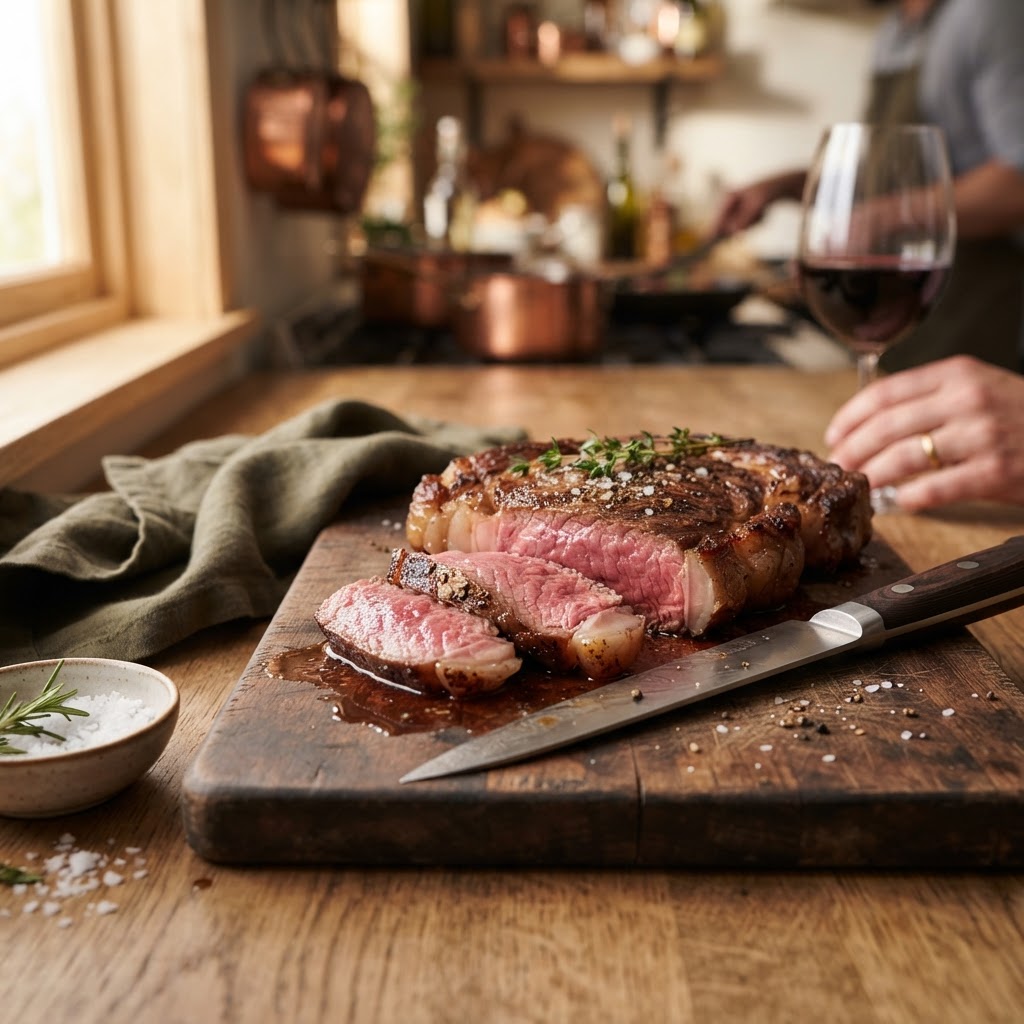
The Lost Art of Resting: Why Timing Your Proteins is the Secret to Succulence
We have all been there: the kitchen is filled with the intoxicating, savory aroma of a searing ribeye or a perfectly roasted chicken, and the timer finally dings. You pull that centerpiece protein from the heat, the crust is caramelized to perfection, and your guests are hovering with forks in hand, hungry and expectant. The temptation to slice into it immediately is almost physiological, a primal urge to consume what you have labored over for the last hour. However, in that moment of impatient gluttony, you are likely committing the single most damaging act possible in the culinary arts. That first, aggressive slice into a piping hot piece of meat is the moment you sacrifice the very moisture and texture you worked so hard to develop.
The concept of resting meat is one of those fundamental kitchen truths that often gets bypassed in the rush of home cooking, yet it is the primary differentiator between a mediocre, dry piece of protein and a restaurant-quality experience. When a protein is subjected to high heat—whether through searing, roasting, or grilling—the muscle fibers tighten and contract, physically squeezing the internal juices toward the center of the cut. If you cut into the meat immediately, those juices have nowhere to go but onto your cutting board, leaving the exterior fibers parched and tough. This is not just a matter of "letting it cool," but rather a complex process of heat equalization and protein relaxation that demands patience.
As we dive into the science and art of this essential technique, I want you to reconsider how you view the final minutes of your cooking process. Resting is not "downtime"; it is an active component of the preparation that deserves as much attention as your seasoning or your searing temperature. By mastering the rhythm of the rest, you are taking control of the final bite before it ever touches the plate. Let’s dismantle the myths surrounding meat preparation and look at why timing, temperature, and environment are the triumvirate of succulent, perfectly cooked proteins. Welcome to the masterclass on the most ignored, yet critical, step in your culinary journey.
The Physics of Muscle Contraction and Moisture Retention
When we talk about the internal structure of a protein, we are discussing a dense network of muscle fibers, connective tissue, and water. Heat is a catalyst for change, but it is also a source of chaos for these delicate structures. As the temperature rises, the protein chains begin to denature and tighten, effectively wringing out the intracellular moisture like a sponge being squeezed. This is why a piece of meat becomes firm to the touch as it moves from rare to well-done. Understanding this movement of fluids is key to why we rest our proteins.
The Thermal Gradient
The heat on the surface of your meat is significantly higher than at the very core. When you remove a steak from the pan at 125°F (for a medium-rare finish), the exterior of that meat might be sitting at 160°F or higher. During the resting period, the heat continues to migrate from the outer, hotter layers toward the cooler center. This is what we call carry-over cooking. If you do not account for this, your meat will often be overcooked by the time it hits the table, regardless of how precise your initial temperature readings were.
The Equilibrium Process
Resting allows the meat to reach a state of thermal equilibrium. As the temperature equalizes across the cross-section of the protein, the violent tension within the muscle fibers begins to subside. Think of this as the protein "relaxing" from the stress of the heat. During this phase, the previously expelled juices are slowly reabsorbed back into the spaces between the relaxed fibers. If you wait the allotted time, that moisture stays inside the meat where it belongs, ensuring that each bite is succulent rather than stringy.
"The resting period is not a pause in cooking; it is the final, vital stage of the thermal transformation. Without it, you are simply serving heat and texture, but losing the essence of the flavor held within the juices."
The Science of the "Juice Run-Off"
Have you ever cut into a steak only to see a pool of red liquid bleed out onto the board? Many amateur cooks mistakenly identify this as "juice," assuming it is a natural part of the meat's volume. In reality, that red liquid is a sign of a failed technique. That is the moisture that should have remained in the protein to provide mouthfeel, lubrication, and flavor. When you lose that liquid, you are losing the fat-soluble compounds that make a steak taste like a steak.
Why Speed Kills Tenderness
The viscosity of meat juices is temperature-dependent. When the meat is piping hot, the juices are thinner and flow with ease. By allowing the protein to rest, the juices thicken slightly as the temperature drops just a few degrees. This increased viscosity prevents the juices from hemorrhaging the moment the knife blade disrupts the structural integrity of the fibers. You are essentially giving the meat a chance to stabilize its internal contents.
The Role of Myoglobin
Often mistaken for blood, the red liquid found in steaks is actually myoglobin, a protein responsible for oxygen transport in muscle tissue. Myoglobin holds the savory, umami-packed flavor profile we associate with beef. When you cut too soon, you aren't just losing water; you are losing the concentrated flavor of the meat. Keeping that myoglobin inside the muscle fibers is the secret to a juicy, deeply flavored dining experience.
Guidelines for Resting: Times and Temperatures
Not all proteins are created equal, and the resting period must be adjusted based on the size, density, and cooking method of the item in question. A thin cut of skirt steak will require a different approach than a massive, bone-in prime rib. Professional chefs generally follow a "rule of thumb" regarding size, but temperature and thermal mass are the true guiding principles.
The Size-to-Time Ratio
For smaller cuts like individual steaks, chops, or chicken breasts, a rest time of 5 to 10 minutes is generally sufficient. However, for large roasts, whole chickens, or briskets, you should be looking at anywhere from 20 to 60 minutes. A good rule of thumb is to rest large roasts for at least 15 minutes per pound, though this is a general guideline rather than a strict mathematical law.
Internal Temperature Targets
Steaks and Chops:* Pull at 125°F for medium-rare; allow to carry over to 130°F-135°F during rest.
Whole Poultry:* Pull at 160°F in the thickest part of the breast; let it reach 165°F during the rest.
Large Roasts (Beef/Pork):* Pull at 120°F-125°F; the rest will bring the center up significantly.
Fish:* Because of their delicate nature, fish require very short resting periods of 2-3 minutes.
The "Don't Cover" Dilemma
There is a common debate about whether to cover meat with foil while it rests. If you wrap it tightly in foil, you create a steam chamber that will inevitably soften the crust you worked so hard to build. Instead, use a tented foil approach—loosely draping the foil over the meat to retain some heat without trapping the moisture, or simply leaving it uncovered if you have a warm environment. If the room is cold, a light tent is essential to ensure the internal temp continues to rise correctly.
The Environment Matters: Where to Rest
The setting where your protein rests is just as important as the duration. If you take a hot steak and place it on a cold marble countertop, you are shock-cooling the bottom of the protein, which can lead to an uneven texture or a "cold" bite at the bottom of the serving. Always use a pre-warmed plate, a wooden cutting board, or a rack set over a tray to ensure that the heat dissipation is controlled.
The Importance of the Cutting Board
Wooden cutting boards are superior for resting because they provide natural insulation. A cold stainless steel or granite surface will draw heat away from the bottom of your meat too aggressively. By using a board that is closer to room temperature, you help maintain a consistent gradient across the entire cut. Additionally, ensure your board has a juice groove to catch any minimal runoff that occurs, which you can then spoon back over the meat before serving.
The "Warm Oven" Technique
For larger roasts, if you are worried about the temperature dropping too much, you can place the meat in a "dead" oven. Simply preheat your oven to the lowest possible setting (around 170°F), turn it off, and place your resting meat inside. This creates a gentle, ambient environment that keeps the exterior warm without continuing to cook the center at a high rate. This is a pro-level tip for dinner parties where timing multiple dishes can be a logistical challenge.
"The true test of a chef is not how hot they can get the pan, but how well they can manage the final descent of the meat's temperature. It is in these quiet minutes that perfection is solidified."
Advanced Techniques for Optimal Succulence
Beyond basic resting, there are techniques that can help you achieve even better results. One of the most effective methods for large cuts of meat is the reverse sear combined with a thorough rest. By cooking the protein slowly at a lower temperature first, you ensure the interior is perfectly cooked. When you combine this with a resting period, the muscle fibers are significantly less stressed than they would be if the meat were subjected to high heat immediately.
The Salt and Rest Synergy
The timing of your seasoning—specifically salting—plays into how the meat holds moisture during the rest. Dry brining (salting at least an hour before cooking) allows the salt to penetrate the meat, which helps the protein fibers retain moisture even under the stress of high heat. When you pair dry brining with a proper resting phase, you create a dual-defense system against dryness, ensuring that the meat remains tender from the surface to the center.
Slicing Techniques
Resting is only half the battle; how you slice the meat after it has rested is the final hurdle. Always cut against the grain. The grain refers to the direction of the muscle fibers. By slicing perpendicular to these fibers, you effectively shorten them, which makes the meat much easier to chew and gives the perception of increased tenderness. Even the most perfectly rested brisket can feel tough if you slice with the grain, so always inspect your meat before your knife hits the surface.
The Psychology of Patience
It is worth addressing the psychological aspect of resting meat. We live in an era of "fast" cooking—microwaves, air fryers, and high-heat induction burners have all trained us to want our food immediately. However, culinary excellence is the antithesis of efficiency. Resting your meat is a form of discipline that separates the cook who is simply feeding people from the cook who is crafting an experience.
Communicating with Guests
The hardest part of the rest is often the social pressure of having hungry guests. Don't be afraid to explain the process to them. When your guests see you carefully resting a beautiful piece of meat, explain that you are giving it the time it needs to achieve the perfect texture. Most will be impressed by the dedication to the craft. It changes the narrative from "Why aren't we eating yet?" to "This chef cares enough about the quality to ensure it is perfect."
The Multi-Tasking Opportunity
Use the rest time to your advantage. While the meat is stabilizing, use those 10 minutes to finish your sauce, plate your garnishes, or pour the wine. This is the "golden window" of preparation where everything comes together. By coordinating your timing so that the meat rest coincides with the final touches on your side dishes, you ensure that the entire meal is ready at the exact moment of peak quality.
Final Thoughts
The art of resting is a testament to the idea that in cooking, as in life, the "finish" is often the most important part. By slowing down, respecting the thermodynamics of your ingredients, and allowing the protein to equalize, you elevate your home cooking from a mundane task to a nuanced craft. Remember that heat is a tool, not a goal in itself; the goal is the transformation of texture, flavor, and moisture.
The next time you pull that sear-crusted tenderloin or that herb-rubbed chicken from the oven, do not rush. Take a breath, grab a glass of wine, and set your timer for the rest. Your board will stay cleaner, your guests will be more satisfied, and you will finally taste the true, succulent potential of the ingredients you’ve chosen. Resting is not just a technique; it is a sign of respect for the protein and for the people sitting at your table. Embrace the pause, and let the flavor develop in the stillness.
As you continue to refine your culinary skills, keep this technique at the front of your mind. It is a subtle change—perhaps the easiest one to implement—yet it yields the most dramatic improvement in your results. Experiment with different rest times for different cuts, observe how the texture changes on the cutting board, and pay attention to how much more flavor you retain in every single bite. You will find that "Blame The Chef" is no longer a warning, but a sign of genuine expertise. Happy cooking, and may your boards always be just a little bit drier because the moisture is exactly where it belongs: inside the meat.


Get the Next Recipe
Weekly recipes, techniques, and gear picks — straight to your inbox.
