The Maillard Reaction: Understanding Browning and Flavor Development in Everyday Cooking
Have you ever wondered why a seared steak tastes so profoundly different from a boiled one, even though the ingredient list starts and ends with a single piece of beef? The answer lies in a complex, transformative chemical process that bridges the gap between raw nutrition and culinary artistry. When we apply heat to food, we aren't just raising its internal temperature to make it safe to eat; we are actively restructuring its molecular makeup. This transformation is the heartbeat of professional cooking, and understanding it is the single most effective way to transition from following recipes to truly understanding how flavors are built from the ground up.
At the center of this transformation is the Maillard Reaction, a non-enzymatic browning process that occurs between amino acids and reducing sugars when heated. It is responsible for the complex, savory, and often nutty aromas that define roasted coffee, toasted bread, seared scallops, and caramelized onions. Unlike simple caramelization, which involves only sugar, the Maillard Reaction is a sophisticated dialogue between proteins and carbohydrates. It produces hundreds of different flavor compounds, each contributing to the depth and complexity that we recognize as "delicious." To master the kitchen, you must learn to manipulate these variables to your advantage.
For the home cook, the Maillard Reaction is the difference between a meal that feels like a chore and one that tastes like a professional production. It requires patience, precise heat control, and a fundamental understanding of moisture management. We often shy away from high heat out of a fear of burning our food, but there is a distinct, golden-brown threshold that separates charred carbon from the flavor-packed crust of a perfect sear. In the sections that follow, we will dissect the science, the timing, and the techniques you need to ensure that every time you stand before the stove, you are creating the best possible version of your chosen ingredients.
The Chemistry of Browning: Beyond the Surface
The Maillard Reaction is named after French chemist Louis-Camille Maillard, who first described the process in 1912. While his initial research focused on biological systems, it didn't take long for the culinary world to realize that this reaction was the secret behind the flavor profiles of everything we cook. At its core, the reaction is a cascade of events. When your pan reaches a temperature between 285°F and 330°F (140°C to 165°C), the carbonyl group of a sugar reacts with the amino group of an amino acid. This produces a variety of compounds, including melanoidins, which are responsible for the rich brown color we look for in our dishes.
Managing Variables for Success
The reaction is highly sensitive to pH levels and moisture content. If your pan is crowded or your meat is wet, the surface temperature will drop significantly, and the moisture will begin to steam the food rather than sear it. Steam, which happens at 212°F (100°C), is the enemy of the Maillard Reaction. To encourage the reaction, you must ensure that your ingredients are as dry as possible before they hit the heat. Patting proteins dry with paper towels is not just a suggestion; it is a vital step in ensuring that your pan energy is spent browning the surface rather than evaporating water.
The secret to professional cooking isn't a secret ingredient or a fancy gadget; it is the masterful application of heat and the patience to let the chemistry do its work before you rush to flip the protein.
The Role of pH and Sugars
Adding a small amount of an alkaline ingredient, such as a pinch of baking soda, can significantly accelerate the Maillard Reaction. This is why alkaline-washed pretzels have that deep, dark brown sheen and unique flavor. Conversely, acidic ingredients like wine or vinegar can slow the reaction down. When you are deglazing a pan, you are capturing the flavorful residue left behind by the Maillard Reaction, but you are essentially halting the process by introducing liquid. Understanding this balance allows you to control the depth of flavor in your pan sauces and braises.
Equipment Choices: Why Surface Matters
The vessel you choose for your cooking is just as important as the technique you employ. Not all pans are created equal, and when it comes to the Maillard Reaction, heat retention and conductivity are your primary concerns. A thin, aluminum pan will likely result in cold spots, leading to uneven browning and potential burning in isolated areas. Instead, look for heavy-bottomed pans—stainless steel, cast iron, or carbon steel—that can store thermal energy and maintain a consistent temperature even when cold ingredients are added to the surface.
The Superiority of Cast Iron and Carbon Steel
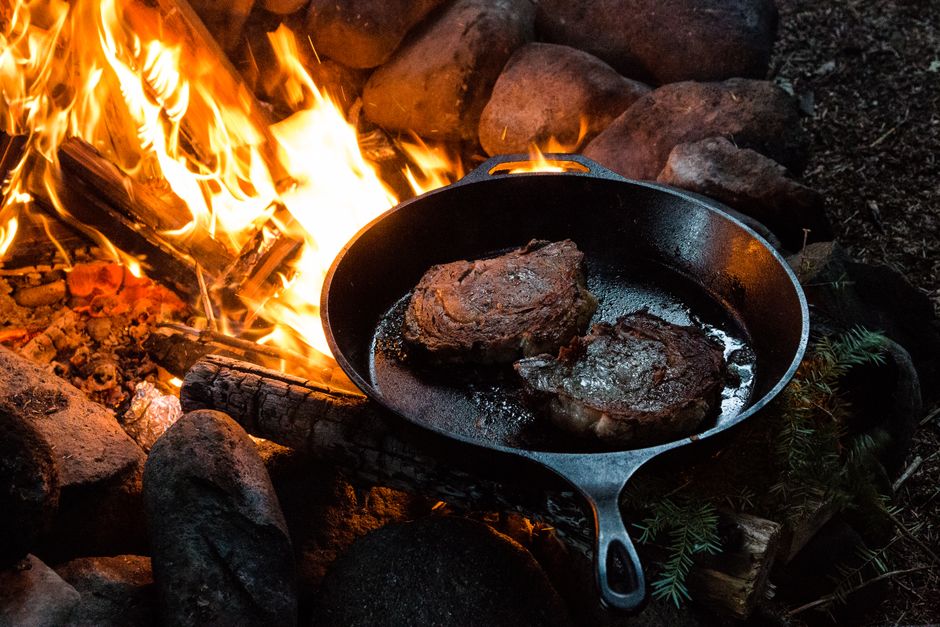
Cast iron is the home cook’s best friend for one simple reason: thermal mass. Because cast iron is dense, it holds onto heat effectively, meaning the pan won't experience a massive temperature drop the moment you add a cold ribeye. Carbon steel, which is lighter but shares many of the heat-management properties of cast iron, is also excellent for searing and sautéing. Both materials, once seasoned, provide a natural non-stick surface that allows for the Maillard Reaction to occur without the ingredients bonding permanently to the bottom of the pan.
Stainless Steel: The Sauce-Maker’s Dream
Stainless steel is the industry standard in commercial kitchens because of its durability and reactivity. While it may not be as non-stick as seasoned iron, it is ideal for generating the fond—the delicious, brown, flavor-packed bits that stick to the bottom of the pan. These bits are the remnants of the Maillard Reaction. By deglazing the pan with stock, wine, or vinegar, you lift these flavorful compounds and incorporate them into your final dish. Mastering stainless steel allows you to build complex sauces that are impossible to replicate in a non-stick pan.
The Art of the Sear: Proteins and Beyond
When we talk about browning, we usually think of steak, but the Maillard Reaction is equally vital for vegetables and grains. Achieving the perfect sear is a matter of timing and attention. You want to aim for a consistent, uniform brown crust across the entire surface of your food. To do this, you must avoid "crowding the pan." When you put too many pieces of food into the pan at once, the heat cannot distribute evenly, and the steam trapped between the pieces will prevent the dry-heat reaction you are aiming for.
Perfecting Your Steak
Beyond Proteins: Vegetables
The Maillard Reaction is equally transformative for vegetables like Brussels sprouts, carrots, and cauliflower. When roasted at high temperatures, the natural sugars and proteins in these vegetables undergo the same browning process, turning earthy and slightly bitter vegetables into sweet, savory delicacies. Drizzle them with a high-smoke-point oil, season generously with salt, and spread them in a single layer on a sheet pan to ensure they roast rather than steam.
The most overlooked aspect of home cooking is the moisture content of the ingredients; by removing excess surface water, you gain the ability to unlock deep, complex flavors that are otherwise hidden beneath a layer of steam.
Temperature Control: Mastering the Heat
Understanding temperature is about more than just setting your dial to "high." You need to know how to read the visual cues of your pan. If you see your oil shimmering, it is nearing its smoke point. If you see wisps of smoke, you are there. However, there is a fine line between the perfect browning reaction and carbonization. If your food starts turning black and tasting acrid, you have surpassed the Maillard Reaction and entered the realm of burning.
The Smoke Point Guide
Clarified Butter (Ghee):* ~485°F. Ideal for high-heat searing.
Avocado Oil:* ~520°F. The gold standard for high-heat, crust-forming projects.
Grapeseed Oil:* ~420°F. Excellent for searing with a cleaner flavor profile.
Extra Virgin Olive Oil:* ~375°F. Better reserved for sautéing or finishing, as it can burn if pushed too hard during a long sear.
Troubleshooting Heat Issues
If you notice that your food is burning on the outside before it is cooked on the inside, your heat is likely too high. In this scenario, you should start with a high initial sear to get the Maillard Reaction started, then reduce the heat or move the pan to a preheated oven to finish the cooking process gently. This "reverse sear" or "sear-roast" technique is the secret that professional chefs use to cook thick proteins like pork chops or thick steaks to perfection every single time.
Deglazing: Extracting Flavor from the Fond
Once you have successfully developed the Maillard Reaction and your protein is removed from the pan, you are left with the fond. This is the brown crust stuck to the pan, and it is arguably the most flavorful part of your cooking. To maximize this, you must deglaze. Deglazing is the act of adding a liquid—such as wine, stock, verjuice, or even water—to the hot pan to loosen and incorporate those bits. It is the bridge between a simple seared piece of meat and a restaurant-quality meal.
How to Deglaze Like a Pro
Remove the protein:* Once your food is cooked and resting, take it out of the pan.
Adjust the fat:* If there is an excess of rendered fat, spoon it out, but leave a small amount for flavor.
Add aromatics:* Briefly sauté garlic, shallots, or herbs in the remaining fat.
Deglaze:* Pour in your liquid. The pan will hiss and steam. Use a wooden spoon to scrape the bottom of the pan, releasing all the browned bits.
Reduce:* Simmer the liquid until it reduces by half, concentrating the flavors.
Mount with butter:* Whisk in a knob of cold butter at the very end to give your sauce a glossy, luxurious finish.
Understanding Caramelization vs. Maillard
It is common for home cooks to confuse caramelization and the Maillard Reaction. While both result in browning and flavor development, they are fundamentally different chemical pathways. Caramelization is the pyrolysis of sugar. It requires higher temperatures—usually above 320°F (160°C) for sucrose—and results in nutty, buttery, and slightly bitter flavor compounds. It is what happens to onions when they are sautéed for a long time or what gives a crème brûlée its distinct flavor.
The Synergy of Both Processes
In many dishes, these two processes occur simultaneously. Think of a perfectly roasted onion; the initial browning is a mix of the Maillard Reaction (due to the proteins within the onion) and the caramelization of the onion’s high sugar content. Learning to use both to your advantage is the key to deep, rich, and multi-layered dishes. For example, when searing a scallop, the Maillard Reaction provides the savory crust, while a light dusting of sugar or the natural residual sugars provide a subtle sweetness through caramelization.
The Limitations of the Maillard Reaction
One thing to keep in mind is that the Maillard Reaction does not happen in a liquid environment. If your pan is full of liquid, the temperature cannot rise above the boiling point of water, which is 212°F (100°C). This is why you cannot "sear" a stew. In stews and braises, you sear the meat separately first to develop the flavor, then you add the liquid. You are essentially doing the hard work of building flavor via the Maillard Reaction before the cooking liquid is ever introduced to the pot.
Practice and Patience: Developing Your Palate
The most important tool in your kitchen is your observation. When you cook, don't just look for a timer to go off. Look at the color of your meat. Smell the air. Does it smell toasted and nutty, or does it smell acrid and charred? These sensory cues are your guides. When you see that deep, golden-brown crust forming, you know you have successfully triggered the Maillard Reaction. If you are cooking in a hurry, you will likely miss these signs and end up with grey, steamed meat that lacks depth.
Exercises for the Home Cook
Integrating Knowledge into Routine
Don't be afraid to experiment with different temperatures and pan types. The goal is to build an intuitive understanding of how your specific stove and pans behave. When you understand the science of the Maillard Reaction, you become the master of your kitchen rather than a slave to the recipe. You will find yourself adjusting cooking times and heat levels instinctively, based on the ingredients at hand and the results you want to achieve.
Knowledge of chemistry is not just for the laboratory; it is the hidden ingredient that elevates home-cooked meals into the realm of the extraordinary, allowing the chef to manipulate flavors with precision and intent.
Conclusion
The journey toward culinary excellence is paved with small, consistent improvements. The Maillard Reaction is perhaps the most fundamental concept for any cook to master because it defines the flavor of almost every savory, delicious item we prepare. By controlling the moisture, managing the heat, and respecting the chemistry of browning, you unlock a depth of flavor that turns simple proteins and vegetables into sophisticated culinary experiences. Do not settle for grey meat or limp, steamed vegetables; instead, embrace the heat.
Start by being more intentional with your prep work. Dry your ingredients, heat your pans, and don't rush the process of searing. Remember that the fond you create is the foundation of your future sauces and that the patience you exercise during those first few minutes of cooking will pay dividends in the flavor of the final dish. Cooking is a science, but it is also a creative expression, and by mastering the technical side of the Maillard Reaction, you free yourself to be a more confident, adventurous cook.
As you continue to refine your skills, remember that "Blame The Chef" is always here to support your growth. We believe that everyone is capable of producing restaurant-quality food at home if they have the right information and the desire to learn. Keep practicing, keep tasting, and keep observing the chemical transformations occurring in your pan. Your journey doesn't end here; it is merely the beginning of a lifetime of delicious discovery, one browned crust at a time. Go forth, turn up the heat, and enjoy the delicious results of your newfound mastery.
Ultimately, cooking is about bringing people together through flavor, and there is no better way to demonstrate your care for those you feed than by creating dishes that are as rich in science as they are in taste. Whether you are searing a simple chicken breast for a Tuesday night dinner or crafting a complex pan sauce for a dinner party, the principles remain the same. The Maillard Reaction is your constant ally in the kitchen, a powerful, consistent tool that never fails when you know how to wield it. Continue to experiment, keep your standards high, and never be afraid to step away from the recipe to follow the cues of your ingredients.
Your growth as a chef is measured by your ability to adapt, to troubleshoot, and to appreciate the subtle differences that come from perfect execution. You now hold the key to flavor development that distinguishes the average home cook from the truly skilled. Every time you turn on your stove, you are a chemist working with heat, protein, and sugar to create something entirely new. Cherish that process, honor the science behind the sizzle, and continue to explore the endless possibilities that await you at the center of the kitchen. Stay curious, stay hungry, and happy cooking.


Get the Next Recipe
Weekly recipes, techniques, and gear picks — straight to your inbox.
