The Mindful Plate: 6 Nutrient-Dense Dinner Swaps for Sustainable Energy
In the modern culinary landscape, we often find ourselves caught in a cycle of convenience that prioritizes speed over the profound impact that our food choices have on our long-term vitality. As home cooks, we hold the power to influence our physiological state simply by curating what lands on our dinner plates, yet we frequently overlook the intricate connection between nourishment and sustained cognitive focus. Embracing a mindful approach to cooking does not mean sacrificing the indulgence or joy found in a well-prepared meal; rather, it invites us to replace inflammatory, high-glycemic fillers with nutrient-dense alternatives that stabilize our blood glucose levels. When we choose to step back from the frantic pace of modern life and dedicate time to understanding the components of our dinner, we transform the kitchen from a place of chores into a laboratory of wellness. The following guide is designed to empower you with the knowledge to make impactful swaps that will leave you feeling energized, sharp, and physically vibrant well into the evening hours.
Transitioning to a more thoughtful way of eating is a journey that begins with awareness and ends with the mastery of basic culinary principles that prioritize bioavailability and flavor balance. Many of the staples we rely on—white pasta, heavy refined flours, and sugary sauces—often lead to that inevitable "post-dinner slump" that steals our productive potential and disrupts our sleep quality. By introducing smarter alternatives, we can maintain steady energy without relying on caffeine or quick-fix snacks later in the night. It is my firm belief that the best meals are those that serve a dual purpose: they must satisfy the palate with complex textures and deep flavor profiles while simultaneously fueling our cellular machinery with essential vitamins and minerals. Whether you are cooking for a family or honing your skills as a solo chef, these shifts will fundamentally change how you interact with your pantry.
Throughout this post, we will explore specific, actionable swaps that maintain the culinary integrity of your favorite dishes while elevating their nutritional density. We will delve into techniques for preparing legumes, grains, and vegetables that ensure you aren't just eating "healthy" food, but genuinely enjoying a professional-grade culinary experience. As you progress through these recommendations, I encourage you to look at your dinner plate as a canvas for sustainability, both for your own health and for the environment. Cooking with intention is an act of self-care that radiates through every other facet of your life, providing the clarity and stamina necessary to tackle the demands of your day. Let us begin this transition toward a more mindful kitchen, starting with the very foundation of your meal preparation.
1. The Grain Swap: Swapping Refined Carbohydrates for Quinoa and Farro
The foundation of many classic dinners is a bed of white rice or refined pasta, which, while comfortable, often lacks the structural integrity to support sustained energy levels throughout the evening. By pivoting toward ancient grains like quinoa and farro, you introduce a complex carbohydrate profile that is packed with fiber and complete proteins. Unlike refined grains, which cause rapid spikes and subsequent crashes in blood sugar, these grains release glucose into the bloodstream at a measured, consistent pace. This consistency is the secret weapon for anyone looking to maintain mental acuity after the sun goes down.
Mastering the Quinoa Ratio and Texture
The primary failure point for many home cooks when preparing quinoa is a failure to properly rinse the grain before cooking. Quinoa is coated in saponins, a naturally occurring compound that imparts a bitter, soapy flavor if not thoroughly washed. Use a fine-mesh sieve and run cold water over the grains for at least sixty seconds, agitating them with your fingers until the water runs clear. For the perfect texture—fluffy but with a distinct "pop"—use a ratio of 1 part quinoa to 1.75 parts liquid. Bring to a boil, then reduce to a low simmer, covered, for 15 minutes. Once the water is absorbed, remove it from the heat and let it steam in the residual warmth for another 5 minutes before fluffing with a fork.
Embracing the Nutty Complexity of Farro
Farro offers a much heartier, chewier texture that is ideal for soups and robust grain bowls. Because it is a dense grain, it requires a different approach to ensure it is tender without becoming mushy. I recommend a soak-and-simmer technique. If time allows, soak the farro in cold water for at least two hours before cooking; this reduces the overall cooking time and ensures the interior of the grain is perfectly cooked through. To cook, use a generous amount of salted water—much like cooking pasta—and boil for approximately 25 to 30 minutes until al dente. Drain the excess liquid and toss with a touch of high-quality extra virgin olive oil to prevent clumping.
"True culinary mindfulness begins when we stop treating our dinner plate as a place for simple caloric intake and start viewing it as a primary engine for our physical and mental potential."
2. Replacing Heavy Creams with Cashew and Cauliflower Bases
Traditional creamy sauces often rely heavily on dairy fats that can be sluggish to digest, especially when consumed in the late evening. However, a velvety, luscious sauce is essential for the comfort and mouthfeel of many dishes, from pasta bakes to curries. By utilizing cashew cream or a cauliflower puree as your base, you maintain the luxurious texture while adding a significant boost of plant-based protein, healthy fats, and prebiotic fiber. This is not about deprivation; it is about intelligent ingredient selection.
The Art of the Cashew Emulsion
To create a rich, plant-based cream, start by soaking raw, unsalted cashews in boiling water for at least 30 minutes. This softens the cell walls of the nut, allowing them to blend into a perfectly smooth liquid. Drain the nuts and place them into a high-speed blender with fresh water or vegetable stock, using a ratio of 1 cup of nuts to 1 cup of liquid for a thick, cream-like consistency. For a more "buttery" flavor, add a squeeze of lemon juice or a teaspoon of apple cider vinegar before blending. This addition of acidity mimics the slight tang of fermented dairy and balances the natural richness of the cashew fat.
The Cauliflower Cream Revolution
When you want a lighter, lower-calorie option, steamed cauliflower is an incredibly versatile medium. Steam or boil cauliflower florets until they are fork-tender, then puree them with a small amount of nutritional yeast, garlic powder, and a splash of almond milk. The result is a sauce that mimics the comfort of Alfredo but provides an abundance of fiber and antioxidants. Because cauliflower is relatively neutral in flavor, it acts as a perfect vehicle for fresh herbs like thyme, parsley, or chives. Adding a pinch of smoked paprika or toasted cumin can deepen the profile, making it a sophisticated addition to roasted chicken or steamed white fish.
3. Beyond the Starch: Replacing Potatoes with Roasted Roots and Squash
The potato, while beloved, is often over-utilized in the standard Western diet. While nutritious, it can be heavy and prone to spiking insulin levels. Swapping white potatoes for nutrient-dense alternatives like butternut squash, celeriac, or parsnips provides a more complex flavor profile and a much lower glycemic impact. These root vegetables offer a natural sweetness and a hearty texture that makes them perfect candidates for roasting or mashing, ensuring your dinner remains satisfying and robust.
Precision Roasting for Maximum Flavor
The key to elevating these vegetables is the Maillard reaction, the chemical process that creates a deep, golden-brown crust and a complex, caramelized flavor. When roasting squash or root vegetables, ensure that you cut them into uniform, one-inch cubes to promote even cooking. Toss the vegetables in a high-smoke point oil, such as avocado or grapeseed oil, to ensure they crisp rather than burn. Roast at 400°F (200°C) for 25 to 35 minutes, turning them halfway through to ensure an even crust on all sides. A light dusting of sea salt and freshly cracked black pepper is usually all that is required, but a touch of rosemary or sage can elevate the dish to professional standards.
The Mash Technique for Root Vegetables
If you crave the comfort of a mashed side dish, celeriac (celery root) is an exceptional replacement for potatoes. It has a slightly earthy, nutty flavor that is far more nuanced. Peel the celeriac, chop it into even pieces, and boil until tender. Mash with a ricer or a food mill to achieve a perfectly smooth consistency. Incorporate a small amount of roasted garlic oil or grass-fed butter to bind the mixture. By focusing on these denser, fiber-rich vegetables, you are feeding your gut microbiome while satisfying your craving for a hearty, traditional-feeling dinner.
4. The Protein Upgrade: Incorporating Legumes and Fermented Soy
When we talk about protein, the default is almost always animal-centric. While high-quality protein is vital for cellular repair, the sheer volume of meat consumed in modern diets can lead to digestive fatigue. Integrating lentils, chickpeas, and tempeh into your weekly rotation provides a diverse amino acid profile along with significant prebiotic fiber. These foods are the "slow-burn" fuels of the culinary world, providing energy that lasts for hours, not minutes.
Preparing Lentils for Optimal Digestibility
The most common mistake when preparing legumes is neglecting to properly spice them with carminatives—herbs and spices that aid in digestion. When simmering lentils, always include a bay leaf, a piece of kombu (dried seaweed), or a teaspoon of cumin seeds in the water. These ingredients help break down complex sugars and make the lentils easier on your gut. Cook lentils at a gentle simmer for 20 to 25 minutes; they should be firm enough to hold their shape in a salad but soft enough to yield easily when bitten.
The Professional’s Guide to Tempeh
Tempeh is an underrated, fermented soy product that offers a meaty, firm texture perfect for stir-fries and grilling. Because it is a fermented food, it is naturally rich in probiotics, which support a healthy digestive tract. However, tempeh can be slightly bitter if prepared incorrectly. The professional secret is to steam the tempeh block for 10 minutes before marinating or grilling. This softens the structure and removes any residual bitterness, allowing it to soak up sauces like a sponge. Once steamed, slice it thinly and sear in a pan with sesame oil and tamari for a deep, savory umami finish.
"Great cooking is not merely about combining ingredients; it is about curating a biological response. When we choose components that harmonize with our body’s needs, we turn every meal into an investment in our long-term wellness."
5. Healthy Fat Substitutions: From Vegetable Oils to Cold-Pressed Nutrients
We are currently witnessing a much-needed correction in the culinary world regarding fat. We are moving away from processed, polyunsaturated vegetable oils—which are highly inflammatory—and returning to traditional, stable fats that support brain function and hormonal health. Swapping standard canola or corn oil for extra virgin olive oil, ghee, or avocado oil is perhaps the most significant change you can make for your systemic health.
High-Heat vs. Low-Heat Strategies
Understanding smoke points is a fundamental skill for the mindful chef. For high-heat cooking, such as searing a steak or pan-roasting vegetables, utilize oils with a high smoke point like refined avocado oil (which can withstand temperatures up to 500°F). For dressings, drizzling, or low-temperature sautés, exclusively use extra virgin olive oil. The health benefits of the polyphenols found in high-quality olive oil are heat-sensitive, so using it at the end of the cooking process ensures you reap those nutritional rewards.
The Role of Ghee in the Mindful Kitchen
Ghee, or clarified butter, is an incredible fat for both flavor and function. By removing the milk solids, we create a fat that is shelf-stable, high-heat resistant, and generally well-tolerated by those who have sensitivities to lactose. Use ghee when you want a rich, buttery flavor without the risk of the milk solids burning in your pan. It is particularly excellent for sautéing mushrooms or finishing a lentil dahl, adding a depth of flavor that is difficult to replicate with plant-based alternatives alone.
6. Elevating Flavor Without Sugar: The Power of Acids and Herbs
Many store-bought sauces and glazes are loaded with hidden refined sugars that provide a false sense of flavor satisfaction. When we remove these sugars, the palate can feel a bit "lost" initially. The solution is to lean into acid-forward flavor profiles and fresh herbaceousness. Vinegar, citrus, and fresh aromatics provide a brightness that lifts a dish, making the absence of sugar entirely unnoticeable to the average diner.
The Balancing Act: Acids and Aromatics
If you find a dish feeling flat, reach for an acid rather than a sweetener. A splash of sherry vinegar can brighten a roasted vegetable medley, while fresh lime juice adds a sharp, vibrant note to legumes. Always keep a variety of high-quality vinegars—balsamic, apple cider, and rice wine—on hand. Similarly, never underestimate the power of finishing a dish with a handful of fresh herbs like cilantro, parsley, or mint. These herbs are not just garnishes; they are concentrated sources of micronutrients that add a layer of complexity to every bite.
Building Umami Without Additives
Umami is that "savory" quality that keeps us coming back for more. In professional kitchens, we achieve this through natural sources like tomato paste, miso, nutritional yeast, or dried shiitake mushrooms. Instead of reaching for bottled sauces, stir a tablespoon of white miso into a soup or a small amount of tomato paste into a pan sauce while sautéing your onions. These ingredients provide that deep, satisfying "meatiness" that anchors a dish, making it feel complete without the need for artificial flavor enhancers or high-sugar condiments.
7. Strategic Meal Composition: The "Mindful Plate" Ratio
To truly sustain your energy through the evening, you must look at the overall composition of your plate. A common mistake is an imbalance toward carbohydrates, which invariably leads to the dreaded afternoon or evening slump. Aim for a ratio that prioritizes non-starchy vegetables, followed by a high-quality protein, a small portion of healthy fats, and a modest amount of complex, fiber-rich carbohydrates. This approach creates a "thermal" effect, where your body spends time digesting and absorbing these nutrients slowly, providing a consistent stream of energy.
Planning Your Plate
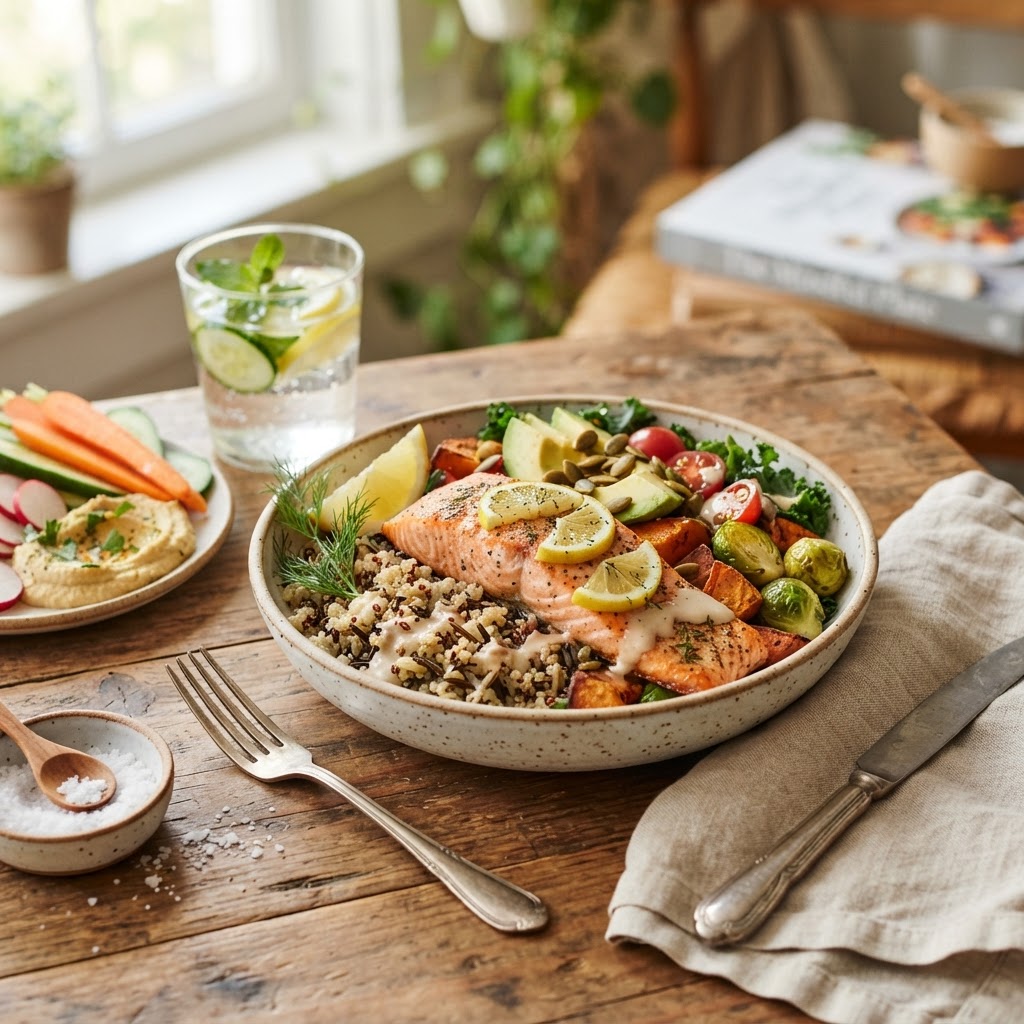
When composing your dinner, start with at least 50% of the plate consisting of fibrous, non-starchy vegetables—think sautéed kale, roasted broccoli, or a fresh, crisp salad. These provide the volume and fiber necessary to stabilize your blood sugar. Next, add a palm-sized portion of protein (around 4 to 6 ounces). If using a plant-based source, increase this portion slightly to ensure a complete amino acid profile. Finally, add your complex carbohydrate source, like half a cup of cooked farro or sweet potato, and a teaspoon of healthy fat, such as an olive oil drizzle or a sprinkle of pumpkin seeds.
The Professional Chef's Plating Technique
Even at home, the way we plate our food affects our perception of satisfaction. Use smaller plates to encourage reasonable portion sizes and focus on vibrant, diverse colors. A dish that incorporates deep greens, bright oranges, and earthy browns is not only visually stimulating but also typically represents a diverse range of phytonutrients. By taking the extra minute to arrange your food, you engage your senses before the first bite, leading to more intentional, mindful eating and better digestion.
Final Thoughts
The journey toward a more mindful culinary life is not a sprint, nor is it a rigid set of rules that must be followed with perfection. It is, instead, a practice of returning to the kitchen with awareness and a desire to align our physical needs with our gustatory desires. By choosing to swap out refined fillers for nutrient-dense whole foods and by mastering techniques that enhance both flavor and bioavailability, you are doing more than just cooking dinner; you are crafting a foundation for better health and lasting energy.
Remember that the kitchen is a space for experimentation and growth. If a particular swap doesn't suit your personal palate, adapt it. Perhaps you prefer the texture of lentils over quinoa, or maybe you find that cauliflower cream serves as a better base for your specific style of curries. The principles remain the same: prioritize fiber, select stable fats, introduce complexity through acids and umami-rich ingredients, and above all, remain present while you cook.
As you begin to implement these six dinner swaps, notice how your energy levels shift. Pay attention to how your body feels an hour after dinner, and note the clarity of your mind as you wind down for the night. You will likely find that when you respect the ingredients, the ingredients return the favor by fueling you in ways that convenience-based cooking never could. Keep your apron clean, your knives sharp, and your curiosity high. The most important meal you will ever cook is the one you are preparing right now, with the intent of nourishing the person you are becoming. Continue to challenge your assumptions about what "healthy" food looks like, and never stop seeking the intersection where culinary art meets human vitality. "Blame The Chef" is here to support you in every step of this delicious, nourishing journey, ensuring your plates are always as vibrant as your life.


Get the Next Recipe
Weekly recipes, techniques, and gear picks — straight to your inbox.
