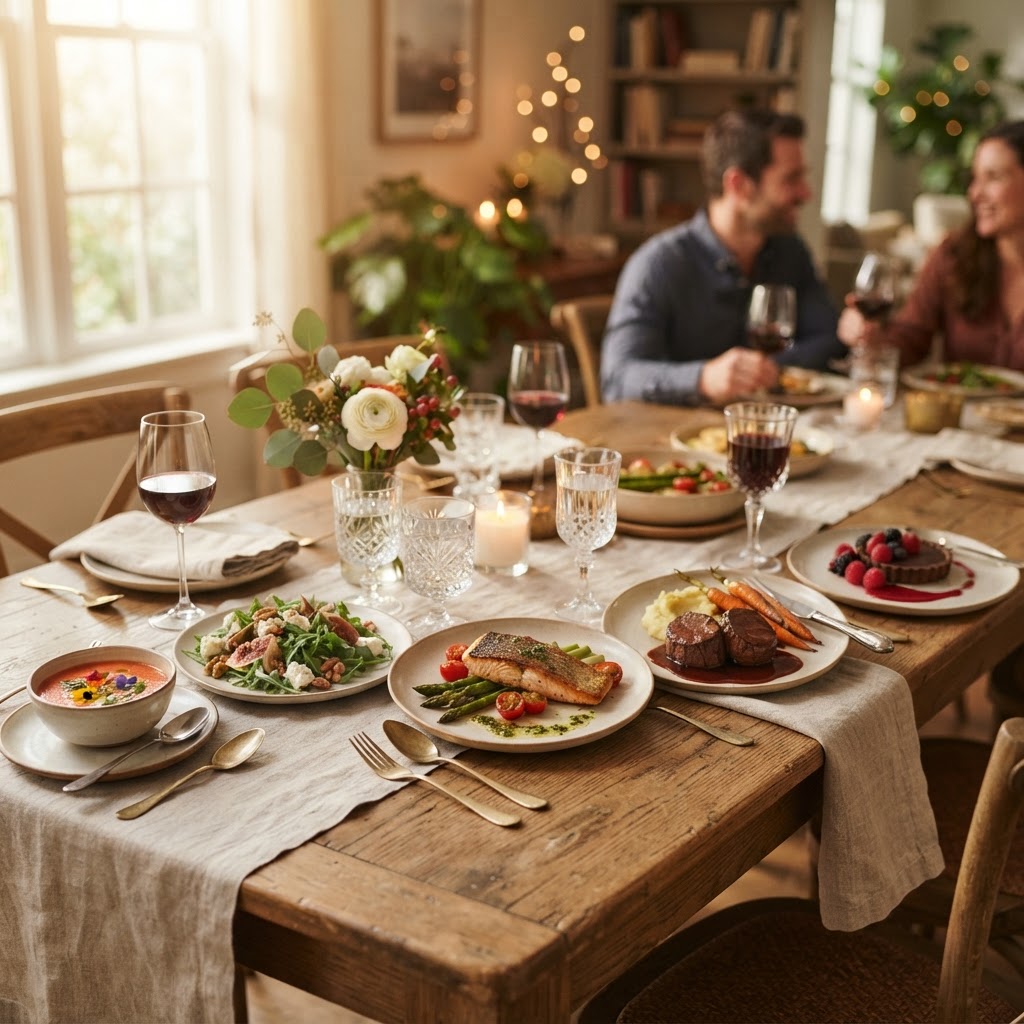
The Multi-Course Flow: How to Sequence Your Menu for a Seamless Dining Experience
There is a distinct, rhythmic magic that occurs when a dinner party moves beyond a simple "main and side" affair and transforms into a choreographed sequence of flavors. Hosting isn't merely about the quality of the ingredients you procure or the technical execution of your recipes; it is fundamentally about the management of time, temperature, and the physiological response of your guests. When you orchestrate a multi-course menu, you are effectively controlling the narrative of the evening, guiding your friends and family through a sensory journey that starts with anticipation and ends with lingering satisfaction. Mastering this flow requires a chef’s mindset, where the kitchen becomes a stage and every transition is planned with the precision of a clockmaker.
The biggest hurdle for most home cooks when attempting a multi-course meal is the fear of becoming trapped in the kitchen while guests mingle elsewhere. This anxiety often leads to rushed plates, lukewarm appetizers, or the dreaded "kitchen panic" that sours the atmosphere. However, the secret to a seamless experience lies in the mise en place and the intelligent selection of dishes that can be prepared in advance. You want to focus your active efforts on the final plating and seasoning, ensuring that your time away from the table is minimized and your interaction with guests is maximized. By sequencing your menu to balance cold prep, stovetop action, and oven time, you create a cadence that feels natural and relaxed.
In this guide, we will break down the structural architecture of a formal or semi-formal menu, exploring how to build a crescendo of flavors that leaves an indelible mark on your guests. We will delve into the physics of palate progression—moving from high-acidity, crisp notes to deep, savory umami, and finally to the sweet or delicate conclusion. This is not just about eating; it is about hospitality as an art form. Whether you are aiming for a classic four-course French-inspired dinner or a modern, tapas-style flow, the principles remain consistent. Let’s prepare to reclaim the kitchen and elevate your dinner party from a meal to an event.
The Architecture of the Appetizer: Setting the Stage
The primary role of the first course, often referred to as the amuse-bouche or the starter, is to awaken the palate without overwhelming it. You want to choose ingredients that provide a spark of acidity or a pleasant contrast in texture. A common mistake is serving something too heavy, like a creamy pasta, as the first course; this can lead to satiety before the main event even begins. Instead, lean into lightness, freshness, and precise seasoning to signal to your guests that the evening has officially begun.
Temperature and Texture Contrast
When designing your starter, prioritize temperature contrast. A chilled gazpacho, for instance, pairs beautifully with a hot, toasted sourdough crisp. Alternatively, a warm, flash-seared scallop sits perfectly atop a cold, bright pea purée. This contrast serves to keep the palate engaged. Aim for a temperature difference that isn't jarring but provides a clear distinction. Professional chefs often focus on the "crunch factor" here—a toasted nut, a shaved radish, or a fried herb adds that necessary snap that differentiates the first bite from the softer main courses to follow.
Mastering the Pacing
The timing for the first course is vital. It should be light enough that guests can finish it within five to seven minutes without feeling full. Keep your portions small—think two or three bites maximum. If you are serving a salad, ensure the greens are dry and the vinaigrette is properly emulsified. An emulsion of 3 parts oil to 1 part vinegar (or citrus juice) is the golden ratio. Season the greens just seconds before serving to prevent wilting. This attention to detail demonstrates to your guests that you haven't just prepared food, but that you have curated an experience.
"A well-executed menu is a conversation between the chef and the guest; the first course is the introduction, and it must be spoken clearly and with absolute freshness."
The Bridge: Introducing the Intermediate Course
The intermediate course, often called the intermezzo or the warm starter, serves as a bridge between the light appetizer and the heavier main. This is an excellent opportunity to showcase a technique-driven dish that might be slightly more complex in its composition. This could be a delicate consommé, a small portion of handmade ravioli, or perhaps a vegetable-forward dish like roasted asparagus with a soft-poached egg. The goal here is to maintain interest without distracting from the main event.
The Role of Acidity and Herbaceousness
During this transition, consider incorporating elements that cleanse the palate or provide an herbaceous lift. If your main course is going to be a rich, fatty cut of meat, the intermediate course should act as a reset. Think of a light citrus-based granita if you are hosting a long, multi-course banquet, or a small bowl of earthy, wild mushrooms sautéed in high-quality butter. By balancing the richness of the coming protein with the bright, clean notes of a vegetable or herb-centric dish, you prevent palate fatigue.
Operational Efficiency
This is where the home cook often falters, but if you utilize your mise en place correctly, this course can be the easiest to execute. Pre-measure your ingredients into small ramekins so that you are only performing final assembly and heating at the last moment. For example, if you are doing a mushroom risotto, have the stock simmering in a separate pot and the mushrooms sautéed ahead of time. All that remains is the integration. Never attempt a dish for more than four people that requires constant whisking or complex timing during the dinner party itself.
The Main Event: The Crescendo of Umami
The main course is the climax of your culinary narrative. This dish should be the heaviest, the most flavorful, and the most satisfying of the evening. Whether you are roasting a whole duck, braising short ribs for four hours, or pan-searing a center-cut filet, the main course requires the most dedicated attention to temperature control and resting. Professional chefs know that the resting period is where the magic happens—it allows the muscle fibers to relax and the juices to redistribute throughout the protein.
The Science of the Maillard Reaction
To achieve a world-class main, focus on the Maillard reaction, which occurs when amino acids and reducing sugars brown, creating those deep, savory, complex flavors we crave. For a perfect sear, your pan must be screaming hot. Use a high-smoke-point oil like avocado or grapeseed, and ensure your meat is absolutely dry before it touches the surface. Never overcrowd the pan; if the temperature drops, you will steam the meat instead of searing it, leading to a grey, unappetizing color rather than a golden, crusty finish.
Timing and Internal Temperatures
Use a digital probe thermometer to ensure accuracy. Forget the "finger test"—science is far more reliable. Aim for the following internal temperatures for perfect service:
Rare:* 120°F to 125°F
Medium-Rare:* 130°F to 135°F
Medium:* 140°F to 145°F
Medium-Well:* 150°F to 155°F
Once you pull the protein off the heat, let it rest for at least 10-15 minutes for large roasts or 5-8 minutes for steaks. During this time, you can finish your sauce or plate your warm sides. The sauce—or gastrique, reduction, or pan gravy—should be prepared in advance so you are simply mounting it with a knob of cold butter at the very end to give it a glossy, professional finish.
"The true test of a chef is not the complexity of the recipe, but the control of the heat; a perfectly seared piece of meat requires only salt, pepper, and the courage to wait for the pan to get hot enough."
Vegetable Harmony: Sides That Support, Not Compete
Too often, side dishes are treated as an afterthought, but in a multi-course flow, they provide the textural backdrop for the main event. A dish of roasted root vegetables or a seasonal purée should complement the protein's flavor profile without stealing the spotlight. If your main course is a heavy, wine-based braise, keep your sides bright and acidic—perhaps a slaw of shaved fennel or bright green beans blanched in salt water and shocked in ice.
The Ratio of Flavor
Aim for a balance of color and texture. If your main is brown (meat and sauce), ensure your sides bring vibrant greens, reds, or yellows to the plate. A good rule of thumb is to include at least one crunchy, one creamy, and one acid-forward element across your side dish selection. If you are serving mashed potatoes, don't serve a heavy cream-based vegetable as well. Opt for a vinegar-dressed salad or quick-pickled vegetables to cut through the starch and fat.
Professional Plating Tips
When plating, think in terms of height and negative space. Do not pile food onto the center of the plate as if it were a buffet. Use the "rule of thirds" to balance your protein and sides. Start by placing the protein slightly off-center, then use the sides to build volume and interest around it. A touch of fresh micro-greens or a drizzle of finishing oil can transform a rustic plate into a sophisticated, chef-quality presentation that delights the eye before the first bite is even taken.
The Sweet Finale: Transitioning to Dessert
The dessert course is your final opportunity to leave a lasting impression. After the richness of the main course, you have two distinct paths: a rich, decadent finish or a light, refreshing conclusion. If your main was heavy on the palate, a light lemon tart or a fruit-forward sorbet is ideal. If your main was lean and acidic, you can lean into chocolate, caramel, or heavy cream-based desserts. The key here is to keep the portion size controlled, as guests will be naturally winding down.
Managing the Prep
Dessert is the best place to hide your "make-ahead" efforts. Soufflés are dramatic, but they are stressful for the home host. Instead, opt for desserts that can be plated or set out well in advance:
Coffee and Digestifs
The dessert course isn't just about the food; it’s about the environment. Once dessert is served, the pacing of the evening should slow down significantly. Offer coffee, tea, or a small pour of a digestif. This signals to your guests that the formality is relaxing and that they are encouraged to sit back and linger. The "flow" isn't over when the plates are cleared; it is over when the last guest feels entirely comfortable and satisfied.
The Logistics of Flow: Timing Your Execution
The biggest mistake a host can make is failing to account for the "transition time" between courses. You don't want your guests sitting for thirty minutes between the appetizer and the main, nor do you want to be sprinting to the kitchen while the table is still finishing their wine. Plan for a 15 to 20-minute gap between courses. This provides enough time to clear plates, freshen drinks, and perform any final assembly in the kitchen without making your guests feel ignored.
Creating a Timing Sheet
Professional chefs use a prep list or "prep sheet" that lists every single task required for the dinner. Do not keep this in your head. Write it down. A sample timeline for a 7:00 PM dinner might look like this:
3:00 PM:* Stocks and sauces are finished and kept warm/reheated.
5:00 PM:* Vegetables are prepped and blanched; pastry is ready.
6:15 PM:* Appetizer components are laid out for quick assembly.
6:45 PM:* Appetizers are assembled and ready for the first pour of wine.
7:30 PM:* Appetizers are served.
8:00 PM:* Main course protein hits the pan while sides are finished in the oven.
Managing the Cleanup
To keep the flow seamless, never pile dirty dishes in the sink where guests can see or hear them. Use a "bussing station" if possible, or clear dishes discreetly and immediately put them into a dishwasher or a hidden tub. The visual of a clean kitchen (even if it's just a temporary clean) does wonders for the host's stress levels and the overall ambiance of the dining space.
"A seamless dinner party is like a well-conducted orchestra; the audience should only hear the music, never the shuffling of the performers behind the curtain."
Final Thoughts
Sequencing a multi-course menu is a transformative act of hospitality. It shifts the focus from merely "feeding" people to "hosting" an event. By understanding the progression of flavors, the importance of preparation, and the necessity of managing your own energy, you ensure that the evening flows as smoothly as the wine in your guests' glasses. Remember that your guests are not coming over to critique your technical skills—they are coming to share in the joy of connection, which is anchored by the food you provide.
Don't be afraid to fail or to start small. Begin with a simple three-course menu—a starter, a main, and a simple dessert—and focus on the rhythm of the transitions. As you become more confident, you can add an intermediate course or experiment with more complex flavors. Keep your mise en place organized, stay hydrated, and most importantly, remember to pour yourself a glass of wine and join the conversation. After all, the best ingredient in any meal is the presence and warmth of the person who prepared it. When the meal is done and the guests are lingering over their coffee, you will know that the effort was entirely worth it. Your kitchen is now more than just a room; it is the heart of your home, and you are the master of its flow. Keep cooking, keep experimenting, and never stop blaming the chef when things get a little chaotic—because that's where the best stories are born.

Get the Next Recipe
Weekly recipes, techniques, and gear picks — straight to your inbox.
