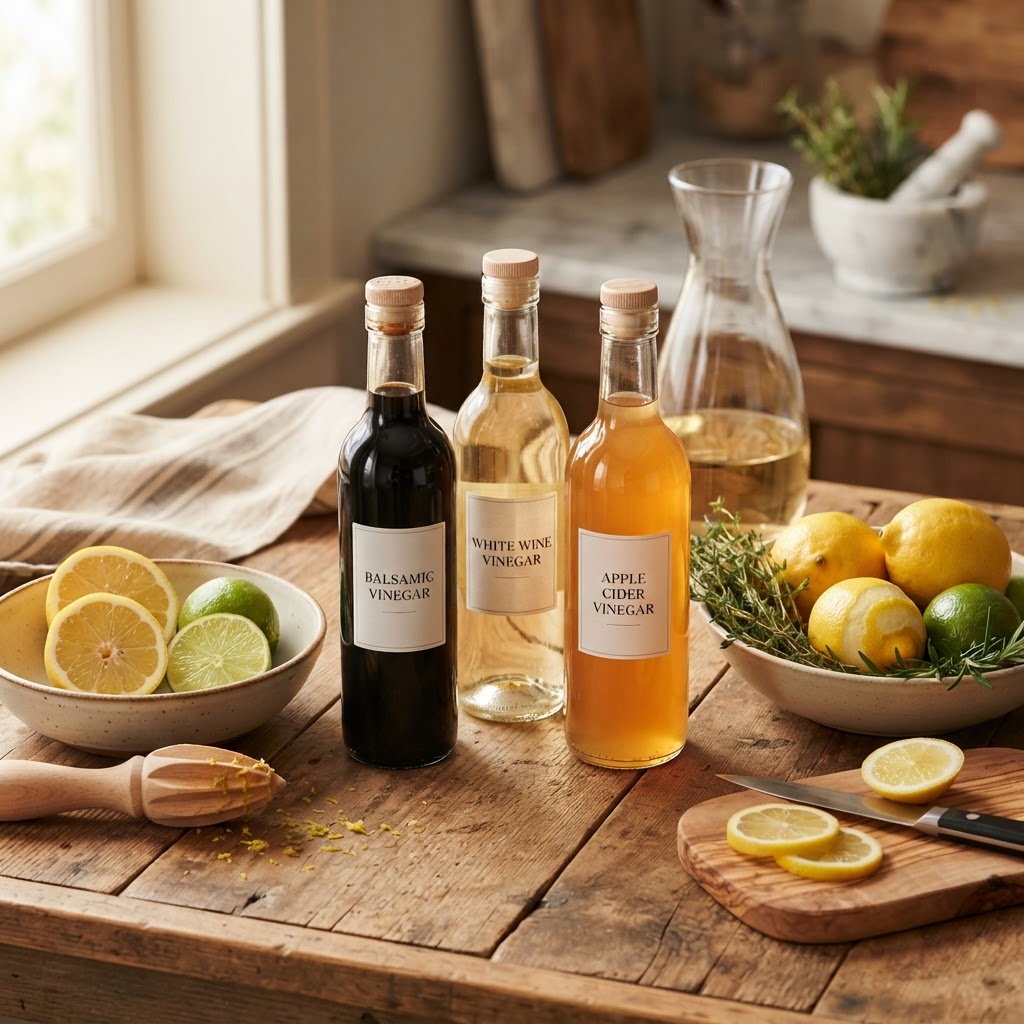
The Power of Acid: How to Use Vinegar, Citrus, and Wine to Brighten Every Dish
Every home cook has experienced that nagging feeling that a dish is missing "something." You have followed the recipe to the letter, measured your salt with precision, and ensured your sear was perfect, yet the final plate lands flat on the palate. Often, the missing link isn’t more butter or a secret spice blend, but rather the transformative force of acid. Acid is the unsung hero of the professional kitchen, acting as a structural backbone that cuts through richness, balances sweetness, and wakes up tired flavors. Understanding how to harness this power is the single biggest step you can take to move from "following instructions" to truly "cooking" with intuition.
When we talk about acidity, we are talking about the culinary equivalent of high-definition contrast on a television screen. Just as shadows define light, acid defines depth in a dish, pulling individual flavors out of a muddy, monochromatic profile and into sharp, vibrant focus. Whether you are working with a splash of sherry vinegar in a heavy cream sauce, a squeeze of fresh lemon over a grilled piece of snapper, or the nuanced tang of a dry white wine in a pan reduction, you are practicing a fundamental technique. Mastering this balance is what separates a professional chef’s output from a standard home-cooked meal, as it engages the salivary glands and keeps the diner coming back for another bite.
In this guide, we are going to demystify the science of sour. We will explore how different types of acid behave, when to introduce them during the cooking process, and why they act as the ultimate corrective tool for an over-salted or overly fatty preparation. You will learn to identify the specific acidity profiles required for various proteins, vegetables, and fats. By the time we reach the end of this deep dive, you will have the confidence to put down the salt shaker, reach for your vinegar or citrus, and start brightening your kitchen repertoire with authority.
The Chemistry of Balance: Why Acid Matters
At the most basic level, acidity is about the pH balance of a dish. When you add an acidic ingredient, you are actively lowering the pH, which changes how our taste buds perceive sweetness, saltiness, and bitterness. Fats are essential for building body and flavor in a meal, but they can easily coat the tongue, creating a heavy, monotonous sensation that masks the more subtle notes of your ingredients. Acid serves as a cleansing agent, cutting through those fat molecules and resetting the palate so that each subsequent bite feels as fresh as the first one.
Beyond mere flavor, acid is a texturizing agent that influences the structure of proteins and the stability of emulsions. If you have ever noticed that marinating a piece of fish in citrus for too long results in a mushy or "cooked" texture, you are witnessing the denaturation of proteins. This chemical reaction is the same process used in ceviche, where the acid essentially replaces the heat of the stove. Understanding these interactions allows you to control not just the taste of your food, but its physical state on the plate.
"If your dish feels like a heavy wool blanket, acid is the open window that lets the breeze in. It doesn't change what you cooked; it changes how you experience it."
The Rule of Three: Salt, Fat, Acid, Heat
The foundational quartet of cooking—salt, fat, acid, and heat—is a loop. Salt enhances flavor, fat carries flavor, heat transforms ingredients, and acid balances it all. If a soup tastes bland, it needs salt. If it tastes thin, it needs fat. But if it tastes heavy or "dull," it almost certainly needs a touch of acid. Never underestimate the power of finishing a dish with a splash of something bright right before serving.
Navigating the World of Vinegars
Vinegar is perhaps the most versatile tool in your arsenal, ranging from the delicate, floral notes of a champagne vinegar to the deep, molasses-like intensity of an aged balsamic. The key to success is matching the vinegar to the dish. Light-colored vinegars (white wine, rice, apple cider) are ideal for vinaigrettes, pickles, and delicate sauces where you want a clean, sharp finish. Dark vinegars (balsamic, sherry, malt) carry more complex, caramel-forward profiles that shine in hearty stews, roasted root vegetables, or reductions for red meat.
When shopping, look for vinegars that list the source ingredient clearly. A high-quality vinegar is a fermented product of real fruit or grain, not just industrial acetic acid mixed with water. For professional results, keep three distinct bottles on your counter: a crisp white wine vinegar, a robust sherry vinegar for finishing sauces, and a decent aged balsamic for finishing salads and roasted meats. Never use "distilled white vinegar" for anything other than cleaning your coffee maker; its harshness is generally too aggressive for refined cooking.
Mastering the Vinegar Reduction
One of the most powerful techniques in the kitchen is the gastrique. This is a sweet-and-sour sauce made by caramelizing sugar and then deglazing the pan with vinegar. It is an incredible way to bridge the gap between acidic sharp edges and savory, meaty depth.
The Magic of Citrus: Freshness on Demand
Citrus is the most accessible form of acid, offering a vibrant, volatile brightness that vinegar cannot replicate. When we talk about citrus, we must talk about both the juice and the zest. The zest contains the essential oils that provide aroma, while the juice provides the acidity. Using them together is a pro-tip that adds two layers of flavor: the aromatic top note and the structural tartness underneath.
Lemons and limes are the workhorses of the citrus family. A lemon is typically more neutral and floral, making it ideal for poultry, seafood, and cream-based pasta sauces. A lime, with its sharper, more bitter edge, is better suited for dishes with heat (chilies) or robust tropical flavors like cilantro and ginger. When choosing citrus, always go for fruit that feels heavy for its size—that is a sign of a high juice content. Avoid fruit with hard, thick skin, which is often a sign that the fruit is drying out.
The Art of the Zest
Never zest into your bowl after you have already juiced the fruit. It is physically difficult and dangerous to your knuckles. Always zest the fruit first using a microplane or a fine grater, ensuring you only take the colorful outer layer (the zest) and leave the bitter white layer (the pith) behind. The pith adds nothing but a harsh, unpleasant flavor. Once zested, roll the fruit firmly against the counter under the palm of your hand before cutting; this breaks the internal membranes and releases significantly more juice when you squeeze.
"The difference between a home cook and a chef is often found in the zester. If you aren't using the zest, you are leaving 50% of the flavor of that lemon in the trash can."
Wine as an Acidic Element
Wine is a misunderstood ingredient in the home kitchen. Many people reach for "cooking wine," which is usually low-quality, high-salt liquid that should be avoided at all costs. If you wouldn't drink a glass of the wine, do not put it in your pan. When you cook with wine, the alcohol evaporates, leaving behind the acidity, the sugars, and the concentrated essence of the grapes.
When selecting a wine for a recipe, think about the dish's flavor profile. A dry, crisp wine like Pinot Grigio or Sauvignon Blanc is perfect for deglazing a pan after searing white fish or chicken. It provides a sharp, clean finish that won't overpower delicate ingredients. Conversely, a bolder wine like Cabernet Sauvignon or a dry Syrah is the perfect base for a long-simmered beef ragu. The tannins in the red wine will provide a structural "grip" to the sauce that helps it cling to pasta or potatoes.
The Deglazing Technique
Deglazing is the act of adding liquid to a hot pan to release the fond—those browned, caramelized bits stuck to the bottom of the skillet. These bits are pure flavor.
Incorporating Acid at the Right Time
Timing is everything when it comes to acid. Generally, there are two distinct ways to incorporate acid: during the cooking process and as a finish. When you add acid during the cooking process—such as adding wine to a stew or lemon to a poaching liquid—the acid mellows and integrates into the base. It becomes a foundational note that builds depth over time. This is essential for long-cooked dishes where you want the flavors to marry and become cohesive.
However, adding acid at the end of the process provides a "high note" that hits the palate first. If you cook a tomato sauce for three hours, much of the initial bright acidity will dissipate. Adding a teaspoon of red wine vinegar or a squeeze of lemon just before serving restores that brightness and makes the sauce taste "alive." This is the secret to why a restaurant pasta sauce often tastes brighter than one made at home.
Heat Sensitivity
It is important to remember that prolonged heat can sometimes dull the volatile aromatic compounds in citrus. This is why fresh lime juice in a taco is almost always added after the taco is assembled, not during the cooking of the meat. If you are baking, the acid in buttermilk or sour cream reacts with baking soda to create lift, but that chemical reaction doesn't necessarily leave a strong "sour" flavor in the final product. Know your goal: are you seasoning, or are you reacting?
Troubleshooting and Flavor Correction
We have all had the experience of a dish that tastes "off." Maybe it's too salty, or perhaps you went a bit too heavy on the butter or oil. Before you toss it or try to dilute it with more liquid (which often just waters down your flavors), turn to your acid. Acid is a natural corrective for salt. A splash of acidity can trick the tongue into thinking there is less salt, effectively balancing an over-seasoned soup or sauce.
If you find a dish is greasy or heavy on the palate, adding a fat-cutting acid—like a sharp sherry vinegar or a squeeze of lemon—acts as an emulsifier. It creates a temporary suspension that prevents the fat from coating your tongue, making the meal feel lighter and more sophisticated. This is why a fatty steak like a Ribeye is almost always improved by a side of chimichurri (herb and vinegar sauce) or a simple balsamic reduction.
Common Balancing Ratios
When you are experimenting, keep these ratios in mind as a starting point. Taste as you go, because every ingredient varies in its intensity.
Vinaigrettes:* 1 part acid to 3 parts oil.
Deglazing:* 1/2 cup liquid for every 1 pound of meat.
Pickling:* 1 part vinegar to 1 part water plus a tablespoon of sugar and salt.
Finishing:* Start with a teaspoon of acid and taste. You can always add more, but you cannot take it out once it is in the pot.
"Cooking is not about following a recipe to a point of paralysis. It is about understanding the levers you can pull to adjust the flavor until it sings."
Advanced Acid Techniques: Fermentation and Beyond
Once you are comfortable with vinegars, wines, and citrus, it is time to look at lacto-fermentation. This is the process of using salt and time to encourage beneficial bacteria to produce lactic acid. Think of sauerkraut, kimchi, or even fermented hot sauces. Lactic acid is distinct from the sharpness of vinegar; it is creamy, funky, and incredibly deep. Bringing these elements into your kitchen—even if it's just buying high-quality artisanal fermented pickles—will add a layer of complexity that is impossible to achieve with vinegar alone.
Another advanced technique is the use of sumac or pomegranate molasses. These Middle Eastern staples offer a deep, berry-like tartness that is less aggressive than vinegar. Pomegranate molasses, in particular, is a reduced syrup that carries both sweetness and acid. It is brilliant when drizzled over roasted eggplant or added to a meat marinade. Expanding your acidic palette beyond the standard "lemon and vinegar" dichotomy will broaden your culinary horizons more than any new spice rack ever could.
Equipment for the Acidic Kitchen
To work effectively with acids, you need the right tools:
Non-reactive cookware:* Always use stainless steel, glass, or enamel-coated cast iron when cooking with high levels of acid. Acid will leach metallic flavors from aluminum or uncoated cast iron, resulting in a "tinny" taste and ruining the pan's seasoning.
Glass storage:* Keep your vinegars in glass, not metal.
Microplane:* Essential for zest and for grating things like garlic or ginger into your acidic dressings.
Final Thoughts
The journey toward better cooking is rarely about learning more complex recipes; it is about learning to taste with intention. By treating acid not as an afterthought, but as a primary component of your flavor profile, you change your relationship with the food you prepare. You stop relying on the heavy hand of salt and fat to provide the excitement, and you start using the delicate interplay of acidity to create balance, lift, and intrigue.
Take your time in the kitchen this week. Pick a dish you make regularly—a roasted chicken, a lentil soup, or a simple pasta—and try adding a splash of acid right at the end. Taste it before and after. Notice how the flavors pop. Notice how your tongue wakes up. That is the power of the ingredient in action. Don't be afraid to experiment with different varieties of vinegar or to test the limits of your citrus. You are the chef, and your palate is the final judge. When a dish feels like it needs a little "something," reach for the acid, and watch your meals transform from routine to remarkable. The secret has been in your pantry all along; you just had to learn how to unlock it.

Get the Next Recipe
Weekly recipes, techniques, and gear picks — straight to your inbox.
