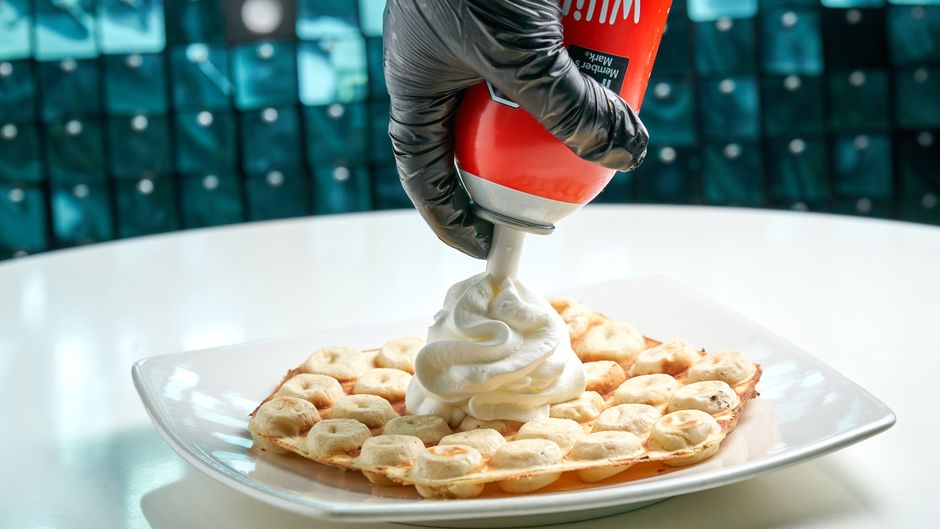
Whipped Cream vs Cream Whipper: What's the Difference?
There is perhaps no greater culinary tragedy than a beautifully baked dessert arriving at the table only to be crowned with a deflated, weeping puddle of what was once supposed to be whipped cream. For many home cooks, the pursuit of the perfect, stable cloud of dairy perfection remains an elusive goal, often leading to frantic last-minute whisking or the accidental creation of sweetened butter. Understanding the mechanics of fat stabilization is the first step toward reclaiming your status as the master of your kitchen’s dessert station. Whether you are aiming for soft, billowy peaks to top a slice of warm pie or structured, pipeable swirls for a professional-grade layer cake, the tool you choose to wield makes all the difference in the world.
In the professional culinary landscape, we often debate the merits of manual versus mechanical aeration, a discussion that inevitably leads us to the classic hand whisk versus the modern N2O cream whipper. While the traditional method relies on the brute force of mechanical agitation to entrap air bubbles, the modern canister approach utilizes gas pressure to dissolve nitrous oxide directly into the fat globules. Each method imparts a distinct texture, mouthfeel, and shelf life, which directly impacts how your guest experiences the final bite. By diving deep into the science of emulsification and aeration, you can finally stop blaming the chef for poor results and start producing restaurant-quality toppings every single time.
This guide aims to demystify the high-stakes world of cream production, exploring the nuances of temperature control, fat percentages, and stabilizer usage. We will look past the marketing hype to examine exactly why your whipped cream might be failing and which equipment is best suited for your specific recipe needs. It is time to treat your dairy with the precision it deserves, ensuring that every dollop serves as the crowning glory of your hard work rather than an afterthought. Put down the store-bought aerosol cans and join me as we explore the elegant physics of foam and the artistry of the perfect whip.
The Chemistry of Aeration: Why Fat Matters
At its most fundamental level, whipped cream is a foam—a colloidal system where air is dispersed throughout a liquid. In the case of cream, the "liquid" is an emulsion of butterfat globules suspended in a water-based serum. When we introduce energy—whether through a whisk, a mixer, or a pressurized canister—we are essentially forcing air into this emulsion while simultaneously causing the fat globules to collide and stick together. These fat particles form a structural network that stabilizes the air bubbles, preventing them from collapsing back into liquid. If the fat content is too low, the network never forms, and you are left with a bubbly, thin mess that dissipates within seconds.
The industry standard for a stable whipped cream is a heavy cream containing at least 35% to 40% milkfat. This high concentration of fat is critical because, as you agitate the cream, the fat globules undergo a process called partial coalescence. These globules clump together to form a solid matrix around the air cells, creating the rigidity necessary for standing peaks. If you try to whip half-and-half or light cream, you are working with an insufficient fat content, meaning there is simply not enough "glue" to hold the structure together. Always reach for heavy whipping cream, and ensure it is kept at a strictly refrigerated temperature of 38°F to 40°F right until the moment of aeration.
The Role of Temperature in Stabilization
The temperature of your cream is perhaps the most overlooked variable in home kitchens. If your cream is too warm, the fat globules remain in a fluid, semi-liquid state and will not coalesce effectively, leading to a runny product. Conversely, if you keep your tools and your cream chilled, the fat remains firm, allowing for a much cleaner and more stable structure. Many professional pastry chefs go as far as chilling their stainless-steel mixing bowls and whisk attachments in the freezer for fifteen minutes before beginning the process. This extra step ensures that the friction generated by the whisking process does not heat the cream prematurely.
"A stable whipped cream is a matter of thermal discipline; if the fat is too soft, the structure is doomed to weep before the plate even leaves the kitchen counter."
Traditional Whisking: The Art of Manual Control
The traditional approach to whipped cream—using a balloon whisk or a stand mixer with a wire whip attachment—remains the gold standard for versatility and texture. When you whip cream by hand or machine, you have complete control over the "stiffness" of the foam at every stage of the process. You can stop at "soft peaks" for a loose, pourable texture that coats a bowl of berries perfectly, or continue until "stiff peaks" are achieved for piping intricate borders onto a gateau. This manual method allows you to visually inspect the protein-fat interface as it evolves, a tactile experience that no pressurized canister can replicate.
However, the manual method requires precision, particularly when using a stand mixer. It is all too easy to walk away from a mixer for thirty seconds too long, at which point the fat globules coalesce too far, the air pockets pop, and you are left with an ugly, yellowing mass of butter and buttermilk. The secret is to keep the mixer speed at a moderate level—never on high—to incorporate small, uniform bubbles rather than large, irregular ones. Small bubbles provide a much creamier, more velvet-like mouthfeel than large, airy pockets created by excessive speed.
Monitoring the Stages of Whipping
To master the whisk, you must learn to recognize the three distinct stages of dairy aeration:
The N2O Cream Whipper: Professional Precision
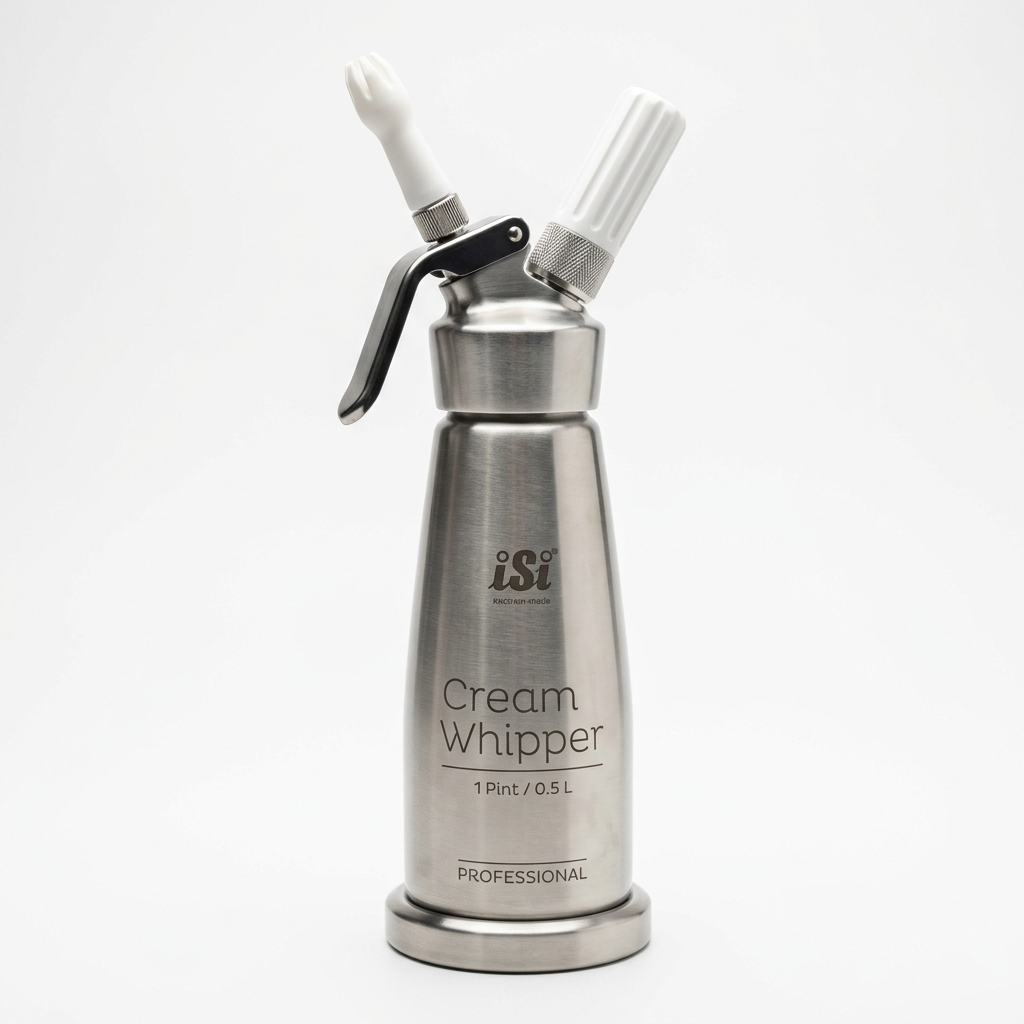
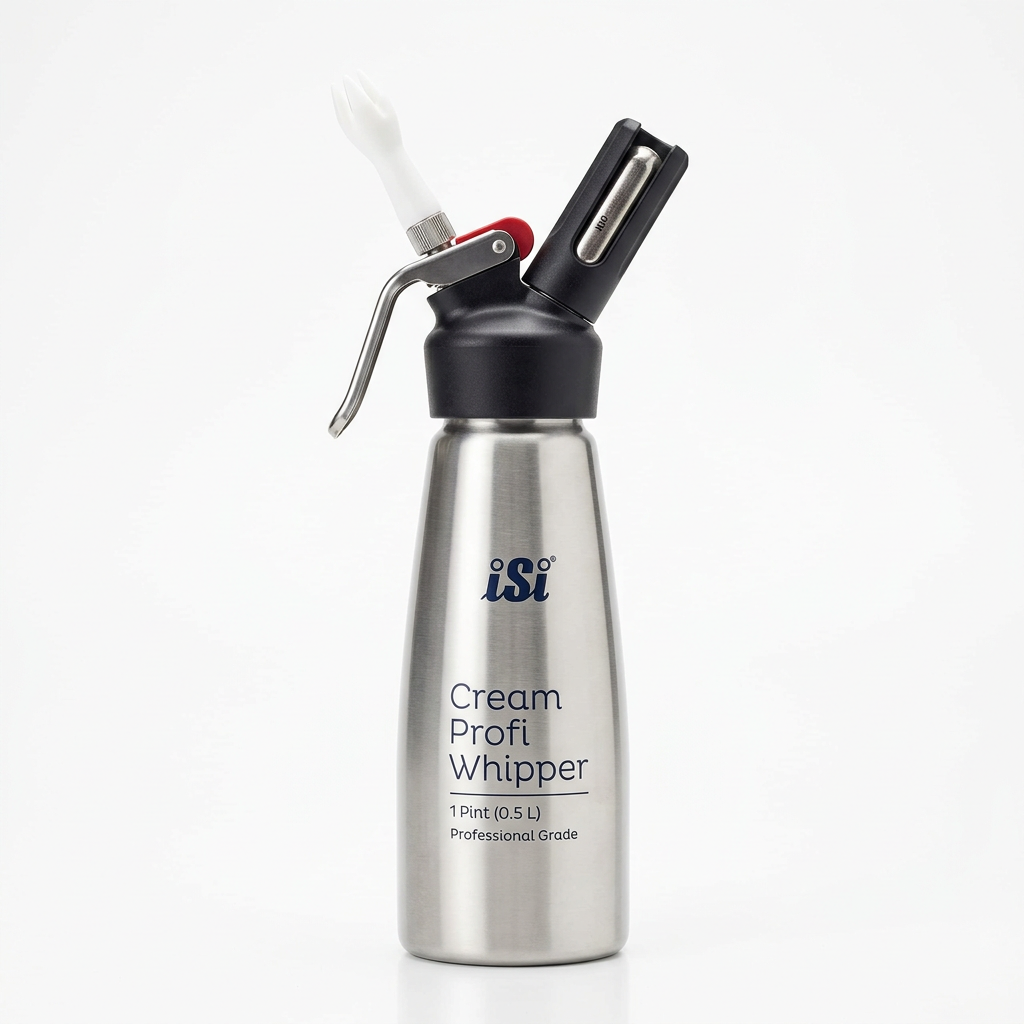
The modern cream whipper, or siphon, operates on a completely different set of physical laws. Instead of relying on mechanical agitation, it uses a small cartridge of nitrous oxide (N2O) to pressurize the cream. When the gas is injected into the chamber, it dissolves into the fat. As you pull the trigger to release the cream, the rapid change in pressure causes the gas to expand instantly, creating millions of tiny, uniform bubbles. This results in a product that is significantly lighter and fluffier than hand-whipped cream, often described as having an ethereal, almost mousse-like quality.
One of the greatest advantages of the cream whipper is convenience and longevity. Because the canister is a sealed, pressurized environment, the cream remains shielded from oxygen and potential contamination. When stored in the refrigerator, a properly charged canister can keep whipped cream fresh for up to two weeks, whereas hand-whipped cream usually begins to break down within hours. This makes the siphon an invaluable tool for dinner parties or busy households where you want the luxury of fresh cream on demand without the hassle of washing a bowl and whisk every evening.
Best Practices for Canister Usage
Strain Your Mix:* Always strain your cream-and-sugar mixture through a fine-mesh sieve before pouring it into the whipper to ensure no undissolved sugar crystals clog the valve.
Do Not Overfill:* Most whippers have a maximum fill line. Respecting this is crucial, as you need sufficient headspace for the gas to pressurize the liquid effectively.
Shake Properly:* After charging with the N2O cartridge, you must shake the canister vigorously in a downward motion to ensure the gas is fully emulsified into the fat.
Temperature Control:* Even when using a whipper, the canister itself should be stored in the refrigerator. A warm canister will result in "sputtering" cream.
Comparative Texture and Flavor Profiles
When you compare hand-whipped cream to canister-whipped cream side-by-side, the differences are palpable. Hand-whipped cream retains a slightly denser, more buttery richness because the aeration process is slower and physically interacts with the fat globules in a way that emphasizes the cream's natural texture. It feels substantial on the tongue, making it the superior choice for desserts where the cream is intended to be a heavy, indulgent component, such as atop a dense chocolate flourless cake or a rich bread pudding.
The siphon-whipped cream, by contrast, is light and ephemeral. Because the expansion of N2O happens so rapidly, the air bubbles are far smaller and more numerous than those produced by a whisk. This makes the cream feel like it melts away almost instantly on the palate, which is ideal for lighter desserts like fresh berry tarts, citrus sorbets, or as a delicate dollop on a morning latte. The flavor profile of siphon-whipped cream is also slightly different; because it is pressurized, the sweetness can sometimes taste more concentrated, and you may find you need slightly less sugar in your base mixture.
"The whisk creates a decadent blanket of flavor, while the siphon provides a weightless, sophisticated cloud that vanishes upon impact."
Choosing Your Tool
Consider the dessert you are serving. If you are preparing a heavy dessert, you want a heavy, stable whip. If you are preparing something delicate and airy, choose the whipper. It is also important to consider the complexity of your flavors. If you are infusing your cream with herbs, spices, or liqueurs, the cream whipper acts as an infusion chamber, allowing the flavors to penetrate the fat much more thoroughly than simply folding them into a bowl of whipped cream.
Troubleshooting Common Culinary Disasters
We have all been there: the dreaded "weeping" of the cream. This occurs when the liquid serum drains away from the fat network, leaving you with a pile of foam floating in a puddle of milk. This is often caused by poor stability. To solve this, many professional chefs incorporate a stabilizer. The most common choice is powdered sugar (confectioner's sugar), which contains a small amount of cornstarch to absorb moisture. For even greater stability, especially for piping, a tablespoon of non-fat milk powder per cup of cream can work wonders, as it adds extra proteins that reinforce the foam structure.
If you find that your cream simply will not whip, the most likely culprit is the temperature of your base or the quality of your cream. Always check the ingredient label on your heavy cream. Some ultra-pasteurized creams can be more difficult to whip because the heat treatment changes the protein structure. While ultra-pasteurized cream is perfectly safe and has a longer shelf life, it often lacks the structural integrity of high-quality, vat-pasteurized cream. If you are struggling, try a different brand or switch to a high-fat, non-homogenized product if you can source it from a local dairy.
Advanced Stabilizing Agents
Gelatin:* If you are building a professional-grade layer cake that needs to hold up at room temperature for hours, dissolve a small amount of bloomed gelatin into a portion of warm cream before whipping the rest.
Cream of Tartar:* A pinch of cream of tartar can help stabilize the proteins, though it can impart a slight acidity that you may or may not want depending on the dessert.
Mascarpone:* Replacing 25% of the heavy cream with mascarpone cheese provides a massive boost in structural stability due to the cheese's high fat and protein content, making it perfect for fillings.
Professional Tips for the Home Chef
The secret to restaurant-level execution is the mise en place—the organization of all your components before you begin. For whipped cream, this means having your cream, your sugar, your flavorings (like vanilla bean paste or citrus zest), and your chilled equipment ready to go. When you work with confidence and precision, you avoid the common mistakes of over-handling and over-whipping. Professional chefs know that cream is a delicate medium, and it should be treated with the same respect as a fine soufflé or a temperamental sauce.
Always taste your cream before you begin the aeration process. The sugar should be fully dissolved, and the flavor should be slightly more intense than you think you need. Once the cream is aerated, the flavor is "diluted" by the inclusion of air, meaning a mixture that tastes perfectly sweet while liquid might taste surprisingly bland once whipped. Start by whisking your sugar into the liquid cream until it is completely dissolved before you begin the agitation phase, as this ensures a consistent texture throughout the entire batch.
Final Techniques for Excellence
Conclusion
The debate between the hand whisk and the cream whipper is not about finding the "better" tool, but rather about understanding which tool best serves the vision of your final dish. By mastering the fundamental physics of fat and air, you elevate yourself from a home cook who follows recipes to a culinary creator who understands the building blocks of their craft. Whether you prefer the tactile, traditional rhythm of the balloon whisk or the modern, efficient, and light-as-air output of the N2O siphon, the principles of temperature control and quality ingredients remain the same.
Do not fear the process of whipping cream, and do not blame the chef when things go awry—instead, look at the science. Did the fat coalesce correctly? Was the environment chilled? Was the fat percentage sufficient? By analyzing these variables, you turn every failure into a learning opportunity. The next time you find yourself staring at a bowl of heavy cream, remember that you are holding the potential for a world-class dessert component. Treat it with care, respect the temperatures, and never, ever stop whisking until you see those soft, billowy peaks beginning to form.
Ultimately, whipped cream is about elevating the simple pleasure of a meal into something memorable. A well-executed whip provides a luxurious, cooling contrast to warm cakes and fruit, adding a layer of sophisticated texture that ties the entire dessert together. Take the time to practice these techniques, experiment with different flavor profiles, and always keep your tools clean and cold. Once you have truly mastered the art of the whip, you will never look at a carton of heavy cream the same way again. Happy baking, and may your peaks always stand tall.
Final Reflections on the Culinary Craft
It is important to remember that culinary perfection is a journey, not a destination. Each time you whip cream, you are engaging in a micro-experiment. You are learning the behavior of butterfat under stress, the effects of pressure on dairy emulsions, and the importance of timing in the kitchen. Keep a journal of your results—note the temperatures of your cream, the time it took to reach your desired consistency, and which stabilizing agents you used. This data-driven approach is exactly how professional pastry chefs maintain consistency across hundreds of servings, and it is a habit that will serve you well in all your culinary endeavors.
Furthermore, never underestimate the power of high-quality ingredients. Because whipped cream contains so few components, the quality of the cream itself is front and center. Seek out local, high-fat, non-ultra-pasteurized heavy cream if possible. The nuance in flavor from a grass-fed, locally sourced dairy product is staggering compared to the mass-market options found in standard grocery stores. When you start with the best possible ingredients, your task as a chef becomes significantly easier, as the product is already inherently stable and delicious.
Finally, share your creations. The joy of cooking is best realized when you can see the delight on the faces of your guests as they take that first bite of a dessert topped with a cloud of perfectly whipped cream. Whether it is a simple Sunday evening treat or an elaborate birthday cake, your attention to detail matters. By understanding the difference between tools and the science behind the foam, you have taken a major step forward in your culinary education. Continue to learn, continue to practice, and most importantly, keep enjoying the process of creating something beautiful from the simplest of ingredients.
Consistency:* The hallmark of a great chef is consistency; aim to produce the same quality of whipped cream every time you work with it.
Safety:* Always handle your N2O cartridges with care and follow the manufacturer's instructions for your specific model of cream whipper to ensure safety in the kitchen.
Cleanup:* Proper maintenance of your equipment, whether it's the whisk or the siphon, ensures that your tools remain in top condition for years to come.
Innovation:* Do not be afraid to experiment with savory whipped creams—a hint of black pepper or a touch of goat cheese can elevate a dish in ways you might not expect.
As you move forward in your baking journey, keep this knowledge in your back pocket. The kitchen is a laboratory as much as it is a studio, and your whipped cream is the ultimate test of your attention to detail. Whether it is for a holiday table or a casual treat, take pride in the fact that you know the science, you have the tools, and you have the expertise to make every dish a masterpiece. Blame the chef no more; today, you are the one in control of the cream.

Get the Next Recipe
Weekly recipes, techniques, and gear picks — straight to your inbox.
