Best Cast Iron & Carbon Steel Pans for Steak (2026)
Disclosure: As Amazon Associates, we earn from qualifying purchases made through links on this page.
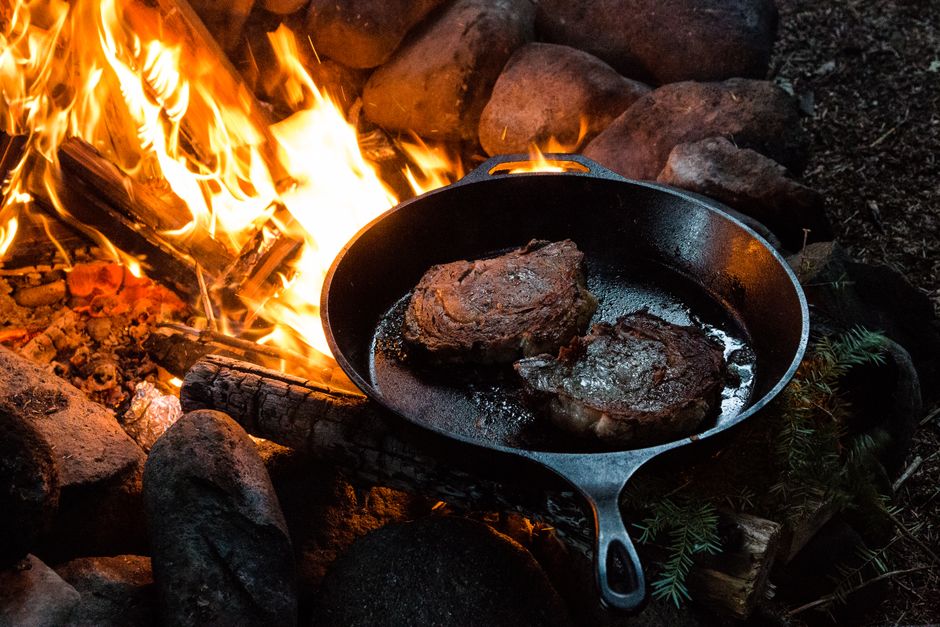
A restaurant-grade steak crust comes down to one thing: getting your pan surface hot enough, and keeping it hot when the cold meat hits it. That is exactly what cast iron and carbon steel do best. Both materials hold far more thermal energy than thin non-stick or aluminum pans, so the sear keeps going instead of going gray and steamed.
Cast iron is the heavyweight: thick, slow to heat, nearly impossible to cool down, happy in a 500°F oven or over a campfire. Carbon steel is its lighter French cousin: thinner walls, faster response, gentler weight, and the same naturally non-stick seasoning that improves every time you cook. If you are torn between the two, start with our head-to-head guide, Carbon Steel vs Cast Iron for Steak: Which Wins?, for the science of heat retention versus responsiveness.
In this guide we break down our top picks for searing steak in 2026, plus the griddles, presses, and seasoning care that turn a good sear into a great one. All picks are based on specs, user reviews, and reputation — no lab, just honest kitchen judgment.
Quick Comparison: Best Steak-Searing Pans of 2026
| Product | Best For | Material | Price Range | Key Highlight |
|---|---|---|---|---|
| 12-Inch Pre-Seasoned Cast Iron Skillet | Best Overall Steak Pan | Raw cast iron | $ (Budget) | Massive thermal mass for an even, dark crust |
| French Carbon Steel Fry Pan | Best Carbon Steel Pan | Carbon steel | $$ (Mid-Range) | Lighter and faster than cast iron, same sear |
| 90/10 Copper-Stainless Fry Pan (Made in France) | Best Premium Heat Response | Copper exterior | $$$ (Premium) | Instant responsiveness for butter-basting control |
| Double-Sided Cast Iron Reversible Griddle | Best for Multiple Steaks & Grill Marks | Raw cast iron | $$ (Mid-Range) | Ridged and flat sides, works on any cooktop |
| Heavyweight Cast Iron Press | Best Searing Accessory | Raw cast iron | $ (Budget) | Full contact for edge-to-edge browning |
| Flaxseed Oil Seasoning Spray | Best for Seasoning Maintenance | Seasoning oil | $ (Budget) | Ready-to-use layer protection after searing |
Top Cast Iron & Carbon Steel Pans for Searing Steak
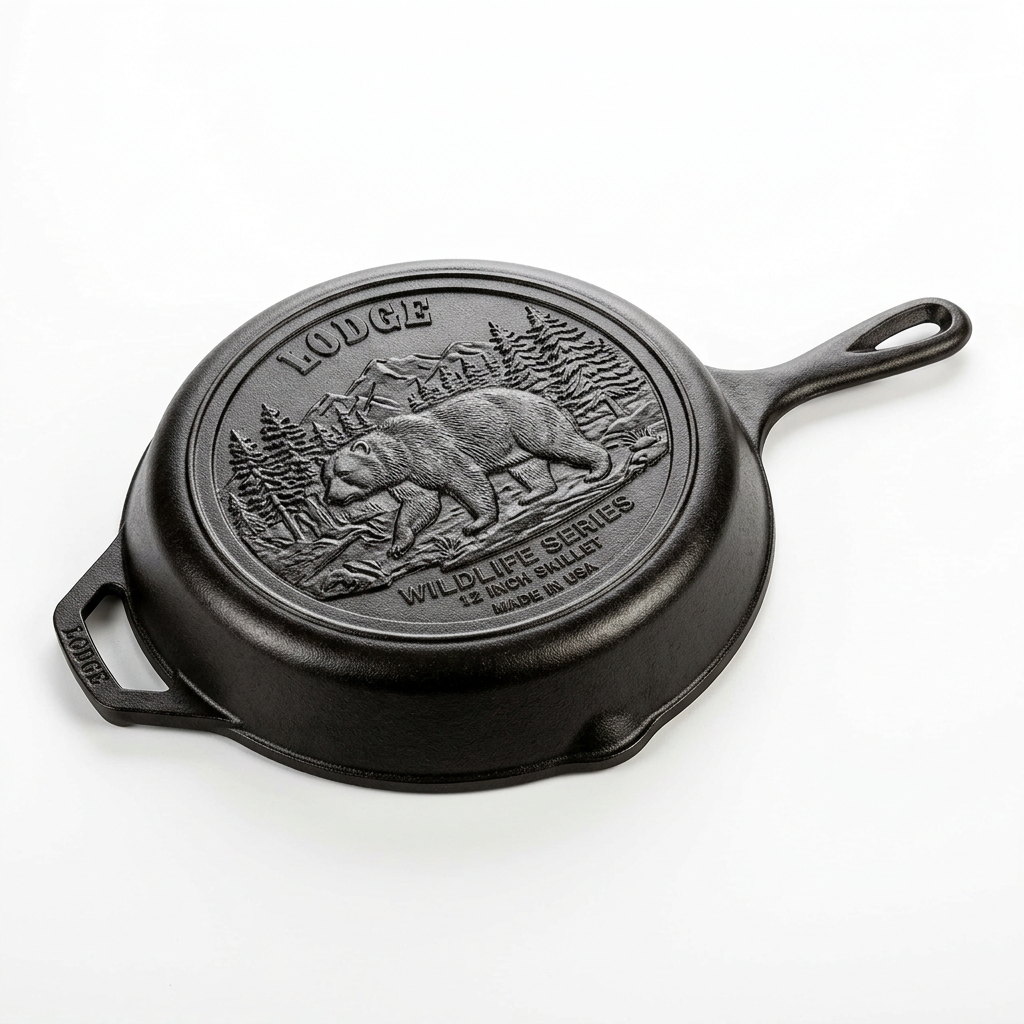
1. 12-Inch Pre-Seasoned Cast Iron Skillet — Best Overall Steak Pan
What it's best for: Home cooks who want the deepest, most even crust for the least money, on any cooktop including induction, in the oven, or over live fire.
Why we picked it: This is the pan most steakhouse-style home searing is done in, and for good reason. A pre-seasoned 12-inch skillet gives you a generous cooking surface for a thick-cut ribeye or two strip steaks, and its sheer mass means the surface temperature barely dips when the steak goes in — the single biggest factor in a fast, dark Maillard crust. It comes pre-seasoned with vegetable oil, works on every heat source you own, and shrugs off oven temperatures no enameled pan would tolerate. Reviewers consistently praise the durability: this is a buy-once pan that improves with years of use.
Pros:
- Unmatched heat retention — the sear keeps going long after the meat hits the pan.
- Pre-seasoned out of the box; seasoning only gets better with use.
- Induction, gas, electric, oven, and open-fire safe.
- Serious value: cast iron performance for a budget price.
Cons:
- Heavy — a loaded 12-inch pan is a two-handed operation.
- Needs basic seasoning care to stay rust-free and non-stick.
2. French Carbon Steel Fry Pan — Best Carbon Steel Pan for Steak
What it's best for: Cooks who want cast-iron searing power but less weight and faster heat response, especially for steak pan sauces and butter basting.
Why we picked it: Carbon steel pans like this French-made fry pan are the standard in professional restaurant kitchens, and steak-heavy bistros in particular. The steel is rolled thin enough for quick heat changes but still thick enough to hold a serious sear, and the pan develops the same natural patina as cast iron — a genuinely non-stick, rust-darkened surface that rewards every cook. At roughly half to two-thirds the weight of an equivalent cast iron skillet, it is far easier to swirl, tilt, and baste with. It handles extremely high heat beautifully, which is exactly what a hard sear demands.
Pros:
- Restaurant-proven material — the workhorse of French steakhouse kitchens.
- Much lighter than cast iron with comparable searing power.
- Fast responsiveness gives you real control over pan sauces.
- Long handle and sloped sides make basting and tossing easy.
Cons:
- Requires seasoning and regular maintenance like cast iron.
- Not dishwasher safe; acidic sauces are better finished elsewhere.
3. 90/10 Copper-Stainless Fry Pan — Best Premium Heat Response
What it's best for: The cook who wants instant, precision control — searing hard, then dropping the heat in a second for a butter-baste or a velvety pan sauce.
Why we picked it: Copper conducts heat faster than any cookware metal, and a French-made pan with a 90% copper exterior paired with a 10% stainless interior gives you the best of both: lightning-fast heating and a durable, low-maintenance cooking surface. For steak, that responsiveness is a real advantage when you are managing carryover at the edge of medium-rare, or when you want to sear hard and immediately throttle back to finish gently in butter, garlic, and thyme. It is a premium purchase, but for frequent steak nights it changes how you cook.
Pros:
- Fastest heat response of any pan material — near-instant sear control.
- Extremely even heating with no hotspots across the base.
- Stainless interior is easy to clean and tolerates acidic sauces.
- Induction-compatible base on this modern version.
Cons:
- Premium price point, many times the cost of cast iron.
- Copper exterior develops a patina or needs polishing to stay bright.
4. Double-Sided Cast Iron Reversible Griddle — Best for Multiple Steaks & Grill Marks
What it's best for: Feeding a crowd: searing three or four steaks at once with proper spacing, with grill marks on one side and a flat plancha surface on the other.
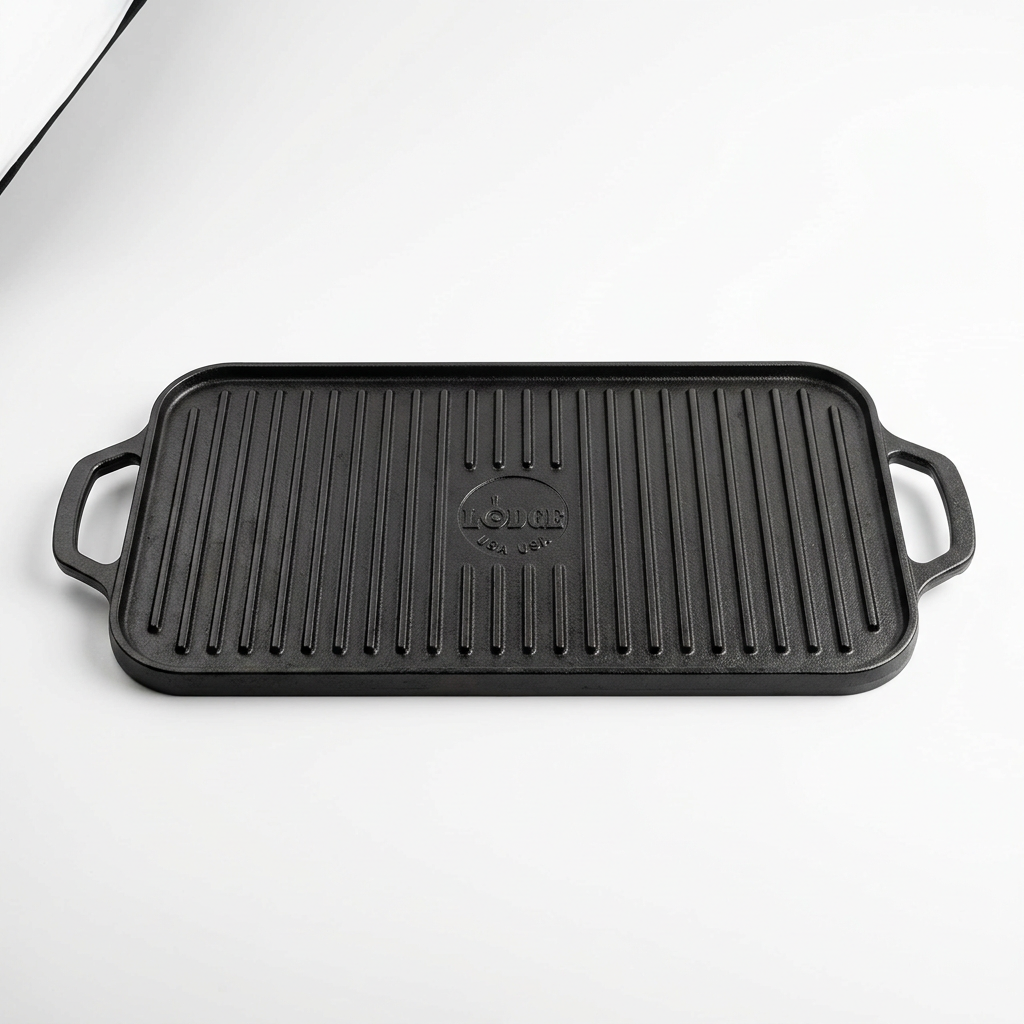
Why we picked it: Searing two steaks in one skillet is fine; four crowding each other in one skillet is a steamed, gray disaster. A large reversible cast iron griddle solves the capacity problem — the ridged side gives you flavorful grill marks while draining rendered fat away from the meat, and the flat side doubles as a plancha for smash burgers, hash, and batch searing. It spans two burners, works on gas, electric, and induction, and because it is cast iron, it holds its temperature even when loaded with cold, wet meat.
Pros:
- Large surface for multiple steaks without crowding or steaming.
- Ridged side for grill marks; flat side for smash burgers and plancha work.
- Works on gas, electric, and induction cooktops.
- Excellent value for the cooking area you get.
Cons:
- Very heavy and awkward to flip between sides when hot.
- Ridges need a stiff brush to clean between grilling sessions.
5. Heavyweight Cast Iron Press — Best Searing Accessory
What it's best for: Pressing steaks, smash burgers, and bacon flat for full contact — no pale edges, no curling, no uneven browning.
Why we picked it: A sear is a contact sport: the parts of the steak touching the pan brown, the parts lifting away do not. A heavyweight cast iron press solves that. Press it on a strip steak for pin-bone-to-edge contact, or use it for smash burgers where maximum contact is the whole point. It also doubles as a weight for pressed sandwiches and keeps bacon flat and evenly crisped. It is the cheapest upgrade to your searing game on this list.
Pros:
- Guarantees edge-to-edge contact for uniform browning.
- Doubles for smash burgers, paninis, and bacon.
- Raw cast iron surface takes on seasoning like your skillet.
- Inexpensive and effectively indestructible.
Cons:
- Preheat it separately or it will slow your sear start.
- Handles heat for long periods — needs a mitt or a long cool-down.
6. Flaxseed Oil Seasoning Spray — Best for Seasoning Maintenance
What it's best for: Keeping your cast iron and carbon steel pans naturally non-stick after hard searing sessions, without the mess of bottled oil and paper towels.
Why we picked it: Steak searing is hard on a seasoning layer — high heat, fond stuck to the steel, and aggressive scraping all take their toll. Flaxseed oil has a well-earned reputation among cast iron enthusiasts for polymerizing into a hard, glassy, stick-resistant finish. A ready-to-use spray makes touch-up seasoning nearly effortless: a light coat after cleaning, a few minutes on the heat, and the pan is protected again. We walk through the full oven-seasoning method in How to Re-Season Cast Iron with Flaxseed Oil.
Pros:
- Flaxseed oil polymerizes into an exceptionally hard seasoning layer.
- Spray format gives thin, even coats with zero waste or mess.
- Ideal for quick touch-ups between deep re-seasonings.
- Works on cast iron and carbon steel alike.
Cons:
- Aerosol sprays run out faster than a bottle of oil.
- Still needs heat to polymerize — it is not a wipe-and-done protectant.
How We Picked These Pans
We did not run an instrumented lab test. Our picks are based on the specs that matter for steak — material thickness, thermal mass, heat tolerance, seasoning surface, and long-term durability — combined with the weight of thousands of owner reviews and each maker's reputation among professional cooks. We favored pans that are known to survive decades of daily high-heat use, since a steak pan is one of the few tools in the kitchen that should never need replacing. Where a premium option made the list, it is because its material offers a real, noticeable advantage in temperature control, not a logo premium.
Frequently Asked Questions
What pan temperature should I sear steak at?
Get the pan surface to around 400–450°F (200–230°C) before the steak touches it. On cast iron or carbon steel that typically means a few minutes over medium-high to high heat. A drop of water should skitter and evaporate instantly. If the oil is smoking hard before the meat goes in, you are slightly over — pull the pan off the burner for 20 seconds and start again.
Is cast iron or carbon steel better for steak?
Both sear beautifully. Cast iron holds more total heat, so it is more forgiving when you load a cold steak — best for hard, dark crusts and oven finishing. Carbon steel heats and recovers faster and is lighter for basting and pan sauces. Our full comparison, Carbon Steel vs Cast Iron for Steak, breaks down the numbers.
Should I finish my steak in the oven or in the pan?
For steaks under about 1.5 inches, pan-only cooking with basting is usually enough — faster and less heat loss. For thick-cut steaks (ribeye, filet, tomahawk above 2 inches), sear hard on the stovetop and finish in a 400°F oven to bring the center up evenly. Both raw cast iron and carbon steel pans are oven safe; enameled pans are usually limited to around 500°F, so check the knob.
What oil should I use for searing?
Use an oil with a high smoke point: avocado, refined olive (not extra virgin), grapeseed, or canola. Add the oil just before the steak, not during preheating with an empty pan. If you want butter flavor, add it in the last minute for basting, not at the start — butter burns at steak-searing temperatures.
How do I clean my pan after searing steak?
Once the pan has cooled a bit but is still warm, scrape out the fond with a stiff spatula, wipe with paper towel, and do a quick scrub under hot water if needed — no soap for seasoned pans. Dry thoroughly over heat for a minute, then apply a thin coat of oil or seasoning spray. Our step-by-step is in How to Clean a Cast Iron Skillet Without Ruining It.
The Bottom Line
If you buy one pan for steak, make it a 12-inch pre-seasoned cast iron skillet — the searing performance per dollar is unbeatable. If you cook steak often and like pan sauces and butter basting, a French carbon steel fry pan is the natural upgrade. Serious enthusiasts can build the full kit: the skillet, the lighter steel pan, a reversible griddle for company, a press for perfect contact, and a bottle of flaxseed oil to keep the seasoning armor-strong. Whichever route you take, keep the pan hot, dry the steak's surface, and leave it alone while the crust forms — the pan does the rest.

Get the Next Recipe
Weekly recipes, techniques, and gear picks — straight to your inbox.
